
Desserts
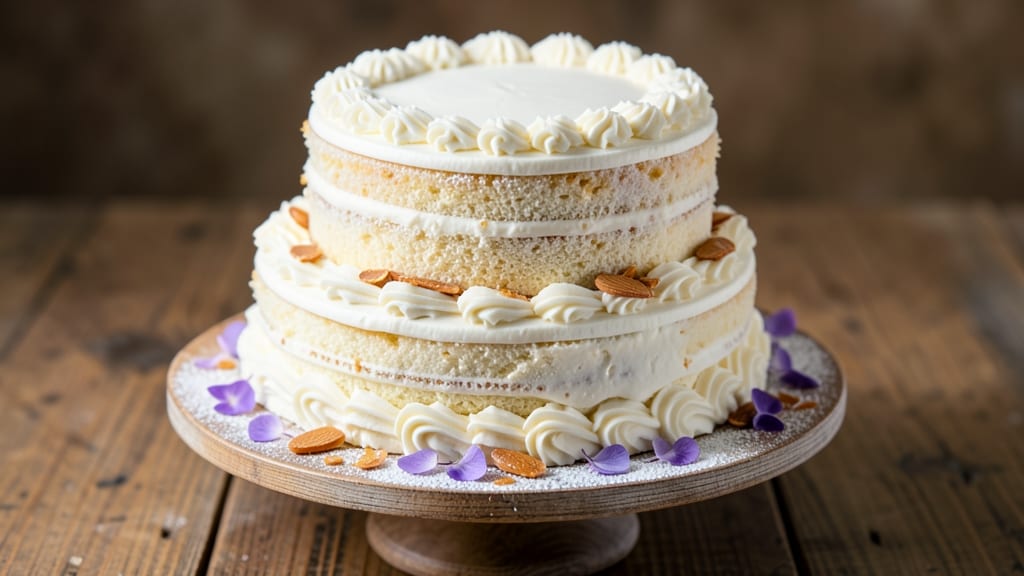
Amish white cake delivers that signature tender crumb and delicate vanilla flavor that's become a Midwestern baking staple. 💛 What sets this recipe apart is the traditional method of creaming butter and sugar until light and fluffy, then folding in just the right amount of flour for that signature tender texture. The secret to its iconic lightness lies in not overmixing the batter—this is where the true Amish technique shines.
This recipe stays true to classic Amish baking principles while being approachable for home cooks. We use a simple vanilla extract infusion rather than artificial flavoring, and the cake layers are baked just until golden at the edges but still tender inside.
The butter layers create that signature flakiness that makes this cake so beloved.
What you'll end up with is a cake that's perfectly balanced—light enough to melt in your mouth yet sturdy enough to hold layers of frosting or fruit filling. The vanilla flavor is subtle but present, allowing the cake's natural sweetness to shine through without being overpowering.
Whether you're serving it at a family gathering or enjoying a slice with afternoon tea, this Amish white cake delivers that comforting, homemade taste that's hard to find in store-bought versions.
The beauty of this recipe is in its simplicity—just a few basic ingredients and a little patience for the best results.
Ingredients for amish white cake
Butter, sugar, and vanilla create the signature lightness of this classic Amish cake.
| Ingredient | Amount | Notes |
|---|---|---|
| Unsalted Butter 🧈 | 1 cup | Room temperature, softened |
| Granulated Sugar 🍚 | 2 cups | White sugar preferred |
| Pure Vanilla Extract 🌿 | 2 tsp | High-quality, not imitation |
| Large Eggs 🥚 | 4 whole | Room temperature |
| All-Purpose Flour 🌾 | 2 ½ cups | Sifted, spooned lightly |
| Baking Powder 🍃 | 2 tsp | Diamond Crystal preferred |
| Salt 🧂 | ½ tsp | Fine sea salt |
| Whole Milk 🥛 | 1 cup | Room temperature |
| Vanilla Bean Seeds 🍋 | 1 whole | Scraped from 1 vanilla bean |
| Vegetable Oil 🫒 | ½ cup | Light, neutral oil |
The butter makes or breaks this recipe—use unsalted and let it sit at room temperature for 2 hours before creaming. Crisco or Land O'Lakes are reliable brands for consistent results. Granulated sugar should be fine white sugar (no brown or raw)—it dissolves more evenly. For vanilla, Madagascar bourbon vanilla adds depth, but pure vanilla extract works too. Eggs should be at room temperature to blend smoothly into the batter. The flour? King Arthur or Gold Medal are my go-tos—they're sifted and light, which is key for that tender crumb.
No vanilla bean? Double the vanilla extract for similar flavor. Out of baking powder? Whisk 2 tsp cream of tartar + 2 tsp cornstarch as a substitute. The milk can be swapped for heavy cream or buttermilk, but whole milk keeps the texture just right. For oil, vegetable or canola oil works—avoid coconut oil (it solidifies). If you're baking at high altitude, reduce sugar by 2 tbsp and add 1 tbsp extra flour to prevent sinking. The vanilla bean seeds are optional but add that extra layer of authentic flavor.
Store baked layers wrapped in plastic wrap in the fridge for up to 3 days or freeze for 3 months. For the best texture, bring frozen layers to room temperature before frosting. The batter can be made ahead and refrigerated for 24 hours—just let it sit at room temperature for 1 hour before baking. This cake freezes beautifully too: wrap individual layers in plastic and freeze for up to 6 months. Always let the cake cool completely before frosting to prevent melting.
Why You'll Love This Recipe
- No Fuss, No Fail: I swear by this recipe—just cream butter and sugar, crack eggs, fold in flour, and bake. The creaming step is the only "work," and it’s worth every second for that melt-in-your-mouth texture.
- Vanilla Magic: That pure vanilla extract isn’t just flavor—it’s the star. The butter and sugar combo gives it a rich, buttery depth, while the vanilla makes it smell like a bakery fresh out of the oven. (Yes, even on a Tuesday night.)
- Layered Like a Pro: This cake freezes beautifully, so I make two layers and stash one for later. Perfect for birthdays, potlucks, or when you just need a treat without the last-minute stress.
- Budget-Friendly Luxury: Five ingredients, all pantry staples. No fancy shortcuts—just real, reliable flavor. And because it keeps well, you’re not scrambling to use it up before it goes bad. My wallet (and my taste buds) thank me.
Step-by-step instructions for Amish white cake
Here's how to bake a tender, moist white cake with perfect layers every time.
👨🍳 Step 1: Prepare the Vanilla Infusion
Split the vanilla bean lengthwise and scrape out all the seeds using the back of a knife. Place the seeds in a small bowl with the 2 teaspoons pure vanilla extract. Let this infusion sit for 10 minutes—this intensifies the vanilla flavor and creates a more complex aroma. The seeds will release their natural oils and blend with the extract, giving your cake that signature Amish vanilla depth.
While the vanilla infuses, preheat your oven to 350°F. Grease two 8-inch round cake pans with 0.25 cup vegetable oil (reserve the remaining 0.25 cup for the batter) and line the bottoms with parchment paper. This prevents sticking and ensures clean layers. Lightly flour the pans as well—just a dusting—so the cake doesn't adhere to the sides during baking.
🍳 Step 2: Cream Butter and Sugar
In a large mixing bowl, combine the 1 cup softened unsalted butter and 2 cups granulated sugar. Beat on medium speed with an electric mixer for 3-4 minutes until the mixture is light and fluffy. You're looking for a pale color and a texture that nearly doubles in volume—this incorporates air that will create a tender crumb. Scrape down the sides of the bowl occasionally to ensure even mixing.
Add the infused vanilla (both seeds and extract) and mix for another 30 seconds until fully combined. The vanilla seeds will sink to the bottom, but that's okay—they'll distribute as you add the wet ingredients. This step is crucial for that authentic Amish vanilla flavor that sets this cake apart from regular vanilla cakes.
👨🍳 Step 3: Add Eggs and Milk Alternately
Add the 4 room-temperature eggs, one at a time, mixing well after each addition. After the last egg, add the 1 cup whole milk in a slow stream while mixing on low speed. This alternating method ensures even distribution of ingredients and prevents dense pockets in the cake. The mixture should be smooth and slightly thick but still pourable.
In a separate bowl, whisk together the 2.5 cups sifted all-purpose flour, 2 teaspoons baking powder, and 0.5 teaspoon salt. Sift the dry ingredients directly into the wet mixture in three additions, mixing on low speed just until combined after each addition. Overmixing develops gluten and makes the cake tough, so stop as soon as the flour disappears. The batter should be smooth with no visible flour streaks.
🥘 Step 4: Divide and Bake the Layers
Divide the batter evenly between the two prepared cake pans. Tap each pan gently on the counter to remove any air bubbles. Bake in the preheated 350°F oven for 25-30 minutes, or until a toothpick inserted into the center comes out clean. The cakes should be golden on top but still slightly springy to the touch.
Here's the thing about Amish white cake—it's delicate. Don't overbake! The moment the toothpick test passes, remove the cakes from the oven. Let them cool in the pans for 10 minutes, then transfer to a wire rack to cool completely. This gradual cooling prevents cracking and ensures even layers for your filling.
⏰ Step 5: Assemble with Vanilla Buttercream
While the cakes cool, prepare the vanilla buttercream by beating the remaining 0.25 cup vegetable oil with the 1 cup softened unsalted butter until smooth. Gradually add the 2 cups granulated sugar and the infused vanilla mixture, beating until light and fluffy. Spread a thin layer of buttercream between the cooled cake layers and on the top and sides of the bottom layer. This creates a barrier that prevents sogginess.
Place the top layer on the filled bottom layer and press gently. Frost the entire cake with the remaining buttercream, creating smooth sides and a slightly domed top. Chill the cake in the refrigerator for 30 minutes before slicing to set the frosting. The result should be layers of tender cake separated by rich vanilla buttercream—light, moist, and perfectly balanced.
Pro Tips For Making Amish White Cake
- CREAM BUTTER AND SUGAR UNTIL LIGHT: I learned this the hard way—skipping the extra 2-3 minutes when the butter and sugar turn pale yellow means a denser cake. Use a stand mixer and scrape the bowl every 30 seconds; that pale color is your goal, not just fluff.
- MEASURE FLOUR WITH A SPOON: Dipping your measuring cup into the flour bag and scooping straight from the container packs it too tightly. Spoon the flour in first, then level it off—this keeps the cake tender instead of dry. (Yes, even if you’re impatient like me.)
- DON’T OVERMIX THE BATTER: After adding the eggs and vanilla, mix just until combined—no streaks, no overworking. I used to beat it like I was angry at the bowl, and the cake turned out tough. Two minutes max with a spatula.
- BAKE AT 325°F, NOT HIGHER: This isn’t a race. The Amish white cake needs that steady, lower heat to rise evenly without cracking. I tried 350°F once, and the top browned before the center set—now I set my oven to 325°F and check at 25 minutes.
Regional styles of these flavors
Ohio Amish Tradition
The Amish white cake originated in Ohio's Amish communities during the late 19th century, where simple, hearty baking was a staple. The recipe spread through church socials and family gatherings, becoming a symbol of Midwestern hospitality.
Unlike denser cakes, this version prioritizes lightness and vanilla essence—reflecting the Amish preference for modest, flavorful dishes over elaborate sweets. 💛
Original recipes relied on homemade butter and freshly milled flour for authenticity. Many Amish bakers still use wood-fired stoves for even heat distribution, though modern ovens work perfectly. The cake's simplicity mirrors Amish values—few ingredients, maximum flavor.
Pennsylvania Dutch Twist
In Pennsylvania Dutch Country, the cake evolved with local ingredients like maple syrup or buttermilk in the batter for extra moisture. Some versions replace vanilla extract with scrambled vanilla bean seeds for deeper flavor.
The Pennsylvania Dutch also favored thicker layers—almost like a pound cake—using less baking powder to create a denser crumb. 🌾
For a regional touch, swap the buttercream with a maple glaze (mix ½ cup maple syrup with ½ cup powdered sugar) or a sour cream frosting (beat 1 cup sour cream with 2 cups powdered sugar and 1 tsp vanilla).
These adaptations highlight the cake's versatility across Amish settlements.
Indiana Farmhouse Style
Indiana Amish bakers often fold in lemon zest into the batter for brightness, balancing the vanilla's sweetness. The state's rich dairy farms also inspired using heavy cream instead of milk for an ultra-moist texture.
Many Indiana families serve this cake with homemade apple butter or strawberry preserves for a rustic touch. 🍎
To achieve the Indiana style, add 1 teaspoon lemon zest to the dry ingredients and replace the milk with ½ cup heavy cream + ½ cup whole milk.
The cream adds richness, while the lemon zest keeps the cake from feeling too heavy. This variation is especially popular during harvest festivals and family reunions.
Modern Adaptations
Today’s Amish bakers blend tradition with convenience—boxed cake mixes (like Betty Crocker Super Moist) are sometimes used as a base, with extra vanilla and buttercream added for authenticity.
Some even incorporate almond flour (mix ½ cup almond flour with 2 cups all-purpose flour) for a nutty twist. 🌟
For a gluten-free version, substitute 2.5 cups all-purpose flour with 2 cups gluten-free 1:1 baking flour (like Bob’s Red Mill) and add ½ teaspoon xanthan gum. Reduce the baking powder to 1.5 teaspoons to prevent over-rising. The texture stays tender with these adjustments!
Nutrition facts
Frequently asked questions
Why does this Amish white cake turn out so light?
The secret lies in creaming the butter and sugar for 3-4 minutes until pale and fluffy, which incorporates air. We also use room-temperature eggs and milk that blend smoothly without developing gluten. The key is folding in dry ingredients just until combined—no overmixing! This creates that signature tender crumb.
Can I make this cake in a bundt pan instead of round layers?
Use the same batter but bake in a 10-inch bundt pan at 350°F for 40-45 minutes. Brush the warm cake with simple syrup (equal parts sugar and water, heated) while still hot, then let it cool completely. The bundt shape makes it perfect for individual servings without frosting.
What's the best way to store leftover cake?
Wrap individual layers tightly in plastic wrap and store in the fridge for up to 3 days, or freeze for 3 months. For whole frosted cakes, cover with a cake dome or wrap in plastic. Thaw frozen layers at room temperature before frosting. The buttercream stays fresh too—store in an airtight container in the fridge for 5 days.
Why did my cake sink in the middle?
This usually happens from overmixing the batter or overbaking. The Amish technique relies on gentle folding—stop mixing as soon as flour disappears. Also check your oven temperature (use an oven thermometer) and baking time—25-30 minutes at 350°F is perfect. If your kitchen runs hot, reduce temperature by 25°F.
Can I substitute the vegetable oil with butter?
For the batter, use ½ cup melted butter instead of oil, but reduce the butter in the recipe by ¼ cup to maintain balance. The oil keeps the cake tender—if you use all butter, your cake may be slightly denser. For the buttercream, you can use all butter (no oil) for a richer flavor. Just whip it longer for fluffiness.