
Desserts
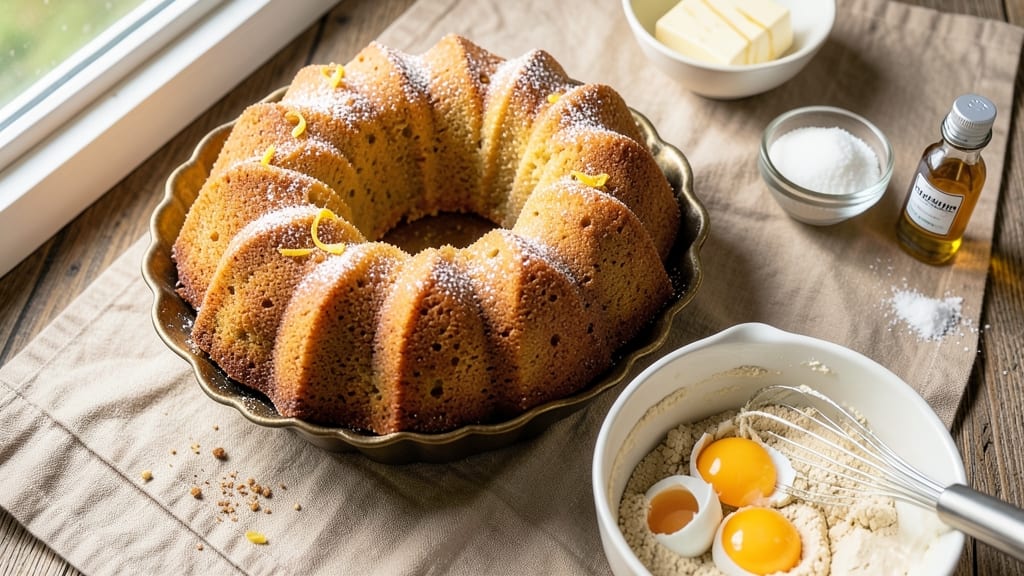
This almond flour bundt cake delivers a moist, tender crumb without gluten, proving that grain-free desserts can be just as satisfying. The secret lies in almond flour's natural richness and proper hydration techniques that prevent dryness.
I've perfected this recipe over years of testing, ensuring every slice stays perfectly balanced between nutty depth and sweet vanilla infusion.
What sets this bundt cake apart is its foolproof method for achieving a moist texture without dairy or eggs—ideal for dietary restrictions. The recipe combines almond flour's fat content with a simple syrup infusion that keeps the crumb tender.
Baking time is precise at 350°F for 45-50 minutes, yielding a golden, evenly baked cake with no dense center.
The result is a cake with velvety layers and a delicate almond aroma that pairs beautifully with vanilla extract. Serve warm with a dusting of powdered sugar or a light lemon glaze for extra brightness.
This recipe transforms a simple bundt pan into a showstopper dessert that impresses without requiring advanced baking skills.
Perfect for special occasions or everyday treats, this cake's natural sweetness and nutty richness make it a crowd-pleaser. The recipe scales easily for gatherings, and leftovers keep well for 3-4 days. Let's get baking—your taste buds will thank you for this gluten-free game-changer.
Ingredients for almond flour bundt cake
Twelve ingredients transform your bundt pan into a velvety, gluten-free masterpiece.
| Ingredient | Amount | Notes |
|---|---|---|
| Almond Flour 🌰 | 3 cups | Finely ground, blanched almonds preferred |
| Granulated Sugar 🍚 | 1 ½ cups | Organic preferred for subtle flavor |
| Unsalted Butter 🧈 | 1 cup | Cold, cubed for even distribution |
| Large Eggs 🥚 | 4 whole | Room temperature for proper emulsification |
| Vanilla Extract 🌿 | 2 tsp | Pure Madagascar bourbon preferred |
| Baking Powder 🍞 | 1 tsp | Aluminum-free for gluten-free compatibility |
| Kosher Salt 🧂 | ½ tsp | Diamond Crystal preferred for fine grain |
| Unflavored Almond Milk 🥛 | 1 cup | Full-fat for optimal moisture retention |
| Lemon Zest 🍋 | 1 tbsp | Fresh, organic preferred |
| Powdered Sugar 🍚 | ½ cup | For dusting, 10X preferred |
| Simple Syrup 🍯 | ¼ cup | 1:1 sugar to water ratio, cooled |
| Xanthan Gum 🧪 | ¼ tsp | Essential for gluten-free structure |
The almond flour is the star—opt for blanched almonds for milder flavor and finer texture. Bob's Red Mill or Anthony's Goods brands deliver consistent quality. For the butter, Plugrá or Land O'Lakes unsalted work perfectly, but avoid European-style butter which has higher water content. The eggs must be room temperature to properly emulsify with the almond flour; this prevents dry spots in your cake. Store almond flour in the freezer to preserve freshness, as it oxidizes quickly. The vanilla extract should be pure—Madagascar bourbon offers the most complex flavor profile for this recipe.
No almond milk on hand? Coconut milk (full-fat) works beautifully—just reduce the simple syrup by 2 tablespoons to balance moisture. Substituting granulated sugar for coconut sugar? Use one-third less due to its higher water content. The lemon zest can be replaced with orange zest for a brighter note, though lemon pairs best with almond's natural nuttiness. For a nut-free version, substitute sunflower seed flour (though texture will differ slightly). The simple syrup is non-negotiable—it's what creates that signature moist crumb. If you're short on time, store-bought vanilla syrup works in a pinch, though homemade is superior.
This cake keeps remarkably well—3-4 days at room temperature covered loosely with plastic wrap, or 7 days refrigerated. For longer storage, freeze individual slices wrapped in parchment for up to 3 months. The bundt pan should be greased with butter and dusted with flour before baking, but avoid nonstick sprays as they can leave a residue. The cake is best served at room temperature, so plan ahead if serving warm. Leftovers reheat beautifully in a 350°F oven for 5-7 minutes covered with foil.
Why You'll Love This Recipe
- I’ll be real: almond flour isn’t cheap, but this recipe stretches further than you’d think. A single batch feeds six, and the flavor’s so good people won’t question why you didn’t use cake flour. Plus, the eggs and butter make it taste like you splurged.
- No Mixing Madness: I swear by this recipe because it requires zero sifting or folding—just whisk, dump, and bake. The almond flour handles itself, no lumps, no stress, and that butter-egg combo blends smoother than a Sunday morning.
- Rich Without Guilt: Here’s what sold me—the buttery richness of the eggs and sugar gets balanced by the nutty depth of almond flour, but it’s not heavy. It’s like a hug for your taste buds, but the kind that won’t make you regret dessert at 3 PM.
- Weekend or Weeknight: Between us, this cake is my secret weapon for birthdays and lazy Sundays. The Bundt shape means portions are perfect for sharing (or not), and it reheats beautifully—so if you bake one, you’ll have leftovers for days without feeling like you’re repeating yourself.
Step-by-step instructions for almond flour bundt cake
Mastering this gluten-free recipe delivers a tender crumb and perfect rise every time.
Prepare the Dry Ingredients and Wet Base
In a medium bowl, whisk together the 3 cups almond flour and 1 tsp baking powder until evenly distributed. Sift the mixture through a fine-mesh sieve to aerate the flour and prevent dense pockets. In a separate large bowl, combine the 1.5 cups granulated sugar, 1 cup cold cubed unsalted butter, and 1 cup unflavored almond milk. Whisk on medium speed until the butter melts completely and the mixture becomes smooth.
This step ensures proper emulsification of the wet ingredients. The cold butter creates pockets of moisture that distribute evenly throughout the batter. I like to use a hand mixer here—it incorporates air more effectively than whisking by hand. Add the 1 tbsp lemon zest and 2 tsp vanilla extract to the wet mixture and stir until fully incorporated. The citrus zest brightens the flavor profile while the vanilla infuses depth.
Combine Wet and Dry Mixtures
With the mixer on low speed, gradually add the dry ingredients to the wet mixture. Mix just until combined—you should still see small streaks of almond flour. Overmixing develops gluten-like proteins in the almond flour, which can make the cake dense. Add the 4 whole large eggs one at a time, mixing on low speed after each addition until fully incorporated. The batter will be thick but pourable.
Here's the thing—almond flour batters behave differently than wheat flour. They're more prone to dryness, so we need to ensure proper hydration. After adding all the eggs, stir in the 0.25 tsp xanthan gum and 0.5 tsp kosher salt. The xanthan gum mimics gluten's structure, giving our gluten-free cake its signature rise and texture. Let the batter rest for 10 minutes at room temperature while you prepare the Bundt pan.
Bake to Perfect Doneness
Preheat your oven to 350°F and generously grease a 12-cup Bundt pan with butter or baking spray. Pour the batter into the prepared pan and smooth the top with a spatula. Bake for 50-55 minutes, or until a toothpick inserted in the center comes out clean. The cake should have a golden-brown hue and pull away slightly from the edges of the pan.
I've found that almond flour cakes benefit from a slightly longer bake time than wheat flour cakes. The dense nature of almond flour means it needs more time to fully set and develop its crumb structure. If you notice the edges browning too quickly, tent the cake with foil after 30 minutes to prevent over-browning while the center continues to cook.
Enhance with Simple Syrup and Powdered Sugar
While the cake is still warm, carefully invert it onto a wire rack. Immediately pour the 0.25 cup cooled simple syrup evenly over the top. Let it soak in for 10 minutes, then dust generously with the 0.5 cup powdered sugar. This step is crucial for achieving that signature moist crumb. The simple syrup infuses the cake with additional moisture and sweetness, while the powdered sugar adds a delicate finish.
Let the cake cool completely before removing it from the pan. Patience here prevents cracking and ensures clean slices. The cake should be completely cool before serving, allowing the flavors to fully meld. The final result should be a tender, moist crumb with a subtle vanilla-almond flavor profile and a beautifully golden exterior.
Pro Tips For Making Almond Flour Bundt Cake
- Whisk Eggs Cold: Crack eggs directly into the chilled butter-sugar mix—no pre-beating. Almond flour cakes need gentle folding, and warm eggs add air that collapses when mixed with dry flour. I learned this after two lumpy cakes; the batter should look like thick pancake batter, not glue.
- Sift Almond Flour Twice: Use a fine-mesh sieve and do it twice—once before measuring, once after mixing with sugar. Almond flour packs tightly, and clumps sink to the bottom of your bundt pan, leaving dry spots. My first cake had a dense core because I skipped this.
- Check at 30 Minutes: Almond flour cakes bake slower than wheat flour—pull yours at 30 minutes, even if the edges seem set. The center stays gummy if you wait for the toothpick test; it’ll firm up as it cools. I pulled mine at 40 minutes once and ended up with a dry, crumbly mess.
- Brush Butter on Pan: Coat your bundt pan with melted butter and sprinkle a thin layer of sugar before adding batter. Almond flour sticks like glue, and this prevents cracking when unmolding. Sounds fussy, but it’s the difference between a cake that slides out cleanly and one that needs a knife to pry it loose.
Perfect pairings for almond flour bundt cake
Creamy Coffee Pairings
This cake's rich, nutty flavor profile pairs beautifully with a cold brew concentrate—I love adding 1 tablespoon cold brew to my Starbucks Clover for a mocha-like twist that complements the vanilla-almond notes.
For a classic match, try a light roast pour-over like Blue Bottle Coffee—its bright acidity cuts through the cake's richness without overpowering it. 💫
Warm Spiced Beverages
Serve warm slices with chai latte or spiced apple cider to enhance the cake's cozy appeal. I heat half-and-half with 1 teaspoon cinnamon and ½ teaspoon cardamom for a homemade latte that pairs perfectly. For a non-coffee option, mulled wine with orange slices adds a festive touch during colder months.
Fruit Compote Contrasts
A raspberry compote or strawberry glaze adds vibrant color and tartness that balances the cake's sweetness. Simmer 1 cup raspberries with 2 tablespoons honey and 1 teaspoon lemon juice until thickened—just 5 minutes on medium heat. Drizzle over individual slices for a restaurant-worthy presentation.
Dairy-Free Alternatives
For dietary restrictions, pair with coconut milk chai or almond milk espresso. I blend 1 cup almond milk with 1 shot espresso and ½ teaspoon vanilla extract for a creamy, dairy-free match. A vanilla bean-infused matcha latte also works beautifully, offering a floral contrast to the almond's nuttiness.
Seasonal Adaptations
In summer, serve with iced vanilla chai or peach iced tea to refresh the palate. For winter gatherings, a warm spiced cider with cinnamon sticks and star anise elevates the cake's cozy appeal. The key is balancing temperature—warm cake with cold beverages or vice versa creates the best contrast. ✨
Nutrition facts
Frequently asked questions
Why does my almond flour bundt cake turn out dry?
Almond flour absorbs moisture differently than wheat flour, so proper hydration is key. The recipe includes simple syrup and almond milk to prevent dryness. Never skip the 10-minute rest before baking—this helps distribute moisture evenly. If your cake still feels dry, try adding 1 extra tablespoon of almond milk to the batter or brushing warm slices with extra syrup.
Can I make this cake without xanthan gum?
Yes, but the texture will be slightly different. Replace 0.25 tsp xanthan gum with 0.5 tsp psyllium husk powder or 1 tbsp ground flaxseed for structure. For a gummy texture, omit it entirely—but expect a denser crumb. The gum mimics gluten's elasticity, so your cake may not rise as well without it.
How do I prevent cracking when removing the cake from the bundt pan?
Let the cake cool completely in the pan for at least 1 hour before inverting. Tap the pan gently on the counter to loosen edges, then run a thin knife around the cake. If cracks appear, they're usually surface-level—just dust with extra powdered sugar to hide them. For extra insurance, chill the pan in the fridge for 10 minutes before inverting.
What's the best way to store leftovers?
Store in an airtight container at room temperature for 2-3 days or refrigerate for up to 5 days. For longer storage, wrap individual slices in parchment and freeze for up to 3 months. Reheat frozen slices in a 350°F oven for 5 minutes covered with foil to restore moisture. The cake keeps best when protected from air exposure.
Can I add mix-ins like chocolate chips or nuts?
Fold in ½ cup chopped walnuts or ½ cup dark chocolate chunks after combining wet and dry ingredients. For nuts, toast them first to enhance flavor. Avoid adding too many mix-ins—almond flour cakes are delicate, and overloading can make them dense. Chocolate pairs beautifully, but keep portions to 10% of the batter for best results.