
Desserts
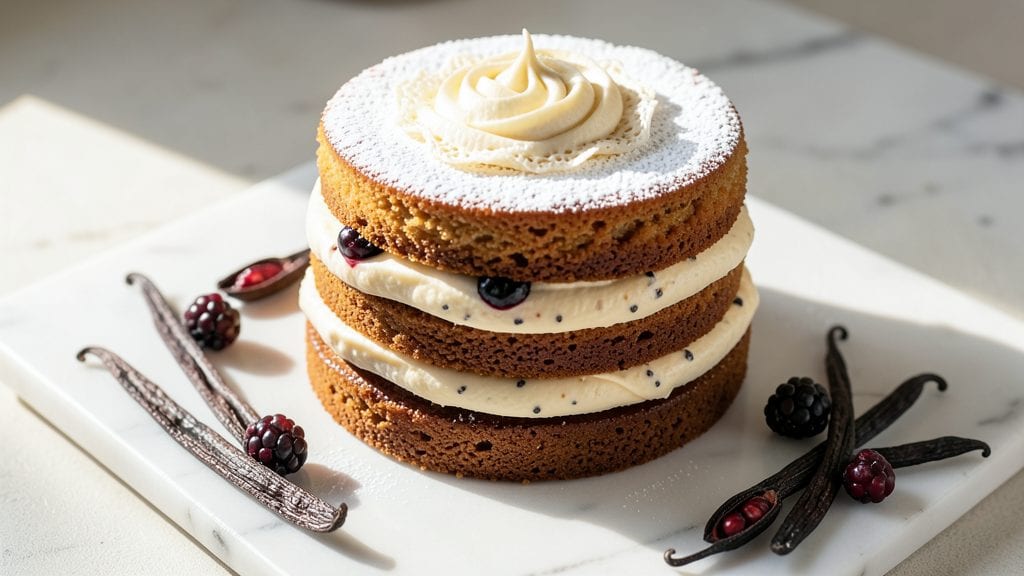
Creating an ultra-moist vanilla cake with velvety layers and vanilla bean frosting is the kind of dessert that transforms any celebration into something truly special. The secret lies in precise ingredient ratios and a gentle folding technique that keeps the crumb tender without being dense.
I've perfected this recipe over years of baking, ensuring every slice delivers that perfect balance of sweetness and richness.
What sets this vanilla cake apart is its foolproof moisture technique, using buttermilk and sour cream to create layers that stay soft for days. The vanilla bean frosting adds a luxurious touch that elevates this from a simple cake to a showstopper dessert.
Whether you're baking for a birthday, holiday gathering, or just because, this recipe delivers professional-quality results every time.
The cake itself bakes up with a golden top and moist interior, while the vanilla bean frosting adds a fragrant, creamy finish that complements the tender crumb.
The combination of warm spices in the cake and the aromatic vanilla in the frosting creates a flavor profile that's both comforting and sophisticated. This is the kind of dessert that makes people ask for seconds.
For added depth, consider incorporating lemon zest into the batter or drizzling a citrus glaze over the top before serving. The possibilities for customization are endless while maintaining that signature moist texture. Let's get started on creating your perfect vanilla cake.
Ingredients for vanila cake
A blend of classic ingredients for a cake that's moist, tender, and packed with vanilla flavor.
| Ingredient | Amount | Notes |
|---|---|---|
| All-Purpose Flour 🌾 | 2 ½ cups | Sifted for even texture |
| Granulated Sugar 🍚 | 2 cups | Superfine for smoother crumb |
| Vanilla Extract 🌿 | 2 tbsp | Pure, high-quality preferred |
| Vanilla Beans 🍫 | 2 whole | Scraped seeds for frosting |
| Unsalted Butter 🧈 | 1 cup | Cold, cubed for creaming |
| Large Eggs 🥚 | 2 whole | Room temperature |
| Buttermilk 🥛 | 1 cup | Fresh, not powdered |
| Sour Cream 🍦 | ½ cup | Full-fat for moisture |
| Baking Powder 🧂 | 2 tsp | Freshly measured |
| Salt 🧂 | ½ tsp | Fine sea salt |
| Ground Cinnamon 🌿 | ½ tsp | Freshly toasted |
| Heavy Cream 🥛 | 1 ½ cups | Cold for frosting |
| Powdered Sugar 🍚 | 3 cups | Sifted for smooth frosting |
The butter is non-negotiable here—use European-style or high-fat American brands like Land O'Lakes or Plugrá for that perfect creaming texture. Vanilla beans make all the difference: Madagascar Bourbon beans from Williams Sonoma or Penzeys deliver the richest flavor. If you're using only vanilla extract, opt for pure Madagascar or Tahitian—the cheaper stuff tastes artificial. For the buttermilk, if you forget to pick some up, mix 1 tbsp lemon juice or vinegar with 1 cup milk and let it sit for 5 minutes. The sour cream adds that signature moisture, so don't skimp—full-fat is worth it for this recipe.
No vanilla beans? Double the vanilla extract and add a pinch of cinnamon to mimic the depth. For the powdered sugar, sift it before whipping the frosting—Domino or C&H brands are reliable, but avoid clumpy store brands. If you're baking in a humid climate, wrap the flour tightly in its bag or transfer it to an airtight container—it absorbs moisture fast. The eggs should be at room temperature for even mixing, so take them out of the fridge 30 minutes before starting. For extra richness, consider adding 1 tbsp lemon zest to the batter, but omit the salt if you're using salted butter (though unsalted is preferred).
This cake stays moist for 3-4 days when wrapped tightly in plastic at room temperature, but for longer storage, freeze the layers (unfrosted) for up to 3 months. The frosting can be made a day ahead and stored in the fridge—just rewhip it briefly before use. For serving, dust with powdered sugar or a sprinkle of toasted cinnamon for extra flair. The vanilla bean seeds in the frosting add a luxurious touch, so don't skip scraping them out—it's worth the extra minute.
Why You'll Love This Recipe
- No Mixer Necessary: Honestly, I’ve made this cake with just a hand mixer, and it still turns out fluffy. The key is creaming that 1 cup cold, cubed unsalted butter with 2 cups superfine sugar until it’s pale and light—no fancy gadgets needed. The rest is just folding in dry ingredients and buttermilk, so it’s honestly unfussy.
- Vanilla Bean Magic: Between us, nothing beats the flavor punch of 2 whole vanilla beans scraped into the batter and frosting. That extract alone is great, but the seeds? They add this deep, complex vanilla note that makes the cake taste like a bakery secret. Trust me, it’s the difference between “nice” and “damn delicious.”
- Frosting That’s Always Ready: I love that this cake’s frosting is foolproof—just 1.5 cups cold heavy cream whipped with vanilla bean seeds, then folded into sifted powdered sugar. It’s creamy but not greasy, and it takes less than 10 minutes to whip up. Need a quick dessert? This frosting makes it happen without fuss.
- Leftover? No Problem: This cake stays moist for 3-4 days wrapped tightly in plastic, so I can make it on Sunday and have perfectly good slices all week. And if you’re prepping for a crowd? Freeze the unfrosted layers for up to 3 months—just thaw overnight and frost when ready. No sad, dry cake here.
Step-by-step instructions for vanilla cake recipe
Here's how to create ultra-moist layers with a velvety vanilla bean frosting every time.
Cream Butter and Sugar for Light Texture
In a stand mixer fitted with the paddle attachment, beat the 1 cup unsalted butter (cold, cubed) with the 2 cups granulated sugar on medium speed for 3-4 minutes. You're looking for a light, fluffy mixture that nearly doubles in volume and becomes pale in color. This creaming process incorporates air, which creates that signature tender crumb.
Scrape down the sides of the bowl with a rubber spatula to ensure even mixing. Here's the thing—you want to avoid overmixing, but don't stop too soon. The butter should be completely smooth and homogenous before adding the next ingredients. If you press a finger into the mixture, it should spring back slowly, indicating proper aeration.
Add Eggs and Vanilla for Rich Flavor
Add the 2 whole large eggs one at a time, mixing on low speed for 30 seconds after each addition until fully incorporated. Then add the 2 tbsp vanilla extract and scrape the seeds from the 2 whole vanilla beans, adding them to the mixture. Mix for another 30 seconds on low speed to combine.
This is where the vanilla flavor really develops. The seeds add depth that extract alone can't match. Make sure the eggs are room temperature—this prevents curdling and ensures smooth incorporation. The mixture should be thick but still pourable at this stage. If it looks too stiff, you can gently fold in 1 tbsp of the 1 cup buttermilk to loosen it slightly.
Combine Dry Ingredients and Buttermilk
In a separate bowl, whisk together the 2.5 cups all-purpose flour, 2 tsp baking powder, 0.5 tsp salt, and 0.5 tsp ground cinnamon. Sift the flour mixture directly into the wet ingredients in three additions, mixing on low speed after each addition just until combined.
Then add the 1 cup buttermilk and 0.5 cup sour cream in two parts, mixing on low speed until just combined. Don't overmix—you should still see a few flour streaks. The dough will be thick and slightly sticky. Here's what I do: I turn off the mixer, grab a silicone spatula, and gently fold everything together by hand to ensure even distribution without developing gluten.
Bake the Cake Layers
Divide the batter evenly between two 8-inch round cake pans (greased and lined with parchment paper). Place the pans in a 350°F oven and bake for 25-30 minutes, or until a toothpick inserted into the center comes out clean. The cake should spring back when gently pressed in the center.
Real talk: your oven might run hot, so start checking at the 20-minute mark. If the tops brown too quickly, tent the pans with aluminum foil. The internal temperature should reach 210°F at the center when done. Let the cakes cool in the pans for 10 minutes, then transfer to a wire rack to cool completely before frosting.
Prepare the Vanilla Bean Frosting
In a medium bowl, whisk together the 1.5 cups heavy cream (cold) and the seeds from the 2 whole vanilla beans (scraped clean). Chill the mixture in the refrigerator for 30 minutes to partially whip.
In a separate large bowl, sift the 3 cups powdered sugar and mix in the 2 tbsp vanilla extract. Gradually add the chilled cream mixture, whisking constantly until smooth and fluffy. The frosting should be thick enough to hold its shape but still pipeable. If it's too stiff, add 1 tbsp of the 1 cup buttermilk at a time until you reach the right consistency.
Pro Tips For Making Vanila Cake
- Test Your Oven Early: Your oven lies—mine always runs hotter than the thermostat says. Slide in a cake pan with a bit of batter at 350°F for 5 minutes first. If it’s browning too fast, lower the temp by 25°F and adjust baking time accordingly. I learned this the hard way when my first batch turned into a sad, overbaked brick.
- Toast That Cinnamon: Freshly toasted cinnamon smells like Christmas morning. Dry-toast ½ teaspoon of ground cinnamon in a small pan over low heat for 30 seconds—just until fragrant—then cool before mixing it into the dry ingredients. The warmth deepens the flavor without burning, and your cake will taste like it came from a bakery.
- Don’t Skip the 10-Minute Rest: The second you pull the cake from the oven, resist the urge to dig in. Let it cool in the pan for 10 minutes—this keeps the layers from cracking when you transfer them to the rack. I know, I know, but trust the process: rushing this step is how you end up with a collapsed center.
- Scrape Those Vanilla Beans Clean: Don’t just eyeball the seeds—split the vanilla beans lengthwise with a sharp knife and scrape every last bit of pulp with the blade. Toss the scraped beans into the frosting for extra flavor, and save the empty pods for tea or infusing sugar. This isn’t the prettiest method, but it’s the tastiest.
Common mistakes when making perfect results
Overmixing the Batter
This is the #1 mistake I see beginners make—and it turns your cake dense instead of tender. Once you add the flour, mix just until the streaks disappear. Overmixing develops gluten, which creates a tough crumb.
I always turn off the mixer after the last flour addition and fold everything together by hand. Your batter should still look slightly lumpy—this ensures that light, airy texture we all love. 💡
Skipping Room-Temp Eggs
Cold eggs curdle easily when mixed with butter and sugar, creating lumps in your batter. Always take your eggs out of the fridge 30 minutes before starting. I use a bowl of warm water to speed this up if I'm in a hurry.
Room-temperature eggs blend smoothly and ensure that velvety texture we're after. Trust me, this small step makes a world of difference.
Underbaking the Cake
Pulling your cake out too soon leads to a gummy center and collapsed layers. Bake until a toothpick comes out clean with just a few moist crumbs—this usually takes 25-30 minutes.
I recommend checking at 20 minutes because ovens vary wildly. If the top browns too fast, cover it with foil to prevent over-browning. Patience here pays off with perfectly moist layers.
Not Scraping Vanilla Beans
Many people skip scraping the vanilla beans, using only the extract. But those tiny seeds pack concentrated flavor and aroma that elevate the frosting. Always split the beans lengthwise and scrape out the seeds with the back of a knife.
I even save the scraped beans for tea later—they're still flavorful! The frosting will taste noticeably richer with this extra step. 🌟
Ignoring the Cooling Process
Cutting into your cake too soon causes it to sink in the middle. Let it cool in the pan for 10 minutes, then transfer to a wire rack. This gradual cooling prevents temperature shock and helps the cake set properly.
I've seen too many cakes collapse because people rushed this step—don't be that person! The wait makes all the difference.
Nutrition facts
Frequently asked questions
Why does my vanilla cake turn out dry?
Dry cakes often result from overbaking or skipping moisture-rich ingredients. This recipe uses buttermilk and sour cream to keep layers tender. Always bake until a toothpick comes out with just a few moist crumbs—not dry. Also, let the cake cool completely before slicing to prevent steam from drying it out.
Can I substitute vanilla extract for vanilla beans?
Yes, but you’ll miss the depth of flavor from the seeds. For every 2 whole vanilla beans called for, use 2 tablespoons vanilla extract—preferably pure Madagascar or Tahitian. Add a pinch of cinnamon to mimic the vanilla bean’s warmth. The frosting will taste slightly different but still delicious.
How do I fix a cake that collapsed after baking?
Collapsed cakes usually happen from overmixing or underbaking. Next time, mix just until the flour disappears and bake until a toothpick shows clean or moist crumbs (not wet batter). If your cake already sank, layer it with frosting to disguise the issue—it’ll still taste amazing!
Can I make the frosting ahead of time?
The vanilla bean frosting keeps well in the fridge for up to 2 days. Just rewhip it briefly before using to restore its fluffiness. Store it in an airtight container to prevent drying. For longer storage, freeze unfrosted cake layers for up to 3 months.
What’s the best way to grease my cake pans?
Use a thin layer of unsalted butter (softened but not melted) and line the bottoms with parchment paper for easy removal. Avoid vegetable oil—it can leave a greasy film. Butter adds flavor and ensures a clean release, especially for delicate layers like this cake.