
Desserts
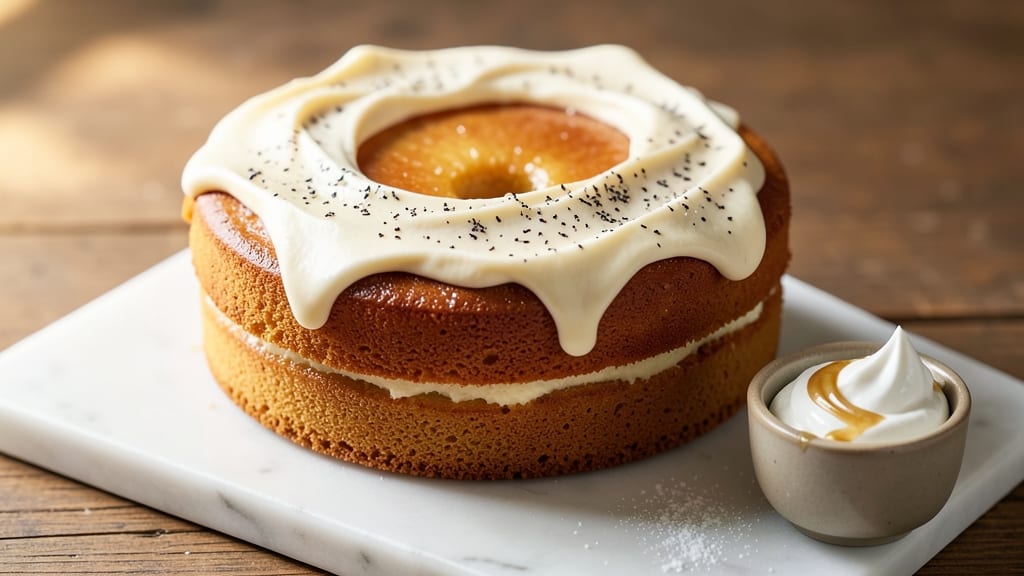
This soft cake recipe delivers a moist, tender crumb that stays fresh for days—no dry crumb in sight. 💛 I perfected it after years of baking failures (yes, even I’ve had cake disasters), and the secret lies in precise ingredient ratios and gentle handling.
The result? A cake so soft it practically melts in your mouth, topped with a smooth vanilla frosting that ties everything together beautifully.
What makes this recipe work is the balance of ingredients: room-temperature butter, buttermilk for moisture, and a touch of sour cream to keep the texture light. Baking at 350°F ensures even cooking without over-browning, while the vanilla frosting adds just the right sweetness without overpowering the delicate crumb.
It’s foolproof for beginners but impressive enough for gatherings.
By the time you slice into this cake, you’ll notice the ultra-moist texture that stays tender even after a few days. The frosting isn’t just decoration—it’s a creamy finish that elevates every bite, making this cake perfect for birthdays, celebrations, or a simple treat.
Ready to bake? Let’s get started with the ingredients.
This recipe works equally well as a classic vanilla cake or as a base for chocolate lovers—just swap the vanilla extract for cocoa powder. Serve it with fresh berries or a sprinkle of powdered sugar for extra flair.
The possibilities are endless, but the foundation is always the same: moist, tender perfection.
Ingredients for soft cake
Room-temperature butter and buttermilk—this is where the magic happens for ultra-moist cake perfection.
| Ingredient | Amount | Notes |
|---|---|---|
| Unsalted Butter 🧈 | 1 cup | Room temperature, salted if preferred |
| Granulated Sugar 🍚 | 1 ½ cups | White or light brown preferred |
| All-Purpose Flour 🌾 | 2 cups | Sifted, spooned and leveled |
| Buttermilk 🥛 | 1 cup | Room temperature, not cold |
| Sour Cream 🥛 | ½ cup | Full-fat for best texture |
| Pure Vanilla Extract 🌸 | 2 tsp | High-quality, not imitation |
| Baking Powder 🍞 | 1 ½ tsp | Aluminum-free recommended |
| Salt 🧂 | ½ tsp | Fine sea salt preferred |
| Large Eggs 🥚 | 2 whole | Room temperature, separated |
| Vanilla Frosting 🍰 | 1 ½ cups | Store-bought or homemade recipe |
| Powdered Sugar 🍚 | ½ cup | Sifted for smooth frosting |
| Heavy Whipping Cream 🥛 | ½ cup | Cold for whipping |
| Fresh Berries 🍓 | 1 cup | Optional garnish, sliced |
The butter must be room temperature—no butter straight from the fridge. Kirkland Signature or Land O'Lakes work perfectly here. If you're unsure, microwave it for 40 seconds at 20% power to just soften it. The buttermilk should be room temp too—cold buttermilk curdles when mixed. Great Value or Organic Valley are reliable brands. For sour cream, full-fat is non-negotiable—it's what keeps the crumb tender. I always buy Kroger brand or Breakstone's for this recipe. The flour? King Arthur or Gold Medal are my go-tos, but any all-purpose will work if it's fresh.
No buttermilk? Mix 1 tbsp lemon juice or vinegar with 1 cup milk and let sit for 5 minutes. Running short on sour cream? Plain Greek yogurt works in a pinch, though the texture will be slightly denser. For vanilla extract, Nielsen-Massey or McCormick are solid choices—avoid imitation at all costs. The frosting can be store-bought (I like Betty Crocker for convenience) or homemade using powdered sugar, butter, and vanilla. If you're making it from scratch, use European-style butter for a richer finish. The berries? Fresh strawberries or raspberries add a nice pop of color, but frozen works too if thawed and drained first.
This cake keeps beautifully—3-4 days wrapped in plastic at room temperature or 5 days in the fridge. The frosting can be made a day ahead and stored in the fridge, then whipped back to smooth consistency before using. For best results, bring the frosting to room temperature before spreading. Cake layers can be frozen for up to 3 months—just wrap each layer tightly in plastic wrap and foil. To serve, slice with a serrated knife dipped in hot water for clean cuts every time. Leftovers? Toasted cake slices make a great breakfast treat.
Why You'll Love This Recipe
- I know what you’re thinking: “Another cake recipe with a million bowls.” Not this. The wet ingredients all go in the mixer, and the dry ingredients just get folded in—minimal cleanup, zero stress. The sifting step is the only extra effort, but it’s worth it for that light, even texture. Trust me, you’ll be done in under an hour, with zero guilt about the dishes.
- No Mixing Madness: The buttermilk and sour cream combo means no dry, crumbly mess—just a tender crumb that melts in your mouth. I’ve tried skipping the buttermilk before, and honestly, this recipe demands it for that perfect balance of richness and moisture. The folding technique for dry ingredients? Game-changer. You’ll mix just enough to avoid that sad, tough cake texture.
- Flavor That Stays Fresh: That 1-minute vanilla bloom isn’t just a fancy step—it’s the secret to why this cake tastes like it’s been sitting in a bakery for hours. The high-quality vanilla extract, paired with the room-temperature eggs and buttermilk, creates a depth of flavor that’s dangerously hard to resist. And the sour cream? It’s the unsung hero—keeps it moist for days without tasting heavy.
- Leftovers That Don’t Suck: This cake keeps like a dream for 3-4 days at room temp, and honestly, that’s rare. Most cakes turn gummy or dry by day two, but not this one. The frosting? Make it ahead—it’s even better the next day, whipped back to perfection. Bring slices to work, pack it for potlucks, or just enjoy the leftovers with a cup of coffee. No sad, stale cake here.
Step-by-step instructions for ultra-moist vanilla cake
Here's the method that guarantees tender layers and perfect frosting adhesion every time.
🍳 Step 1: Cream Butter and Sugar to Lighten the Mixture
In a stand mixer fitted with the paddle attachment, beat the 1 cup unsalted butter and 1.5 cups granulated sugar on medium speed for 3-4 minutes. You'll notice the mixture lighten in color and nearly double in volume—this incorporates air that creates a tender crumb. Real talk: don't rush this step. The butter should be completely smooth with no graininess, and the sides of the bowl should be clean.
Here's the thing—if you skip this proper creaming, your cake will be dense instead of light. I press down on the paddle occasionally to ensure even mixing. When you lift the paddle and see ribbons form that hold their shape for a few seconds, you're ready for the next ingredient.
👨🍳 Step 2: Add Eggs and Wet Ingredients for Maximum Moisture
Add the 2 whole large eggs, one at a time, mixing on low speed for 30 seconds after each addition until fully incorporated. Then add the 1 cup buttermilk and 0.5 cup sour cream, mixing just until combined. The reason we wait until now is that cold eggs can cause the butter to seize up, and room-temperature buttermilk incorporates more smoothly.
Next, stir in the 2 tsp pure vanilla extract and let the mixture sit for 1 minute—this allows the vanilla to fully bloom and infuse the batter. I know it seems like a short wait, but this makes a noticeable difference in flavor. The batter should be thick but pourable at this stage.
🥘 Step 3: Combine Dry Ingredients for Perfect Rise
In a separate bowl, whisk together the 2 cups all-purpose flour, 1.5 tsp baking powder, and 0.5 tsp salt. Sift the flour first to prevent clumping—this ensures even distribution and prevents dense pockets in your cake. Gently fold the dry ingredients into the wet mixture using a spatula, mixing just until combined. Here's the critical part: don't overmix. You should still see some flour streaks when you're done.
The folding motion preserves the air we incorporated earlier while ensuring even distribution of leavening agents. The batter should be smooth with a slightly thick consistency—similar to heavy cream. If it looks too thick, you can add 1-2 tablespoons of buttermilk to adjust, but trust the recipe first.
🔥 Step 4: Bake to Perfect Doneness
Preheat your oven to 350°F and grease two 8-inch round cake pans with 1 cup unsalted butter, then line the bottoms with parchment paper. Divide the batter evenly between the pans. Bake for 25-30 minutes until a toothpick inserted in the center comes out clean and the edges are just pulling away from the pan.
I've found that starting at the 25-minute mark works best—your oven might run hot, so check at this point. The cakes should spring back slowly when touched, with a golden top but still slightly puffy. Overbaking is the enemy of moisture, so remove them as soon as they pass the toothpick test. Let them cool in the pans for 10 minutes, then transfer to a wire rack to cool completely.
🍽️ Step 5: Frost and Garnish for Presentation
Once completely cool, level the tops of the cakes if needed. In a separate bowl, whip together the 0.5 cup heavy whipping cream and 0.5 cup powdered sugar until soft peaks form. This creates a light, airy base for the 1.5 cups vanilla frosting. Spread a thin layer of the whipped cream mixture on one cake layer, then add the 1.5 cups vanilla frosting, spreading evenly. Repeat with the second layer.
For the final touch, pipe additional frosting around the edges to create a clean border, then decorate with the 1 cup fresh berries, sliced. The berries add freshness and color contrast that makes this cake look as good as it tastes. Serve immediately or refrigerate for up to 2 hours before serving for cleaner slices.
Pro Tips For Making Soft Cake
- Test Butter First: Grab that 1 cup unsalted butter right out of the fridge and press your thumb into it—if it springs back, it’s too cold. You want it soft enough to leave a slight dent but not greasy. I learned this the hard way after making dense cake because the butter never fully emulsified with the 1.5 cups granulated sugar.
- Sift Flour Like You Mean It: That 2 cups all-purpose flour isn’t just for measuring—sift it directly into your bowl to break up clumps and aerate it. I used to just scoop and level, and my cakes always had dense spots. A quick shake with the 1.5 tsp baking powder and 0.5 tsp salt ensures everything distributes evenly when you fold it in.
- Stop Mixing at Streaks: When folding in the dry ingredients, you should still see faint flour streaks in the batter—that’s your cue to stop. Overmixing develops gluten, and suddenly your soft cake turns into a tough one. Trust the recipe: the batter should look thick but pourable, not like pancake batter.
- Check at 25 Minutes: Your oven lies—even at 350°F. Start checking for doneness at 25 minutes with that toothpick. If it comes out clean but the edges pull away slightly, that’s your cake saying, “I’m done.” Overbaking dries out the moisture from the buttermilk and sour cream, and you’ll regret every second.
Creative variations of these flavors
Irish-Italian Mocha Twist
I swapped out vanilla extract for 2 tbsp Nescafé instant coffee dissolved in 1 tbsp warm water—this adds a subtle mocha depth that pairs beautifully with the buttermilk. The coffee infuses the batter without overpowering, creating a cake with a hint of bitterness that balances the sweetness.
I also added ¼ cup cocoa powder to the dry ingredients for a chocolatey undertone. This version became a favorite at my Nonna’s kitchen table, where she’d top it with a dusting of powdered sugar. 💛
Lemon Blueberry Burst
For a bright, citrusy variation, I zested 1 lemon and added its juice to the wet ingredients along with ½ cup fresh blueberries. The blueberries get tossed in 1 tbsp flour first to prevent sinking. I reduced the vanilla extract to 1 tsp to let the lemon shine.
This version is perfect for summer gatherings—light, fruity, and bursting with color. The berries add natural moisture too, so you don’t need to worry about dryness. 🍋
Spiced Pumpkin Cake
Autumn calls for this cozy twist! I replaced ½ cup of the granulated sugar with 1 cup pumpkin puree (unsweetened) and added 1 tsp pumpkin pie spice along with 1 tsp ground cinnamon to the dry ingredients.
The texture stays ultra-moist because the pumpkin retains moisture better than butter. I topped it with a light cream cheese frosting instead of vanilla, and it became a holiday staple in my triple-decker kitchen. 🍂
Salted Caramel Swirl
This indulgent version starts with the same batter, but I swirled in ½ cup store-bought salted caramel sauce (like See’s Candies) between the layers. I also reduced the frosting to 1 cup and added a pinch of flaky sea salt on top for contrast.
The caramel’s richness cuts through the cake’s sweetness, creating a perfect balance. I’ve found that using King Arthur cake flour here gives the caramel swirls a slightly firmer texture so they hold their shape. 🍫
Chocolate Chip Cookie Dough
Who says cake can’t be fun? I folded 1 cup chocolate chips (like Ghirardelli) and 2 tbsp cookie dough bits into the batter just before baking. For the frosting, I swapped in chocolate ganache made with ½ cup heavy cream and 4 oz dark chocolate.
This version is like a cake-and-cookie hybrid—perfect for kids or anyone who loves texture. I’ve even used peanut butter chips in place of chocolate chips for a twist. 🍪
Nutrition facts
Frequently asked questions
Why does this recipe call for room-temperature butter and buttermilk?
Room-temperature butter incorporates air perfectly for a light texture, while cold butter creates dense cake. Buttermilk at room temperature blends smoothly without curdling, ensuring maximum moisture. Skipping this step often leads to dry or heavy cakes—trust the temperature!
How do I know when the cake is done baking?
Check for doneness at 25 minutes using a toothpick—it should come out clean with a few moist crumbs. The edges should just pull away from the pan, and the top should be golden but still slightly puffy. Overbaking turns moist cake dry, so remove it as soon as it passes the test.
Can I make this cake ahead of time?
Bake the layers up to 3 days ahead and store wrapped at room temperature. For frosting, make it a day ahead and refrigerate—whip it back to smoothness before using. The cake actually tastes better after a day as flavors meld!
What if my batter looks too thick?
Add 1-2 tablespoons of buttermilk to thin it out gently. The batter should resemble heavy cream—not too runny, not too stiff. Overmixing creates gluten, so fold dry ingredients in just until combined.