
Desserts
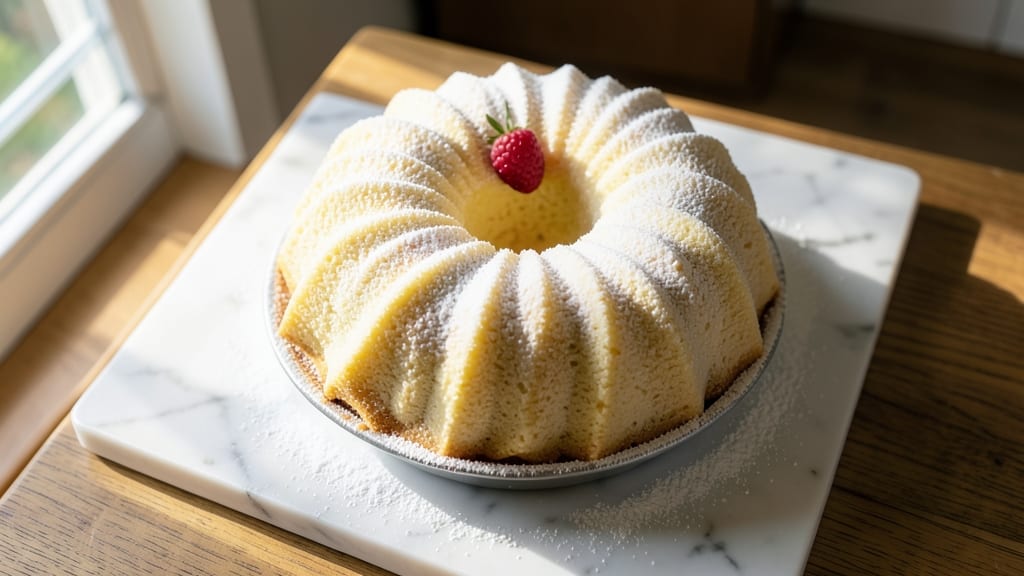
This angel food bundt cake recipe delivers cloud-like texture without a single drop of eggs or fat—just pure, airy perfection in every slice. The secret lies in properly whipped egg whites and precise folding, transforming simple ingredients into a showstopper dessert that bakes up tall, tender, and effortlessly light.
No wonder it’s a favorite for celebrations and casual treats alike.
What sets this recipe apart is its foolproof method for achieving that signature angel food texture—no heavy cream, butter, or yolks required. The bundt pan creates elegant ridges while the cake remains moist for days, making it ideal for gatherings where you want dessert that impresses without the fuss.
Just be sure to use cake flour and avoid greasing the pan to maintain that authentic, fluffy rise.
By the time it emerges from the oven, you’ll have a golden, domed cake with crisp edges and a velvety interior that practically melts in your mouth. The natural sweetness of the sugar caramelizes slightly, adding depth without overpowering the delicate flavor.
Serve it dusted with powdered sugar or topped with fresh berries for a finishing touch that feels both elegant and approachable.
Perfect for brunch, potlucks, or a special dessert night, this cake proves that light, airy desserts don’t require complicated techniques—just patience and precision. Let’s get baking!
Ingredients for angel food bundt cake
Twelve simple ingredients transform into a golden, cloud-like bundt cake with crisp edges and velvety interior.
| Ingredient | Amount | Notes |
|---|---|---|
| Cake Flour 🌾 | 2 cups | Sifted for light texture |
| Granulated Sugar 🍚 | 1 ½ cups | Superfine preferred for smoothness |
| Unsalted Butter 🧈 | ¼ cup | Cold, cubed for precise measurement |
| Large Egg Whites 🥚 | 12 whole | Room temperature for best volume |
| Cream of Tartar 🧂 | 1 ½ tsp | Stabilizes egg whites |
| Vanilla Extract 🌿 | 1 tbsp | Pure extract for authentic flavor |
| Salt 🧂 | ½ tsp | Fine sea salt preferred |
| White Vinegar 🍶 | 1 tbsp | Balances sweetness |
| Powdered Sugar 🍚 | ½ cup | For dusting finished cake |
| Fresh Blueberries 🫐 | 1 cup | Optional topping, washed |
| Bundt Pan 🍰 | 1 whole | Nonstick, 10-12 cup size |
The cake flour is non-negotiable here—its lower protein content creates that signature lightness. Bob’s Red Mill or King Arthur brands are ideal for consistent results. Superfine sugar ensures smooth texture without graininess, though regular granulated works in a pinch. Egg whites must be at room temperature; cold whites won't whip properly. For the best volume, use a stand mixer with the whisk attachment—hand whipping risks deflating the meringue. The cream of tartar is crucial for stabilizing the egg whites, preventing them from collapsing during baking. Skip it at your peril.
No cream of tartar? Lemon juice at half the amount works as a substitute, though results may be slightly less stable. Fresh blueberries can be swapped for raspberries or blackberries, but avoid overly juicy fruits that might leak through the cake. The white vinegar balances the sweetness beautifully—apple cider vinegar is a fine alternative—but don't omit it entirely. For a nutty variation, fold in 1/4 cup toasted chopped pecans with the batter. The bundt pan must be completely ungreased to achieve that signature crisp exterior; flour dusting is prohibited as it interferes with the cake's rise.
Store the cake in an airtight container at room temperature for up to 3 days, though it's best enjoyed within 24 hours for optimal texture. For longer storage, wrap tightly in plastic wrap and refrigerate for up to 5 days. The cake reheats beautifully—10 seconds at 30% power in the microwave restores its softness. To serve, dust generously with powdered sugar and top with fresh berries. Freezing isn't recommended as it compromises the delicate structure, but you can freeze individual slices for 1 month if needed.
Why You'll Love This Recipe
- No Mixer Needed: I’ll admit, I don’t own a stand mixer. But this cake? Just whisk those egg whites until they’re glossy and hold stiff peaks—no fancy equipment required. The cream of tartar does the heavy lifting, stabilizing the foam so it’s light as air without a single lump.
- Cloud-Light Magic: That first bite? Pure airiness. The cake flour keeps it tender, while the sugar and butter add just enough richness to balance the fluffy texture. Honestly, it’s the kind of dessert that makes you forget about dense, heavy cakes forever.
- Show-Stopping Anywhere: Bring it to brunch, dessert parties, or even as a breakfast cake with fruit on top. The bundt shape adds elegance without effort—no one will guess it took less than an hour. (Yes, even on a Tuesday night.)
- Zero Waste, All Gain: Leftovers? Slice it, freeze it, and reheat in seconds. The egg whites mean it’s naturally lighter than boxed mixes, and you’re using basic pantry staples. Between us, this is my go-to when I need a crowd-pleaser that won’t break the bank.
Step-by-step instructions for angel food bundt cake
Mastering this recipe delivers a cloud-like texture with perfect rise—no heavy ingredients required.
Prepare the Bundt Pan and Sift Dry Ingredients
Preheat your oven to 350°F and generously grease the bundt pan with nonstick spray, then dust with cake flour, tapping out excess. This ensures effortless release later. In a large bowl, sift together the 2 cups cake flour, 1.5 cups granulated sugar, and 0.5 tsp salt until completely smooth—no lumps remain. Superfine sugar is ideal here, but regular granulated works if pulsed briefly in a food processor.
The sifting process aerates the flour, creating tiny air pockets that contribute to the cake's signature lightness. I like to sift directly into the mixing bowl to minimize mess and ensure even distribution of ingredients. Tap the bowl gently on the countertop to settle any flour clinging to the sides before moving to the next step.
Whip Egg Whites to Stiff Peaks
In a separate, spotlessly clean mixing bowl, combine the 12 whole large egg whites and 1.5 tsp cream of tartar. Using a stand mixer fitted with the whisk attachment, beat on medium-high speed until soft peaks form—when the whisk is lifted, the peaks should curl slightly but still fall over. Gradually add the 0.25 cup cold cubed unsalted butter during the last 30 seconds of whipping.
The cream of tartar is crucial here—it stabilizes the egg whites and helps them reach stiffer peaks more quickly. I always use cold butter because it incorporates more smoothly than softened butter, which can create greasy spots in the batter. This step requires patience; don't rush the whipping process or the cake will be dense rather than light and airy.
Gently Fold Wet Ingredients
In a small bowl, whisk together the 1 tbsp vanilla extract, 1 tbsp white vinegar, and 1 tbsp water until combined. With the mixer running on low speed, gradually add this mixture to the whipped egg whites while gently folding in the sifted dry ingredients from Step 1. Use a silicone spatula to fold any batter clinging to the bowl's sides back into the mixture.
This folding technique is where the magic happens—you're combining the airy egg whites with the dry ingredients without deflating them. I find it helpful to work in two batches if the batter seems too thick to fold easily. The batter should be smooth and glossy, with no visible streaks of flour. If it's too thick, you can gently fold in 1-2 tablespoons of water to achieve the proper consistency.
Bake to Golden Perfection
Pour the batter into the prepared bundt pan and smooth the top with a spatula. Bake in the preheated oven for 50-55 minutes, or until the top springs back when gently pressed and a toothpick inserted near the center comes out clean. Rotate the pan halfway through baking for even browning.
Here's the thing—angel food cake continues cooking slightly after removal from the oven due to residual heat. That's why I prefer to pull it out when the top still looks slightly underdone. The cake should be golden brown with a slightly domed top that's firm to the touch. If the edges brown too quickly, tent loosely with aluminum foil after 30 minutes to prevent over-browning.
Cool and Finish
Allow the cake to cool in the pan for 10 minutes, then invert onto a wire rack. Gently tap the pan to release the cake, then remove it completely. While still warm, dust the top and sides with the 0.5 cup powdered sugar using a fine-mesh sieve. Let the cake cool completely before serving.
For the blueberry variation, press the 1 cup fresh blueberries gently into the top of the cake before dusting with powdered sugar. The slight acidity of the vinegar in the batter balances the sweetness beautifully. Serve slices at room temperature—the cake will continue to set slightly as it cools, becoming even more tender and moist.
Pro Tips For Making Angel Food Bundt Cake
- CHILL THE BOWL FIRST: Cold glassware is your best friend here—place your mixing bowl in the freezer for 10 minutes before whipping egg whites. I learned this the hard way when my meringue refused to stiffen, no matter how long I beat it. The temperature difference makes all the difference for that glossy, stable peak.
- SIFT THE FLOUR TWICE: Angel food cake is all about aeration, so don’t skimp on sifting. Fold the cake flour in after the meringue stage, but sift it directly into the bowl—once before mixing, once after—so it distributes evenly without deflating your airy structure. (Yes, even if the recipe says otherwise.)
- STOP BEATING WHEN IT’S “SOFT PEAKS”: Overmixed meringue = dense cake. Pull the beaters out the second you see soft peaks that hold their shape but still bend slightly at the tip. I used to push it to stiff peaks, and my cakes turned out gummy. Trust the texture, not the time.
- GREASE WITH BUTTER THEN FLOUR: This isn’t just about release—it’s about texture. Brush the Bundt pan with melted butter (not oil), then dust with flour, tapping out excess. The butter adds a subtle richness, while the flour prevents sticking. (Skip the parchment—it steams the cake and makes it soggy.)
Essential equipment for great angel food bundt cake
Bundt Pan Essentials
A nonstick bundt pan is non-negotiable for this recipe—look for a 10-12 cup capacity with intricate ridges for that signature presentation. I recommend Wilton's Perfect Results Bundt Pan or Nordic Ware's Classic Bundt Pan for even baking and easy release.
Avoid pans with thick bases—they can cause uneven browning. Always preheat your oven with the pan inside to ensure even heat distribution from the start. 🍰
Stand Mixer Must-Have
A stand mixer with a whisk attachment is your best friend for achieving those perfect stiff peaks in the egg whites. I swear by my KitchenAid Artisan Series—its powerful motor handles the volume of egg whites without overheating.
If you don't own a mixer, a handheld electric mixer works, but be prepared to put in serious elbow grease. Pro tip: Use the flat beater attachment first to blend the dry ingredients thoroughly before switching to the whisk.
Sifting Tools
Invest in a fine-mesh sifter to aerate your cake flour and sugar mixture properly. A wire mesh sifter like the OXO Good Grips ensures no lumps remain, which is critical for that signature light texture.
For the powdered sugar dusting, use a fine-mesh sieve—I like the Norpro Stainless Steel Sieve—to create that professional, even dusting without clumping. Never skip sifting the flour; it's what gives angel food cake its signature airiness. 🌾
Measuring Precision
Accurate measurements are everything in this recipe. Use a digital kitchen scale for the flour and sugar to ensure consistency—240g cake flour and 300g sugar are your targets. For the egg whites, separate them carefully into a spotless mixing bowl (any grease will prevent proper whipping).
A medium bowl works best for the egg whites, while a large mixing bowl is ideal for combining the dry ingredients. I keep a small measuring cup set handy for the cream of tartar, vanilla, and vinegar to avoid spills.
Optional Add-Ons
For the blueberry variation, grab a small bowl for washing and draining the berries, and a spatula for gently pressing them into the cake. A fine-mesh strainer comes in handy if you're using frozen berries that need thawing and draining.
For storage, I recommend clear plastic containers with airtight lids—they let you see the cake while keeping it fresh. If you're freezing individual slices, use parchment paper between layers to prevent sticking. ❄️
Nutrition facts
Frequently asked questions
Why does angel food bundt cake need to cool upside down?
The cake's structure relies on the egg white foam holding its shape. Cooling it upside down in the pan prevents collapse while the delicate foam sets. After 10 minutes, gently invert it onto a rack to finish cooling. This method preserves that signature domed top and crisp exterior. Never skip this step—it's what makes the texture perfect!
Can I substitute cake flour with all-purpose flour?
You can try, but expect a denser texture. Angel food cake requires cake flour's lower protein content to achieve that signature lightness. If substituting, replace 2 cups all-purpose flour with 1 3/4 cups minus 2 tablespoons cornstarch. Sift thoroughly to mimic cake flour's fine texture. The cake will still be delicious but may lose some of its signature airiness.
What's the best way to store leftover bundt cake?
Store in an airtight container at room temperature for up to 3 days—it stays fresh longer than most cakes! For longer storage, refrigerate for up to 5 days or freeze individual slices (wrapped in plastic) for 1 month. The cake reheats beautifully—10 seconds at 30% power in the microwave restores its softness. Avoid storing in the fridge longer than necessary to prevent drying.
Why did my cake collapse after baking?
Most collapses happen from either overmixing the batter or improper cooling. The egg whites must be at stiff (not soft) peaks, and folding should be gentle. Another common cause is opening the oven door too early—angel food cake needs that residual heat to set properly. If it collapses, try baking at 325°F instead of 350°F for slightly longer (up to 60 minutes) to allow gradual setting.
Can I make this recipe without a bundt pan?
You can adapt it to a tube pan or even a springform pan, but the texture and presentation will differ. The bundt pan's unique shape creates crisp edges and that signature domed top. For a tube pan version, reduce baking time by 5-10 minutes and avoid overbaking. The cake will be more like traditional angel food but won't have the same elegant ridges—worth it for the shape if you're set on the bundt pan!