
Desserts
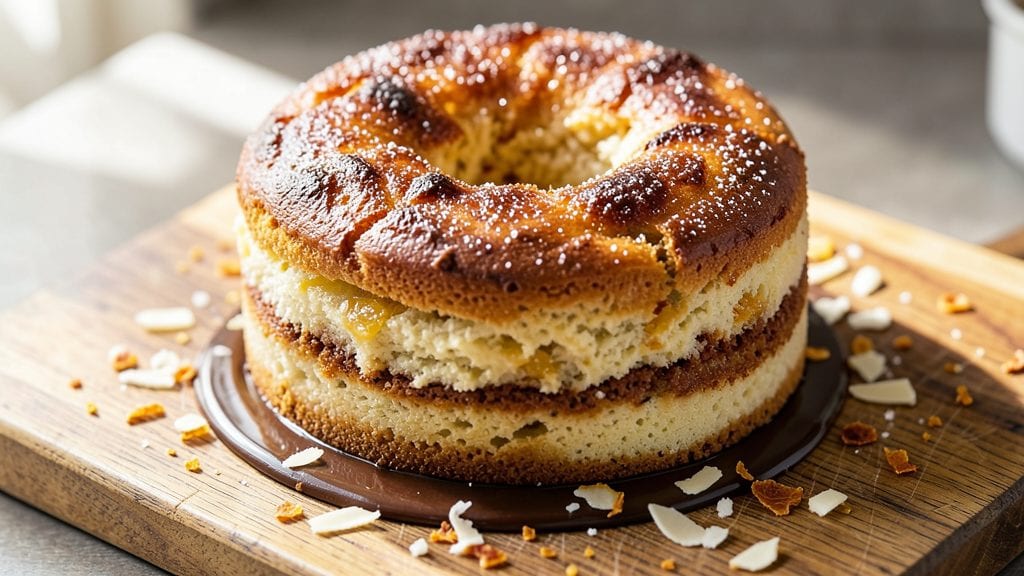
This Panettone cake recipe transforms a traditional Italian holiday dessert into a showstopping centerpiece with its signature soft crumb and candied fruit crown. 🌟 The secret lies in precise yeast fermentation—two rises create that signature airy texture, while candied fruit and chocolate add festive flair.
Perfect for Christmas or Easter celebrations, this recipe delivers restaurant-quality results with a home-baked touch.
What sets this apart is the balance between technique and tradition. The dough requires patience—4 hours of total time—but the process is straightforward once you understand the key stages: mixing, first rise, shaping, second rise, and baking at 350°F for golden perfection.
Every step ensures a tender crumb and even browning, while the candied fruit crown adds a decorative yet functional element.
The result is a cake that’s both visually stunning and irresistibly delicious—soft, buttery layers with bursts of citrusy candied fruit and rich chocolate accents. This isn’t just dessert; it’s a celebration in every bite, designed to impress guests or elevate your holiday table.
The cultural roots run deep, but the execution is simple enough for home bakers.
Whether you stick to the classic version or experiment with modern fillings like Nutella or mascarpone, this recipe adapts beautifully while keeping its signature charm. Ready to bake tradition with a modern twist? Let’s get started.
Ingredients for panettone cake
Precision and patience transform simple pantry staples into a showstopping holiday centerpiece.
| Ingredient | Amount | Notes |
|---|---|---|
| Active Dry Yeast 🍞 | ¼ tsp | Proofed in warm milk |
| Granulated Sugar 🍚 | ½ cup | Divided for dough and glaze |
| Unsalted Butter 🧈 | 1 cup | Cold, cubed, full-fat preferred |
| Large Eggs 🥚 | 2 whole | Room temperature, separated |
| All-Purpose Flour 🌾 | 3 ½ cups | Sifted, plus extra for dusting |
| Baking Powder 🧂 | 1 tsp | Aluminum-free preferred |
| Salt 🧂 | ½ tsp | Diamond Crystal kosher |
| Orange Zest 🍊 | 1 tbsp | Freshly grated, organic preferred |
| Vanilla Extract 🌿 | 1 tsp | Pure Madagascar bourbon |
| Heavy Cream 🥛 | ½ cup | Cold, for candied fruit |
| Candied Citrus Peel 🍋 | 1 ½ cups | Homemade or store-bought |
| Dark Chocolate Chips 🍫 | 1 cup | 70% cacao, Valrhona preferred |
| Powdered Sugar 🍚 | ½ cup | For glaze, sifted |
| Milk 🥛 | ½ cup | Warm, for yeast activation |
The yeast is non-negotiable—Saf-Instant or Red Star ensure reliable fermentation. Proof it in warm milk (110°F) for 5-10 minutes until foamy. For flour, King Arthur or Gold Medal yield the best texture. The candied citrus peel? Homemade is ideal—simmer orange, lemon, and grapefruit peels in sugar syrup for 45 minutes—but Trader Joe's pre-made works in a pinch. Chocolate chips should be 70% cacao minimum; Valrhona or Lindt elevate the final product.
No vanilla extract? Seeds from a pod work, but bourbon vanilla adds depth. For a gluten-free adaptation, swap flour for King Arthur GF blend (reduce by 15%). Substitute heavy cream with Greek yogurt for richness, though texture may vary. The candied fruit can be omitted entirely if you prefer a classic butter cake—simply reduce sugar by 0.25 cup. For a modern twist, fold in Nutella or mascarpone between layers, though traditionalists may balk at the departure from tradition.
Store the dough in an airtight container at room temperature for up to 24 hours before shaping. Once baked, keep the cake at room temperature for 2 hours before slicing to allow the crumb to set. For longer storage, wrap tightly in plastic and refrigerate for up to 5 days—bring to room temperature before serving. The candied fruit crown can be prepped 3 days ahead and stored in the fridge, saving time on decorating day.
Why You'll Love This Recipe
- No-Fuss Assembly: I love that this cake lets me mix the dough ahead—up to a full day! Just toss the batter in the fridge, and when you’re ready, pop it in the oven. No last-minute scrambling, just that just-baked aroma filling your kitchen.
- Candied Citrus Crown: The candied citrus peel isn’t just decoration—it’s a burst of sweet-tart flavor in every bite. That 1.5 cups of homemade (or store-bought) peel? It turns the cake’s crown into something special, like a little edible gift wrapped around each slice.
- Double-Layered Comfort: Two layers mean two chances to get it just right—soft, moist, and perfectly balanced. The glaze ties it all together, so even if one layer isn’t perfect, the other saves the day. Plus, it’s the kind of cake that tastes even better the next day.
- Budget-Friendly Luxury: You’d think a cake with dark chocolate chips and candied fruit would break the bank, but honestly? The ingredients are simple, and the results feel like a treat. That 1 cup of Valrhona chocolate? Worth it, but you could even swap for a good-quality store brand and still get that rich, indulgent bite.
Step-by-step instructions for panettone cake
This method delivers a tender crumb with a signature candied fruit crown—every element balanced for perfect texture.
👨🍳 Step 1: Activate the Yeast and Prepare the Dough Base
In a small bowl, combine the 0.5 cup warm milk (110°F) with the 0.25 tsp active dry yeast and let sit for 5-10 minutes until frothy. This step is critical—you'll see tiny bubbles forming when it's ready. In a stand mixer fitted with the paddle attachment, cream the 1 cup cold unsalted butter and 0.25 cup granulated sugar on medium speed until light and fluffy, about 3-4 minutes.
Add the 2 whole large eggs one at a time, mixing well after each addition. Scrape down the sides of the bowl, then add the 1 tbsp orange zest, 1 tsp vanilla extract, and the yeast-milk mixture. Mix until fully incorporated, creating a smooth, pale batter. The reason for adding the zest and vanilla now is to infuse their flavors throughout the dough base before the dry ingredients are introduced.
🍳 Step 2: Incorporate Dry Ingredients and Heavy Cream
In a separate bowl, whisk together the 3.5 cups all-purpose flour, 1 tsp baking powder, and 0.5 tsp salt. With the mixer on low speed, gradually add the dry ingredients to the wet mixture. Mix just until combined—you should still see small streaks of flour. This prevents overdevelopment of gluten, which would make the cake dense.
Reduce the speed to low and add the 0.5 cup heavy cream and 1.5 cups candied citrus peel, mixing until evenly distributed. The heavy cream adds moisture and richness, while the candied citrus peel introduces bursts of sweetness and texture. Fold in the 1 cup dark chocolate chips by hand using a silicone spatula, ensuring even distribution throughout the dough.
🥘 Step 3: Assemble and Bake the Cake Layers
Preheat your oven to 350°F. Grease and flour two 9-inch round cake pans (or one 9x13-inch pan if preferred). Divide the dough evenly between the pans, spreading it into an even layer. Bake for 25-30 minutes or until a toothpick inserted into the center comes out clean. The edges should be golden brown, and the top should spring back gently when touched.
While the layers bake, prepare the glaze by whisking together the remaining 0.25 cup granulated sugar and 0.5 cup powdered sugar with 2-3 tablespoons milk until smooth. This glaze will create a glossy finish and add a touch of sweetness to the crown. Once the layers are baked and cooled, spread the glaze evenly over the top of each layer.
⏰ Step 4: Layer and Chill for Maximum Flavor Development
Allow the baked layers to cool completely in their pans for 10 minutes, then transfer to a wire rack. Once cooled, place one layer on a serving plate and spread a thin layer of the remaining glaze mixture. Top with the second layer, pressing gently to create a seamless surface. The glaze acts as a binder, ensuring the layers stay cohesive.
Refrigerate the assembled cake for at least 2 hours (or overnight) to allow the flavors to meld and the glaze to set. This chilling period is essential for developing the cake's signature texture—soft crumb with a slightly chewy crown. Before serving, garnish with additional candied citrus peel and dark chocolate chips for a festive touch.
Pro Tips For Making Panettone Cake
- Proof Yeast at Room Temp: Skip the fridge—yeast wakes up faster in warm water (105–110°F) for 5–10 minutes. I used to dump cold water straight from the tap and wonder why my dough took forever to rise. Warm water activates it instantly, so your panettone cake won’t start sluggish.
- Cream Butter and Sugar Long: Beat the butter and sugar until pale, fluffy, and ribbon-like—at least 3–5 minutes. This lightens the dough, giving your cake that signature airy texture. I learned this the hard way when my first attempt came out dense and heavy.
- Don’t Overmix the Dough: Once flour hits the bowl, mix just until combined—overworking develops gluten, and your panettone cake will turn out tough. Stop when the dough clumps together; it’ll come together as it rests.
- Use Room-Temp Eggs: Cold eggs won’t blend smoothly into the butter mixture, leaving streaks. Let them sit out for 30 minutes first—your cake’s texture will be creamier, not streaky. (Yes, even if you’re impatient like me.)
Wine and beer pairings for this dish
Italian Wine Pairings
Panettone’s rich, buttery layers and candied citrus peel call for wines that complement its sweetness without overpowering it. A Prosecco DOCG (like La Marca) is my go-to choice—its effervescent bubbles and bright acidity cleanse the palate between bites of chocolate and fruit.
For a still wine, a Pinot Grigio from Friuli-Venezia Giulia, such as Giacomo Conterno, offers crisp citrus notes that echo the panettone’s orange zest. 🍷
Dessert Wine Essentials
If you’re feeling indulgent, a Vin Santo from Tuscany pairs beautifully with panettone’s caramelized notes. This sweet dessert wine, often served with cantucci cookies, enhances the cake’s chocolate and candied fruit flavors. Look for Biondi-Santi for an authentic experience. I always keep a bottle chilled for special occasions.
Beer Options for Balance
A Belgian witbier like Leffe Blond brings a refreshing contrast with its orange peel and spice notes. The subtle sweetness and effervescence cut through the cake’s richness. For a lighter option, a German wheat beer (like Weihenstephaner Hefeweizen) adds a creamy texture that complements the panettone’s soft crumb. 🍺
Regional Italian Pairings
In Lombardy, where panettone originated, locals often pair it with a Lambrusco, a lightly sparkling red wine from Modena. Its fruity, slightly tart profile balances the cake’s sweetness.
For a modern twist, try a Lambrusco Secco (dry version) for a bolder contrast. This pairing feels like a true celebration of Italian tradition.
Coffee and Digestif Alternatives
For a non-alcoholic option, a Venetian espresso with a splash of amaretto (like Disaronno) enhances the cake’s nutty and chocolatey notes. If you prefer something stronger, a Limoncello or Mirabelle cherry liqueur adds a citrusy finish that ties into the candied fruit. Sip slowly to savor every bite.
Nutrition facts
Frequently asked questions
Why does this panettone recipe require two rises?
The two rises—first after mixing and second after shaping—are essential for that signature airy texture. The first rise develops gluten gently, while the second creates the light, fluffy crumb. Skipping either step can result in a dense cake instead of the tender, pillowy texture you want.
Can I substitute store-bought candied citrus peel for homemade?
Store-bought candied citrus peel works perfectly in a pinch. Just ensure it’s finely chopped for even distribution. The homemade version adds extra brightness, but the convenience of pre-made peel makes it a great backup—especially when you’re short on time.
What if my yeast doesn’t activate?
If your yeast doesn’t foam within 5-10 minutes, it may be old or the milk isn’t warm enough (110°F). Try proofing it in slightly warmer water (110-115°F) or use fresh yeast. If all else fails, skip the yeast and use baking powder for a lighter, though less traditional, result.
How do I prevent the cake from sinking in the middle?
Baking at 350°F and avoiding overmixing the dough helps, but the key is letting the cake cool in the pan for 10 minutes before transferring. This allows the center to set evenly. Overbaking can also cause sinking, so check for doneness with a toothpick.
Can I make this cake ahead of time?
Yes! The dough can rest in an airtight container for up to 24 hours before shaping, and the assembled cake tastes even better after 2 hours in the fridge. This chilling time lets flavors meld and the texture perfect—ideal for holiday prep!