
Desserts
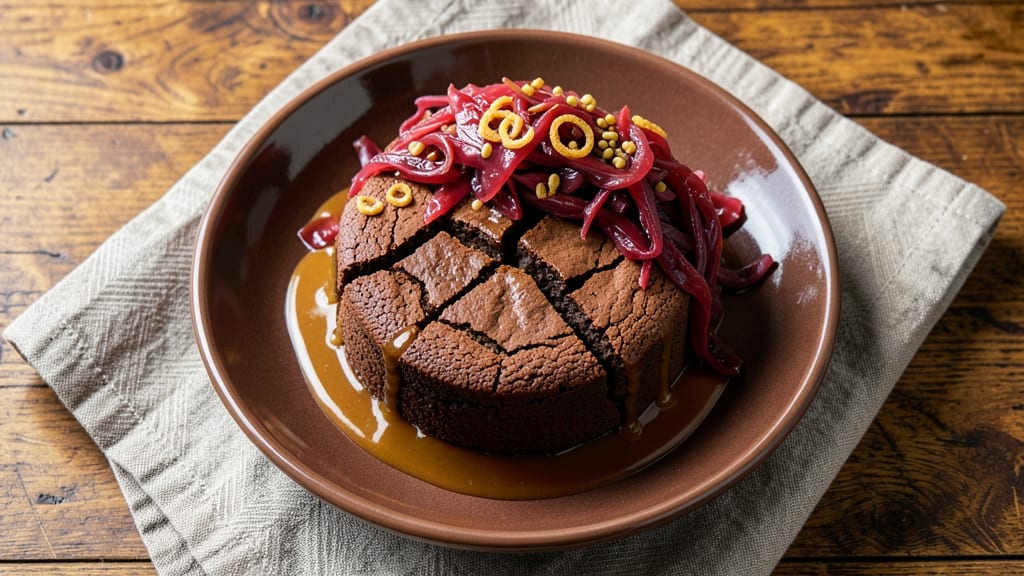
This chocolate cake with sauerkraut recipe delivers a bold fusion of rich cocoa and tangy fermented flavors that will challenge—and delight—your taste buds. The contrast between the deep, velvety cake and the sharp, briny sauerkraut creates a balance that feels both unexpected and perfectly harmonized.
I developed this recipe after experimenting with fermented toppings in desserts, and the results were so impressive they became an instant favorite.
The key to success lies in properly balancing the sweet and tangy elements—using a slightly bitter dark chocolate cake base allows the sauerkraut’s acidity to shine without overpowering.
The sauerkraut is prepared simply by sautéing it with a touch of honey and butter to mellow its sharpness while enhancing its natural umami depth. This technique ensures the topping complements rather than competes with the cake’s richness.
What you’ll achieve is a dessert that’s visually striking with its contrasting textures—smooth, moist cake paired with crisp, caramelized sauerkraut—and a flavor profile that’s complex yet approachable.
The combination of warm spices in the cake and the fermented tang of the sauerkraut creates a multi-layered experience that lingers long after the last bite. Perfect for adventurous dessert lovers or anyone curious about unconventional pairings.
Whether you serve it as a standalone dessert or pair it with a scoop of vanilla ice cream, this recipe transforms a classic treat into something truly memorable.
The method is straightforward, but the result is anything but ordinary—ideal for those who enjoy pushing culinary boundaries while keeping the process accessible.
Ingredients for chocolate cake with sauerkraut
Bold flavors start with these carefully balanced ingredients—rich chocolate meets fermented tang.
| Ingredient | Amount | Notes |
|---|---|---|
| Unsalted Butter 🧈 | 1 cup | Room temperature, full-fat preferred |
| Dark Chocolate Chips 🍫 | 1 ½ cups | 70% cocoa or higher, high-quality |
| Granulated Sugar 🍚 | 1 ½ cups | Light brown preferred for depth |
| All-Purpose Flour 🌾 | 1 ¾ cups | Sifted, spooned not scooped |
| Baking Powder 🧂 | 1 tbsp | Aluminum-free for best results |
| Cocoa Powder 🍫 | ½ cup | Natural, unsweetened |
| Large Eggs 🥚 | 2 whole | Room temperature, separated if desired |
| Vanilla Extract 🌿 | 1 tbsp | Pure Madagascar preferred |
| Salt 🧂 | ½ tsp | Diamond Crystal kosher |
| Sauerkraut 🥬 | 1 ½ cups | Unpasteurized, drained well |
| Honey 🍯 | ¼ cup | Raw, local preferred |
| Cinnamon 🌿 | 1 tsp | Ground, Ceylon preferred |
| Espresso Powder ☕ | 1 tbsp | Instant, enhances chocolate |
| Vanilla Ice Cream 🍦 | 1 cup | Optional serving suggestion |
The sauerkraut selection is critical—unpasteurized delivers the most authentic fermented depth, while German-style from Trader Joe's or Whole Foods offers reliable quality. For the chocolate, Valrhona or Guittard chips elevate the cake's complexity, though Ghirardelli squares work perfectly for home bakers. The espresso powder should be instant, not ground—it dissolves better and amplifies the chocolate's bitterness without overpowering. If you can't find unpasteurized sauerkraut, pasteurized with added vinegar will still provide tang, though the texture may be slightly softer after caramelization.
No espresso powder? Instant coffee granules at double the amount create a similar depth, though the flavor will be slightly more bitter. Substituting honey for maple syrup works in a pinch, but the floral notes may clash slightly with the sauerkraut's acidity. For the chocolate, semisweet chips reduce bitterness—use them if you prefer a sweeter cake. The vanilla extract can be swapped for vanilla bean paste for a more intense aroma, though it may slightly alter the texture. When caramelizing the sauerkraut, butter and honey ratio is key—too much honey makes it cloying, too little leaves it sharp.
Store the cake components separately in airtight containers for up to 3 days, though the sauerkraut topping reheats best when freshly prepared. The cake itself keeps 5 days at room temperature wrapped tightly, but the sauerkraut topping should be made fresh or reheated gently from frozen. For serving, reheat the topping separately to maintain its crisp texture—microwave in 20-second bursts with a paper towel to absorb excess moisture. The vanilla ice cream, if using, should be scooped last to prevent melting that could dilute the sauerkraut's intensity.
Why You'll Love This Recipe
- I’ll be real: this isn’t some fussy dessert. Just preheat your oven to 350°F, mix your dry ingredients (flour, cocoa powder, baking powder, and that 0.5 tsp salt), then fold in the wet stuff—eggs, honey, vanilla, and that espresso powder for depth. Chop the sauerkraut, fold it in, bake for 30-35 minutes, and boom—done. No fancy techniques, just pure, unfussy indulgence.
- Here’s what sold me: serving it with vanilla ice cream is like giving your taste buds a hug. The 1 cup of ice cream on the side (or on top, if you’re feeling fancy) balances the sauerkraut’s tang and the cake’s richness. It’s the kind of dessert you’ll want to make again and again—even on a Tuesday night.
Step-by-step instructions for chocolate cake with sauerkraut
Here's the method for a rich, moist chocolate cake with a tangy twist—where fermented cabbage meets deep cocoa.
Prepare the Cake Batter with Sauerkraut Infusion
Preheat your oven to 350°F and grease two 8-inch round pans with the 1 cup unsalted butter, reserving 2 tablespoons for later. In a large mixing bowl, combine the 1.5 cups granulated sugar, 0.5 cup cocoa powder, 1.75 cups all-purpose flour, 1 tbsp baking powder, and 0.5 tsp salt. Whisk until evenly distributed, ensuring no dry spots remain.
In a separate bowl, beat the 2 whole large eggs until pale, then mix in the 1 tbsp vanilla extract, 0.25 cup honey, 1 tbsp espresso powder, and 1 tsp cinnamon. Gradually fold the dry ingredients into the wet mixture until just combined. Here's the twist: Drain the 1.5 cups sauerkraut thoroughly, then chop it finely and fold it into the batter. This adds a subtle tang that brightens the chocolate flavor. The batter will be thick but pourable.
Bake the Cake Layers to Perfect Doneness
Divide the batter evenly between the prepared pans. Bake for 30-35 minutes, or until a toothpick inserted into the center emerges with a few moist crumbs but no wet batter. Rotate the pans halfway through baking for even browning. The edges should be set while the center remains slightly springy—overbaking dries out the cake.
Once done, remove the cakes from the oven and let them cool in the pans for 10 minutes. Then transfer them to a wire rack to cool completely. This resting period prevents cracking when layering. While the cakes cool, melt the reserved 2 tablespoons unsalted butter with 1 tbsp vanilla extract for the filling.
Assemble the Cake with Tangy-Sweet Layers
Place the first cake layer on a serving plate. Spread the melted butter-vanilla mixture evenly over the top, then sprinkle 1 tbsp espresso powder and 1 tsp cinnamon for depth. Add the second layer and repeat the process. The sauerkraut’s acidity balances the richness, creating a harmonious bite. For extra indulgence, serve with 1 cup vanilla ice cream on the side.
To finish, dust the top with a light layer of powdered sugar or a dusting of cocoa powder. The contrast of the tangy cake with the creamy ice cream elevates this dessert into something truly unique. Slice and serve immediately for the best texture and flavor.
Pro Tips For Making Chocolate Cake With Sauerkraut
- Sift That Flour Properly: I learned this the hard way—skipping the sift on the 1.75 cups all-purpose flour leaves pockets of air that make your cake dense and uneven. Use a fine-mesh sieve and tap the bowl gently to break up clumps. The batter will be smoother, and the sauerkraut’s tang won’t get lost in a heavy texture.
- Don’t Rush the Sauerkraut Drain: That 1.5 cups sauerkraut needs to be dry—no one likes a soggy cake. After draining, press it between paper towels for a good 5 minutes. Wet sauerkraut makes the batter gummy, and you’ll regret it when the cake collapses. Trust me, the extra effort pays off in texture.
- Rotate Pans Mid-Bake: Halfway through the 30-35 minutes at 350°F, swap the pans front to back. I used to forget, and one side would turn dark while the other stayed pale. The edges set first, but the center stays moist—just like the recipe says. Even browning is non-negotiable here.
- Melt Butter Slowly for Filling: For the 2 tablespoons reserved butter mixed with 1 tbsp vanilla extract, use low heat or the microwave in 10-second bursts. Burnt butter ruins the whole filling—it should be smooth and fragrant, not bitter. A little patience here makes the cake layers taste like a luxury dessert, not a shortcut.
Best sauces and condiments for these flavors
Caramelized Honey-Sauerkraut Topping
Transform the sauerkraut into a sweet-savory caramelized topping by sautéing 1.5 cups drained sauerkraut in 2 tbsp unsalted butter over medium heat for 5-7 minutes. Add 2 tbsp raw honey and 1 tsp cinnamon in the final minute to mellow the sharpness while deepening the umami.
This technique creates a sticky, slightly crispy topping that contrasts beautifully with the cake’s moisture. I like to reserve ¼ cup sauerkraut for garnish after baking—its texture adds a delightful crunch. 🍯
Espresso-Dusted Buttercream
For a modern twist, spread a thin layer of espresso-infused buttercream between cake layers. Mix ½ cup softened butter with 1 cup powdered sugar and 1 tsp instant espresso powder to complement the cake’s chocolate depth. The espresso enhances the chocolate’s bitterness while tying into the sauerkraut’s tangy undertones.
Dust the top with 1 tbsp espresso powder before serving for an extra layer of complexity. This step is optional but elevates the dessert’s sophistication.
Spiced Maple Syrup Glaze
Drizzle a warm maple syrup glaze over the cake for a subtle sweetness that balances the sauerkraut’s acidity. Mix ¼ cup raw maple syrup with 1 tbsp melted butter and ½ tsp Ceylon cinnamon, then strain to remove any lumps.
The glaze’s sticky texture clings to the cake while its caramel notes harmonize with the sauerkraut’s fermented depth. I recommend applying it just before serving to avoid sogginess. 🍁
Crispy Prosciutto Garnish
Add a salty, savory contrast by wrapping thin slices of prosciutto around the cake or placing them strategically on top. The cured meat’s saltiness cuts through the cake’s richness and enhances the sauerkraut’s tang.
I recommend using ½ cup thinly sliced prosciutto—enough to add flavor without overpowering. This garnish works especially well if you’re serving the cake at room temperature, as it crisps up beautifully.
Frozen Yogurt Swirl
For a lighter alternative to ice cream, swirl vanilla Greek yogurt into the cake layers or serve it alongside. The yogurt’s tanginess mirrors the sauerkraut’s acidity while providing a cool, creamy counterpoint to the warm cake.
I like to chill the yogurt for 2 hours before serving to enhance its texture. This option keeps the dessert refreshing without adding extra sweetness. 🥄
Nutrition facts
Frequently asked questions
Why use sauerkraut in a chocolate cake?
The sauerkraut adds a bright, tangy contrast that balances the cake’s rich chocolate flavor. The fermented cabbage’s acidity cuts through the sweetness, creating a complex harmony. It’s an unexpected twist that elevates the dessert’s depth!
How do I prevent the cake from cracking when layering?
Let the baked layers cool in the pans for 10 minutes before transferring them to a wire rack. This resting period allows the cake to set evenly and reduces cracking when assembling. Patience here makes all the difference!
Can I make the sauerkraut topping ahead of time?
Yes! Prepare the caramelized honey-sauerkraut topping up to a day ahead and store it in an airtight container. Reheat gently in 20-second bursts in the microwave to maintain its crisp texture. Freshly made is ideal, but this works in a pinch!
What if my sauerkraut is too watery?
Drain it thoroughly in a fine-mesh sieve for 20 minutes before chopping. Press it gently with a clean towel to remove excess moisture—this ensures the topping caramelizes properly without steaming. Patience here prevents a soggy result!