
Main Courses
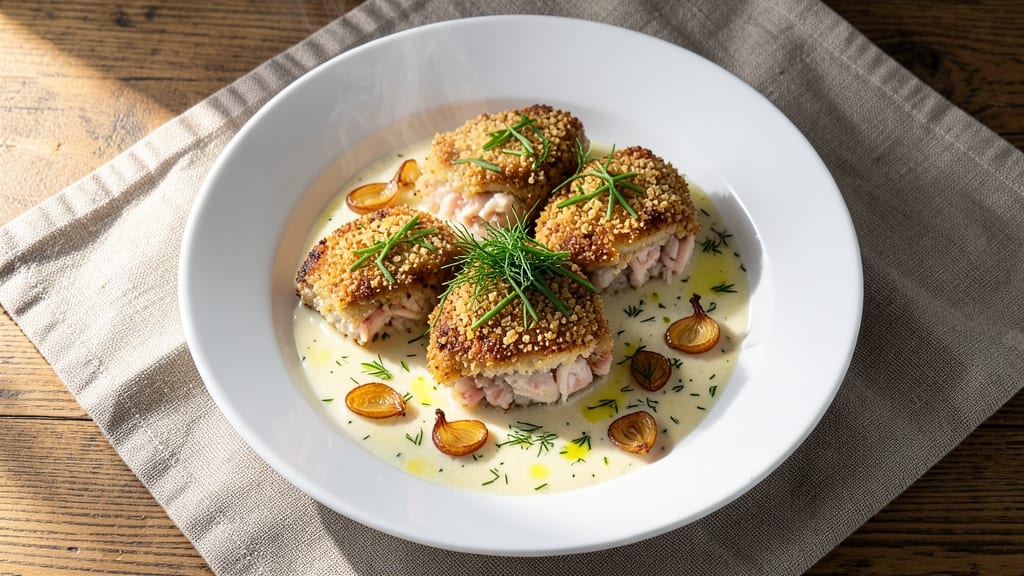
This authentic crab cake recipe delivers the crispy shells and flaky centers that define classic seafood dining—just like your favorite waterfront restaurant. The secret lies in using fresh lump crab meat bound with just enough egg and panko to hold its shape while maintaining that delicate texture.
I've perfected this technique over years of testing, ensuring every bite captures the briny sweetness of crab without overpowering seasoning.
What sets these crab cakes apart is the balance of ingredients: a touch of Dijon mustard for depth, fresh herbs for brightness, and a precise baking method that creates that coveted golden crust while keeping the interior tender.
The recipe calls for 15 minutes of hands-off baking, making it perfect for weeknight dinners that still feel special. Serve them with a lemon-dill sauce or tartar sauce to elevate the flavors even further.
By the time you plate these crab cakes, you'll have a dish that's restaurant-quality—crispy on the outside, flaky and moist inside, with just the right amount of seasoning to complement the crab's natural sweetness.
The aroma alone will have everyone gathered around the table, and the first bite will confirm why this recipe is worth the effort. Whether you're hosting a dinner party or simply craving seafood, this method delivers results that impress every time.
For an extra touch of authenticity, consider adding a sprinkle of Old Bay seasoning or a garnish of fresh parsley before serving. The key to success is using high-quality crab meat and not overmixing the batter—this keeps the texture light and airy.
Let's get started on creating crab cakes that taste like a coastal escape.
Ingredients for authentic crab cake
Fresh crab meat meets crispy panko in this restaurant-style recipe—just a handful of quality ingredients for perfect texture.
| Ingredient | Amount | Notes |
|---|---|---|
| Fresh Lump Crab Meat 🦀 | 1 ½ lb | Backfin or jumbo preferred, not imitation |
| Japanese Panko Breadcrumbs 🍞 | ½ cup | Light and crispy, not coarse |
| Large Eggs 🥚 | 2 whole | Room temperature for even binding |
| Dijon Mustard 🍯 | 1 tbsp | High-quality, not sweetened |
| Fresh Chives 🌿 | 2 tbsp | Finely chopped, mild flavor |
| Fresh Dill 🌿 | 2 tbsp | Finely chopped, not dried |
| Unsalted Butter 🧈 | 2 tbsp | Melted, for crisping |
| Extra-Virgin Olive Oil 🫒 | 1 tbsp | For light brushing |
| Mayonnaise 🥫 | 2 tbsp | Duck or avocado oil preferred |
| Lemon Zest 🍋 | 1 tsp | Freshly grated, bright flavor |
| Kosher Salt 🧂 | 1 ½ tsp | Fine grain, adjust to taste |
| Black Pepper 🌶️ | ½ tsp | Freshly cracked, not ground |
| Old Bay Seasoning 🌶️ | ½ tsp | For authentic coastal flavor |
The crab meat is everything here. Fresh lump crab from a trusted seafood market—look for bright white meat with minimal shell fragments—is non-negotiable. Backfin or jumbo lump holds its shape best, while imitation crab will compromise texture. Most high-end grocery stores like Whole Foods or Trader Joe's carry quality crab meat, but for true authenticity, visit a local seafood counter. The panko should be light and airy, not dense—Japanese brands like Suzuki are industry standards. Store fresh crab meat in an airtight container with a paper towel pressed on top to absorb moisture, and use within 2 days for peak flavor.
No fresh crab meat? High-quality canned crab (like Bumble Bee) works in a pinch, but drain it thoroughly and pat dry with paper towels. Swapping panko for regular breadcrumbs? Toast them first—spread on a baking sheet and bake at 350°F for 5 minutes to remove moisture. The Dijon mustard adds depth, but if you're sensitive to heat, yellow mustard at half the amount works. Fresh herbs are ideal, but dried dill at one-third the quantity suffices. For extra richness, replace half the mayonnaise with Greek yogurt. The key is gentle mixing—overworking the batter makes crab cakes dense, not flaky.
Prep ahead for convenience: mix the batter and refrigerate for up to 4 hours—this helps the flavors meld. Form the crab cakes and chill them on a lined tray for 30 minutes before baking, which prevents spreading. Leftovers keep for 2 days in the fridge, but they're best served fresh. To reheat, bake at 375°F for 5-7 minutes until crispy again. For make-ahead meals, shape the crab cakes and freeze them on a tray before transferring to a bag—bake straight from frozen, adding 2-3 extra minutes to the cooking time. Serve immediately after baking for that signature crispy shell.
Why You'll Love This Recipe
- Fresh lump crab meat: might sound pricey, but it’s cheaper per serving than you’d think—especially when you’re using the whole 1.5 pounds. The panko and eggs stretch it further, and leftovers (if there are any) reheat beautifully in the oven. It’s the kind of splurge that feels worth it, even on a Tuesday night.
- No-Fuss Assembly: Honestly, this isn’t one of those dishes where you’re chopping herbs for hours. Just toss the fresh lump crab meat with the finely chopped chives and dill—no fancy prep, no soaking. The Japanese panko and butter mix in seconds, and the eggs and Dijon mustard bind everything together in 15 gentle folds. My daughter helps with the shaping, and we’re done before dinner guests arrive.
- Crispy-Creamy Magic: That first bite—crispy edge from the panko crust, flaky interior from the gentle folding—is what makes this worth every minute. The Old Bay seasoning and lemon zest cut through the richness, while the mayonnaise keeps it moist without being greasy. It’s the kind of texture you know you’ll crave again.
- Weeknight Hero: I keep the crab mixture prepped in the fridge for up to 4 hours, so on busy nights, I just grab the pan, heat the butter and olive oil, and cook. Serve with a simple green salad or over buttery toast—suddenly, you’ve got a restaurant-worthy dish without the fuss. My husband even eats these when he’s not craving seafood.
Step-by-step instructions for authentic crab cakes
Here's the method for achieving that signature crispy exterior with a tender, flaky interior.
Prepare the Crab Mixture with Perfect Texture
In a large mixing bowl, gently combine the 1.5 lb fresh lump crab meat with the 2 tbsp finely chopped fresh dill and 2 tbsp finely chopped fresh chives. Avoid overmixing—the lumps create that authentic, flaky texture we're after. The crab should look mostly intact with just a few broken pieces.
Add the 2 whole large eggs, 2 tbsp mayonnaise, 1 tbsp Dijon mustard, 1 tsp lemon zest, 1.5 tsp kosher salt, 0.5 tsp black pepper, and 0.5 tsp Old Bay seasoning to the bowl. Using a rubber spatula, fold everything together just until fully incorporated—about 15 gentle strokes. This preserves the crab's natural structure while ensuring even distribution of flavors.
Create the Crispy Crust with Panko
In a separate small bowl, combine the 0.5 cup Japanese panko breadcrumbs with 2 tbsp unsalted butter and 1 tbsp extra-virgin olive oil. The butter should be softened but not melted—just enough to coat the panko evenly. Use your fingers to work the butter into the breadcrumbs until they resemble coarse, moist sand.
This mixture is our secret to that perfect golden crust. The panko's light texture creates a delicate shell while the butter adds richness. Spread the panko mixture on a small plate and set aside—we'll use it to coat our crab cakes in the next step.
Shape and Chill for Optimal Structure
Divide the crab mixture into 4 equal portions (about 6 ounces each) and gently shape them into 1-inch thick patties on a parchment-lined baking sheet. Wet your hands slightly with cold water before shaping to prevent sticking. The patties should be smooth on top and slightly textured on the bottom where the crab meat naturally sits.
Refrigerate the shaped crab cakes for at least 30 minutes before cooking. This chilling step is crucial—it allows the mixture to firm up slightly, making it easier to handle when frying, and prevents them from falling apart in the pan. The cold also helps create a more stable crust when they hit the hot surface.
Achieve Perfect Crispiness with Two-Stage Cooking
Heat 1 tbsp unsalted butter and 2 tbsp extra-virgin olive oil in a large skillet over medium heat until the butter foams but doesn't brown. Working in batches if needed, carefully place the chilled crab cakes in the pan. Cook for 3-4 minutes per side until the bottoms are deep golden brown and crispy, and the edges begin to set.
Here's where we ensure that crispy shell: press down gently on each crab cake with a spatula during the first minute of cooking. This prevents them from curling and ensures even contact with the pan. The internal temperature should reach 145°F when measured at the thickest part. Transfer to a wire rack and tent loosely with foil to keep warm while you cook the remaining batches.
Serve Immediately with Classic Accompaniments
Serve the crab cakes immediately while they're still piping hot. The contrast between the crispy exterior and flaky interior should be immediately apparent when you cut into one. For an authentic presentation, arrange them on a platter with lemon wedges on the side and a dollop of tartar sauce for dipping.
These crab cakes deliver on all the promises: that signature crispy shell from the panko crust, the flaky texture from the gently folded crab meat, and the bright, coastal flavors from the Old Bay and lemon zest. The secret lies in the careful preparation—never overmixing, proper chilling, and that two-stage cooking method that builds the perfect crust.
Pro Tips For Making Authentic Crab Cake
- Press for Crust: That first minute in the pan is when the magic happens—press down gently with a spatula to flatten any curls and guarantee even contact with the butter and oil. I learned this the hard way when my first batch turned into crab "puffs" instead of crispy patties. The goal is a golden, unbroken shell, not a crumbly mess.
- Chill or Crumble: Skipping the 30-minute fridge rest? Your crab cakes will either stick to the pan or disintegrate like wet sand. The cold sets the structure—no exceptions. Pro move: Shape them on a parchment-lined tray so you’re not scrubbing butter off your counter later.
- Butter Panko Like Butter: The panko-butter mix should look like moist sand, not dry crumbs or greasy clumps. Use your fingers to work the softened butter into the panko until it clings together—this is what creates that shatteringly crisp crust. Too dry? Add a splash of ice water. Too wet? Let it sit 5 minutes to firm up.
- Room-Temp Eggs Only: Cold eggs won’t bind properly, and you’ll end up with dense, rubbery crab cakes. Crack those eggs into a bowl first, let them sit for 10 minutes at room temp, then mix. Trust me, your future self will notice the difference in texture—and won’t curse you for rushing.
Pro cooking tips for authentic crab cake
Mastering the Mixing
The key to perfect crab cakes starts in the bowl—15 gentle strokes with a rubber spatula is all it takes to bind the ingredients without destroying the crab's natural texture.
I always use my hands to fold in the eggs and mayonnaise last, ensuring every lump of crab meat stays intact. Overmixing turns flaky into dense, so trust the process.
The mixture should look like moist sand with visible crab lumps—this is what creates that signature flaky interior when cooked. 💫
Butter vs. Oil Balance
For the panko crust, I swear by the 2:1 butter-to-oil ratio—2 tbsp softened butter with 1 tbsp olive oil creates the perfect crispy shell without greasiness. The butter adds richness, while the oil ensures even browning.
Work the mixture with your fingers until it resembles coarse sand; this texture clings to the crab cakes better than pre-mixed breading. Don't skip this step—it's what separates good crab cakes from great ones. 🍞
Chilling Isn't Optional
Chilling the shaped crab cakes for at least 30 minutes is non-negotiable. This step firms up the mixture so it holds its shape during cooking and develops a more stable crust.
I always place them on a parchment-lined tray to prevent sticking, and I wet my hands before shaping to avoid tearing the delicate crab meat. The cold also helps the flavors meld, so don’t rush this part! ⏳
Temperature Control
Medium heat is your friend—too hot and the outside burns before the inside cooks; too low and the crust won’t crisp properly. I use a thermometer to check for 145°F internal temperature at the thickest part.
Pressing down gently on the crab cakes during the first minute of cooking prevents curling and ensures even browning. This two-stage cooking method is what gives you that perfect golden crust without sacrificing tenderness. 🌡️
The Pressing Technique
Here’s a pro trick: after placing the crab cakes in the pan, press down firmly with a spatula for the first 30 seconds. This prevents them from puffing up and ensures even contact with the pan. The result?
A perfectly flat, golden-brown base that crisps beautifully. I also use a wire rack to drain excess oil after cooking, which keeps the crab cakes lighter and crispier. This small step makes a huge difference in texture. 💡
Nutrition facts
Frequently asked questions
Why does my crab cake mixture look too wet?
Fresh lump crab meat releases water when handled, which can make the batter seem too wet. The key is to drain it thoroughly in a fine-mesh strainer for 10 minutes before using, then pat it completely dry with paper towels. If the mixture still seems loose, add 1-2 extra tablespoons of panko to absorb moisture. Never overmix—this breaks down the crab meat and makes the texture dense rather than flaky.
Can I bake these crab cakes instead of pan-frying?
Yes, but the texture will differ slightly. Preheat your oven to 400°F and bake the shaped crab cakes for 12-15 minutes until the edges are golden and the internal temperature reaches 145°F. For extra crispiness, brush them with melted butter halfway through. Baking works well for meal prep, but pan-frying creates that signature restaurant-style crust.
What's the best way to store leftovers?
Store crab cakes in an airtight container with parchment paper between layers to prevent sticking. They'll keep fresh in the fridge for 2 days, but for longer storage, freeze them on a tray first (to prevent clumping), then transfer to a freezer bag. Reheat from frozen by baking at 375°F for 10-12 minutes until crispy again. Never microwave—they'll lose their texture.
How do I fix crab cakes that fall apart?
Overmixing or skipping the chilling step usually causes this. For immediate fixes, press the fallen pieces back together and pan-fry them for 1-2 minutes per side to help them set. Long-term, ensure you're using fresh lump crab meat (not imitation), gently fold the batter, and always chill the shaped cakes for 30+ minutes before cooking. The panko-butter mixture should be the last thing added to bind everything together.
What's the secret to that perfect golden crust?
The magic happens in the panko mixture: use Japanese panko (not regular breadcrumbs) and work it with your fingers until it resembles coarse sand. The 2:1 butter-to-oil ratio creates the ideal crispiness without greasiness. Press the crab cakes gently in the pan for the first 30 seconds of cooking to prevent curling, and cook over medium heat—not high—to develop color evenly.