
Desserts
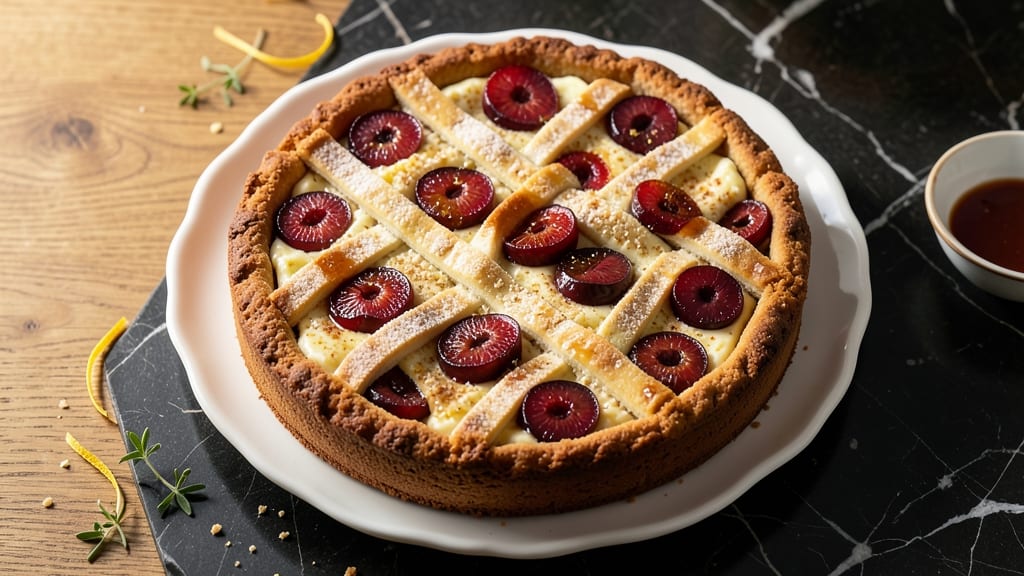
Austrian Plum Cake brings the heart of Central Europe to your kitchen with its signature layers of tender butter cake and spiced plum filling. This classic dessert, known as Plumerl or Topfenkuchen, delivers a perfect balance of buttery richness and fruity depth that's impossible to resist.
The secret lies in the cake's delicate crumb and the way the warm plum filling melts between each layer, creating a harmony of textures and flavors.
What makes this recipe special is the traditional technique of baking the cake in a round pan, then assembling it with a generous layer of stewed plums spiced with cinnamon and vanilla.
The cake itself is made with a simple yet elegant combination of butter, flour, eggs, and almond flour for that signature Austrian flavor. Each element comes together to create a dessert that's both impressive and comforting, perfect for special occasions or a cozy weekend treat.
By the time you're done, you'll have a stunning cake with golden-brown layers and a glaze that adds just the right amount of shine. The aroma of cinnamon and warm plums will fill your kitchen, making it impossible to wait to slice into this masterpiece.
The result is a dessert that's as beautiful as it is delicious, with each bite offering a perfect blend of buttery cake and spiced fruit.
Whether you're serving this cake at a holiday gathering or simply indulging in a slice with a cup of coffee, this Austrian Plum Cake is sure to become a favorite.
The recipe includes traditional methods that ensure authenticity, while still being approachable for home bakers. Let's get started on creating this timeless classic.
Ingredients for austrian plum cake
Buttery layers, spiced plums, and a touch of almond flour—this is your secret to authentic Austrian Plum Cake.
| Ingredient | Amount | Notes |
|---|---|---|
| Unsalted Butter 🧈 | 1 cup | Softened to room temperature |
| Granulated Sugar 🍚 | 2 cups | White or light brown |
| Large Eggs 🥚 | 4 whole | Room temperature preferred |
| All-Purpose Flour 🌾 | 2 ½ cups | Sifted for light texture |
| Almond Flour 🌰 | ½ cup | For signature Austrian flavor |
| Baking Powder 🍞 | 1 ½ tsp | For tender crumb |
| Ground Cinnamon 🌿 | 1 tsp | Freshly ground preferred |
| Salt 🧂 | ½ tsp | Fine sea salt |
| Vanilla Extract 🌸 | 1 tbsp | Pure vanilla preferred |
| Fresh Plums 🍑 | 2 ½ lbs | Pitted and sliced |
| Lemon Juice 🍋 | 2 tbsp | Freshly squeezed |
| Ground Vanilla Bean 🌸 | ½ tsp | For extra depth of flavor |
| Powdered Sugar 🍚 | 1 cup | For glaze |
| Heavy Cream 🥛 | ¼ cup | For glaze |
The butter is non-negotiable here—European-style unsalted butter like Plugrá or Kerrygold gives that signature rich flavor. Grab fresh plums from your local farmers market in summer or use frozen plums (no thawing needed) when they're out of season. The almond flour is what sets this apart—Bob's Red Mill is my go-to brand, but any good-quality almond flour works. Sift that flour and baking powder together for the lightest, most tender crumb possible. And if you can find vanilla bean instead of extract, trust me on this—it's a game-changer for the filling.
No fresh plums? Canned plums in juice work in a pinch, but drain them well. Running short on almond flour? Substitute an extra 0.25 cup all-purpose flour, but you'll lose that subtle nutty depth. The glaze can be made ahead—just keep it refrigerated until ready to use. For extra richness, add a splash of rum or brandy to the plum filling. And if you're feeling fancy, dust the finished cake with powdered sugar right before serving—it adds that professional bakery touch. The cake layers should be baked just until golden—220-225°F internal temperature is perfect.
This cake keeps beautifully for 3 days in an airtight container at room temperature, though I won't judge if you eat it all in one day. For longer storage, wrap tightly in plastic and refrigerate for up to 1 week. The glaze sets up nicely, so you can assemble the cake ahead and glaze it just before serving. If you're making this for a crowd, double the glaze recipe—it disappears fast. And pro tip: Serve with whipped cream or a scoop of vanilla ice cream for the ultimate Austrian dessert experience.
Why You'll Love This Recipe
- No Fuss Layers: I swear by this recipe—just cream butter and sugar, fold in eggs, then alternate flours. No standing over a mixer, no overworked batter. The secret’s in the gentle folding; almond flour keeps it tender without the fuss.
- Plum-Perfection Pairing: That burst of jam in the center? Chef’s kiss. The buttery layers soak up the sweet-tart plums like a dream, and the almond flour adds a nutty depth that makes it taste like a bakery bought it—not your kitchen.
- Weeknight or Wows: Slice it thin for breakfast toast, serve it warm with coffee, or pack it for lunch. Honestly, I’ve taken it to potlucks, book club, and even my mom’s house (she’s picky). It’s the one dessert that never feels out of place.
- Budget Baking Gold: Butter and sugar are the stars, but almond flour stretches the dough just enough to make it feel special without breaking the bank. Leftovers? They last days—my coworkers still ask for seconds from the last batch I brought in.
Step-by-step instructions for Austrian plum cake
Here's how to create layers of buttery perfection with a spiced plum filling that melts in your mouth.
Prepare the Plum Filling
Start by pitting and slicing the 2.5 lbs fresh plums into ¼-inch thick rounds. Toss them gently with 2 tbsp lemon juice and 0.5 tsp ground vanilla bean in a large bowl. This brightens the plums and adds depth of flavor. Let the mixture sit for 15 minutes—this allows the lemon juice to tenderize the fruit slightly and the vanilla to infuse.
Drain any excess liquid that forms (you want the filling to be juicy but not syrupy) and set aside. This step is crucial—overly wet filling can make your cake soggy. The plums should be tender but still hold their shape when you press them lightly with your finger.
Cream Butter and Sugar
In a stand mixer fitted with the paddle attachment, beat the 1 cup unsalted butter and 2 cups granulated sugar on medium speed for 3-4 minutes until light and fluffy. You're looking for a color change from pale yellow to a lighter, almost creamy hue. This step incorporates air, which creates that signature tender crumb in Austrian plum cakes.
Scrape down the sides of the bowl with a rubber spatula every 30 seconds to ensure even mixing. If you skip this, the butter and sugar won't combine properly, leading to a denser cake. The mixture should nearly double in volume and have a ribbon-like consistency when you lift the paddle.
Add Eggs and Dry Ingredients
Add the 4 whole large eggs, one at a time, mixing on low speed after each addition until fully incorporated. Then stir in the 1 tbsp vanilla extract and mix for another 10 seconds. In a separate bowl, whisk together the 2.5 cups all-purpose flour, 0.5 cup almond flour, 1.5 tsp baking powder, 1 tsp ground cinnamon, and 0.5 tsp salt.
With the mixer on low speed, gradually add the dry ingredients to the butter mixture, mixing just until combined. Avoid overmixing—you should still see small flour streaks. The batter should be thick but pourable. This careful mixing ensures a tender, not tough, cake. Fold in half of the plum mixture now, reserving the rest for later.
Bake the Layers
Preheat your oven to 350°F. Grease and flour two 9-inch round cake pans (or use parchment paper liners for easy removal). Divide the batter evenly between the pans, spreading it out smoothly. Bake for 20-25 minutes, or until a toothpick inserted into the center comes out clean. Rotate the pans halfway through for even baking.
While the layers bake, prepare the glaze by whisking together the 1 cup powdered sugar, 0.25 cup heavy cream, and a pinch of salt until smooth. This glaze will give your cake that signature Austrian shine. Let the cake layers cool in the pans for 10 minutes, then transfer to a wire rack to cool completely before assembling.
Assemble and Glaze
Place one cake layer on a serving plate. Spread half of the reserved plum filling evenly over the top, leaving a ½-inch border uncovered. Top with the second cake layer and spread the remaining plum filling over the top. Brush the entire cake with the prepared glaze, letting any excess drip down the sides for a decorative finish.
Chill the cake in the refrigerator for at least 2 hours before serving. This allows the layers to set and the flavors to meld. The result? A perfectly balanced cake with tender layers, spiced plum filling, and a glossy finish that makes every bite irresistible. Slice and serve with a dollop of whipped cream if desired.
Pro Tips For Making Austrian Plum Cake
- Whip Butter Slowly: Austrian plum cake lives or dies by its butter-egg mix—don’t rush it. Use a stand mixer on medium speed for 3-4 minutes until the butter is pale, fluffy, and actually room temp (not warm). I learned this the hard way after a cake that tasted like melted ice cream.
- Sift Almond Flour Twice: Almond flour is sneaky—it clumps like a grudge. Sift it before measuring, then sift again right into the bowl with the other dry ingredients. No lumps = no dense patches in your cake. (Yes, even if you’re impatient like me.)
- Don’t Overmix the Batter: Once you fold in the flour, stop when it’s just combined—no streaks, no overworking. Overmixing = tough cake. Use a spatula to gently fold in the last 10% of flour. Trust me, your cake will be tenderer.
- Bake at 325°F, Not Hotter: Austrian plum cake needs patience—325°F is non-negotiable. A hotter oven will brown the top before the center sets, leaving you with a cake that’s cakey on the outside and gummy inside. Check at 40 minutes, then tent with foil if needed.
Flavor customization for this austrian plum cake
Spiced Variations
For a deeper spice profile, add ½ tsp cardamom or ¼ tsp clove to the plum filling—these warm spices are traditional in Alpine desserts. I find Penzeys Spices has the best ground cardamom for this purpose.
Alternatively, swap the cinnamon for 1 tsp orange zest and ½ tsp nutmeg for a bright, citrusy twist that pairs beautifully with the plums. 🌿
Nutty Enhancements
Boost the almond flavor by toasting ¼ cup sliced almonds in a dry pan until golden, then sprinkle them over the plum filling before assembling. For a hazelnut variation, replace the almond flour with ½ cup hazelnut flour (blend toasted hazelnuts into a fine powder).
Both options add delightful crunch and depth to each bite.
Fruit Alternatives
No plums? Use peaches or apricots instead—they work beautifully with the same spice blend. For a winter version, try stewed rhubarb with 1 tbsp honey and ½ tsp ginger in the filling.
I’ve also had great success with blackberries in summer, though they release more juice, so drain them thoroughly before using.
Boozy Upgrades
Add 1 tbsp rum or 1 oz brandy to the plum filling for an adult-friendly twist. For a non-alcoholic option, use 1 tsp almond extract or ½ cup apricot jam mixed with the plums. The alcohol infuses beautifully during chilling, enhancing the fruit’s natural sweetness without overpowering it. 🍷
Glaze Variations
For a chocolate twist, replace the powdered sugar glaze with ½ cup melted dark chocolate mixed with 2 tbsp heavy cream. For a citrusy finish, whisk 1 cup powdered sugar with 2 tbsp lemon juice and 1 tsp lemon zest instead.
Both options create stunning visual contrasts while keeping the cake’s signature texture.
Seasonal Adjustments
In summer, use fresh, underripe plums for a tart contrast. In winter, opt for frozen plums (thawed and drained) or dried plums (reconstituted in warm water with spices).
For a festive holiday version, dust the assembled cake with powdered sugar and garnish with crushed pistachios or edible gold leaf for a luxurious touch. ✨
Nutrition facts
Frequently asked questions
Why does the recipe call for almond flour instead of regular flour?
Almond flour gives this cake its signature Austrian flavor and tender crumb. It adds subtle nutty depth while keeping the texture moist and delicate. The recipe only uses 0.5 cup so you won't miss the extra calories—it's just enough to elevate the flavor without overpowering the buttery layers.
Can I make this cake without fresh plums?
Use 2.5 cups canned plums in juice (drained well) or 2 cups frozen plums (thawed and patted dry). For extra flavor, simmer canned plums with 1 tbsp lemon juice and ½ tsp vanilla bean for 5 minutes before using. The texture will be slightly softer but still delicious.
How do I prevent the cake layers from getting soggy?
Bake the layers just until golden (220-225°F internal temp) and let them cool completely before assembling. Spread the plum filling only on the top layer, leaving a ½-inch border uncovered. Chill the assembled cake for at least 2 hours before slicing to set the layers properly.
What's the best way to store leftover cake?
Wrap tightly in plastic wrap and store at room temperature for 3 days or refrigerate for up to 1 week. For longer storage, freeze slices wrapped individually for 2 months. Thaw overnight in the fridge before serving. The glaze may thicken slightly when chilled—rewhisk with a splash of milk if needed.
Can I make this cake in a different pan shape?
Yes, but adjust baking times accordingly. For a 9-inch square pan, bake 15-18 minutes per layer. For a 6-inch round pan, bake 25-30 minutes. The key is achieving 220-225°F internal temp—use an instant-read thermometer for accuracy. The cake will spread slightly in square pans, so don't overfill them.