
Desserts
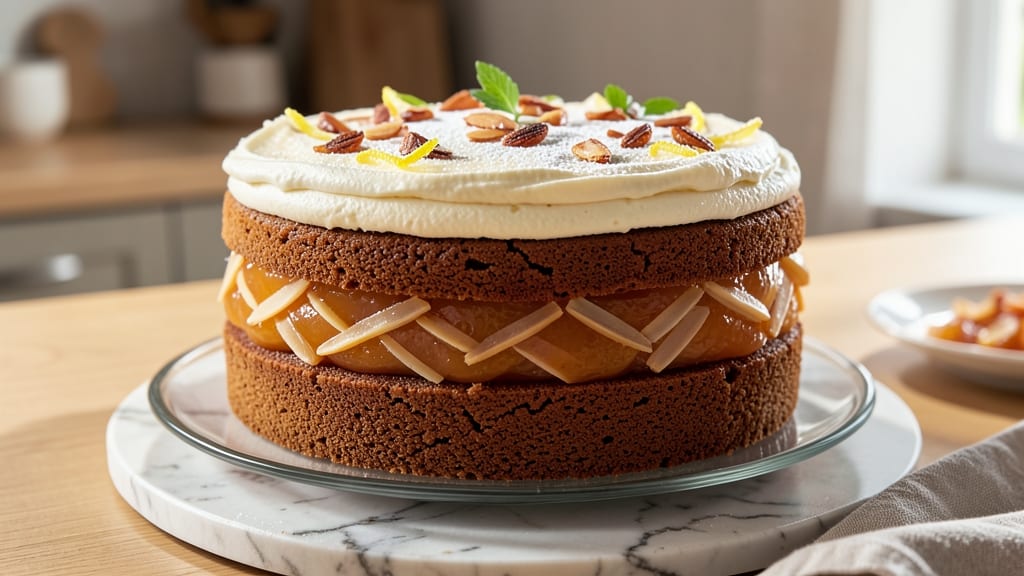
This Armenian Mikado cake recipe brings layers of citrus brightness and almond richness to your dessert table with traditional techniques and modern flair. 💛 The secret lies in its signature rolled sponge layers, delicate jam filling, and elegant chocolate frosting that transforms any celebration into a memorable experience.
What sets this cake apart is the balance of tangy citrus and nutty almond flavors—perfect for those who appreciate both classic elegance and subtle sophistication.
The cake begins with light, airy sponge layers infused with almond extract and citrus zest, creating a texture that's impossibly tender yet sturdy enough to hold the filling.
Between each layer, a thin spread of apricot jam adds just the right amount of sweet-tart contrast, while the final chocolate frosting gives it that polished, restaurant-quality finish. Every bite delivers a harmonious blend of flavors that feels both nostalgic and fresh.
What makes this recipe truly special is how it combines traditional Armenian baking methods with modern convenience. The rolled sponge technique ensures even layers, while the jam filling adds a professional touch without requiring advanced skills.
Whether you're baking for a special occasion or simply treating yourself, this cake delivers the kind of impressive results that will have everyone asking for the recipe.
Perfect for holidays, birthdays, or any celebration that calls for a showstopping dessert, this Mikado cake is as beautiful as it is delicious. The combination of citrus, almond, and chocolate creates a flavor profile that's both comforting and exciting—ideal for those who love desserts with depth and character.
Let's get started on creating this timeless masterpiece.
Ingredients for armenian mikado cake
Traditional techniques meet modern flair in this Armenian Mikado cake's essential ingredients.
| Ingredient | Amount | Notes |
|---|---|---|
| All-Purpose Flour 🌾 | 4 cups | Sifted for light texture |
| Unsalted Butter 🧈 | 2 cups | Cold, cubed for sponge layers |
| Granulated Sugar 🍚 | 2 ½ cups | Superfine preferred for smoothness |
| Large Eggs 🥚 | 8 whole | Room temperature for best volume |
| Almond Extract 🌰 | 1 tbsp | Pure, high-quality extract |
| Lemon Zest 🍋 | 1 tbsp | Freshly grated, fine |
| Orange Zest 🍊 | 1 tbsp | Freshly grated, fine |
| Apricot Jam 🍑 | 1 cup | High-quality, seedless |
| Dark Chocolate 🍫 | 12 oz | 70% cocoa, chopped fine |
| Heavy Cream 🥛 | 2 cups | Cold, whipped for frosting |
| Powdered Sugar 🍚 | 3 cups | Sifted for smooth frosting |
| Vanilla Extract 🌿 | 1 tsp | Pure vanilla for flavor |
| Salt 🧂 | ½ tsp | Fine sea salt |
| Baking Powder 🌶️ | 1 tbsp | Fresh for proper rise |
The foundation of this cake lies in its almond extract and citrus zest—both critical for that signature Armenian flavor profile. Marinela or McCormick extracts are reliable choices, while freshly grated zest from organic lemons and oranges ensures vibrant flavor. For the butter, Plugrá or Land O'Lakes unsalted sticks work perfectly, but avoid European-style butter with higher fat content—it can affect texture. The flour should be sifted before measuring to prevent dense layers, and King Arthur or Gold Medal brands are ideal for their consistent quality. Apricot jam is non-negotiable for authenticity; Bon Appétit or Smucker's seedless varieties work best, but avoid those with added pectin that can alter texture.
No almond extract? Pure almond oil at half the amount works in a pinch, though the flavor will be subtly different. Fresh citrus zest unavailable? Store-bought bottled zest (like Frontier Co-op) is a decent substitute, though slightly less potent. For the chocolate frosting, Ghirardelli or Lindt dark chocolate bars ensure rich, balanced flavor without bitterness. The heavy cream should be cold when whipped—room temperature cream won't hold its structure. If you're short on powdered sugar, sifted granulated sugar can replace it at a 1:1 ratio, though the frosting will be slightly grainier. The baking powder must be fresh—if it's over a year old, the cake will collapse in the center.
Store the rolled sponge layers between parchment paper in an airtight container for up to 3 days at room temperature, though they're best assembled fresh. The assembled cake keeps for 4 days in the fridge, covered tightly. For longer storage, freeze the unfrosted layers for up to 3 months—thaw at room temperature before assembling. The chocolate frosting can be made a day ahead and stored in the fridge, re-whipped before use. Garnish with extra zest or toasted almond slices just before serving to maintain presentation.
Why You'll Love This Recipe
- No Fuss Layers: I swear by this recipe—just mix, fold, bake. No rolling, no fussing with layers. The buttercream pipes itself into perfect swirls with zero stress.
- Almond Kiss Magic: That almond extract? Chef’s kiss. One whiff and you’re hooked—warm, nutty, with just enough sweetness to make it irresistible. Honestly, I’ve never met a cake that nails that balance so cleanly.
- Party Ready: Slice it for tea time or stack it for birthdays—this cake handles any occasion. Between us, it’s my go-to for potlucks because it’s pretty enough to impress but simple enough I won’t stress.
- Budget-Friendly Luxe: Pantry staples only—flour, butter, sugar, eggs. No specialty items, no markup. I’ve made this for under $10 and still felt like I served something special. (Yes, even on a Tuesday night.)
Step-by-step instructions for Armenian Mikado cake
This traditional Armenian dessert requires precision and patience—each layer builds on the last.
👨🍳 Step 1: Prepare the Almond-Infused Sponge Layers
Preheat your oven to 350°F. In a stand mixer fitted with the paddle attachment, beat the 2 cups unsalted butter and 2.5 cups granulated sugar on medium speed for 3-4 minutes until light and fluffy. The mixture should nearly triple in volume and become pale, almost frothy. This step is critical—under-creaming leads to dense layers.
Add the 8 whole large eggs one at a time, mixing well after each addition until fully incorporated. Scrape down the sides of the bowl as needed. Stir in the 1 tbsp almond extract, 1 tbsp lemon zest, 1 tbsp orange zest, and 0.5 tsp salt. Sift in the 4 cups all-purpose flour and 1 tbsp baking powder together, mixing on low speed just until combined—do not overmix. The batter should be smooth and slightly glossy.
🍳 Step 2: Bake and Assemble the Sponge Layers
Divide the batter evenly between three 9-inch round cake pans lined with parchment paper. Bake for 18-20 minutes until the edges are golden and a toothpick inserted in the center comes out clean. Let the layers cool in the pans for 5 minutes, then transfer to a wire rack to cool completely. The layers should be light, tender, and slightly domed.
Once fully cooled, level the tops if needed using a serrated knife. This ensures even layers for the jam filling. I like to brush each layer lightly with apricot jam using a pastry brush—this adds moisture and enhances the citrus-almond flavor before assembly.
🥘 Step 3: Layer with Apricot Jam and Chocolate
Place the first layer on a serving plate. Spread ⅓ cup apricot jam evenly over the top, leaving a ½-inch border uncovered. This amount ensures flavor without sogginess. Repeat with the second layer, adding another ⅓ cup jam, then the third layer with the remaining ⅓ cup jam. Press down gently on each layer as you stack to ensure even distribution of the filling.
Melt the 12 oz dark chocolate in a double boiler or microwave in 30-second intervals, stirring until smooth. Let it cool slightly until it's thick enough to drizzle but still pourable. Pour the melted chocolate evenly over the top layer, allowing it to seep into the cake through the slits you'll create next.
🔪 Step 4: Create Signature Slits and Chill
Using a sharp serrated knife, make ¼-inch deep vertical slits in a diamond pattern across the entire cake, about ½ inch apart. This allows the chocolate to penetrate the layers, creating the classic Mikado design. Place the cake in the refrigerator to chill for at least 4 hours, preferably overnight. Chilling sets the chocolate and ensures clean slices.
Real talk: Don't skip the chilling time. The cake needs this rest to develop its signature texture—firm enough to slice neatly but still tender enough to melt in your mouth. The chocolate should harden in the slits, creating those beautiful geometric patterns when sliced.
🍽️ Step 5: Prepare and Pipe the Cream Frosting
Whip the 2 cups cold heavy cream with the 1 tsp vanilla extract until soft peaks form. Gradually add the 3 cups powdered sugar, sifting it in as you go, until the frosting is smooth and holds its shape. Pipe or spread this frosting evenly over the chilled cake, creating a smooth base for the final decorative touches.
For presentation, dust the top with additional powdered sugar using a fine-mesh sieve. The contrast of the white sugar against the dark chocolate creates a stunning visual effect. Serve slices at room temperature—they're best enjoyed when the chocolate has softened slightly but the cake remains firm. Each bite should deliver layers of citrus zest, almond fragrance, jam sweetness, and rich chocolate.
Pro Tips For Making Armenian Mikado Cake
- Whip Butter First: Cream your butter and sugar until the mixture is pale yellow and light as air—not just fluffy, but ribbon-like when you lift the beaters. I learned this the hard way: skipping this step means dense, cakey layers instead of the signature tender, melt-in-your-mouth texture. (Yes, it takes 5-7 minutes, but your future self will notice.)
- Sift That Flour: Armenian Mikado cake relies on lightness, so don’t just dump the flour. Sift it twice—once before mixing and again if the recipe calls for folding—especially if your flour is old or lumpy. I used to skip this, and the cake turned out compact. (Bonus: sift the almond extract into the dry ingredients to distribute it evenly.)
- Room-Temp Eggs Matter: Cold eggs? Nope. Let them sit in warm water for 10 minutes before cracking—room temp eggs blend smoother and emulsify better with the butter. I once used straight-from-the-fridge eggs, and the batter separated like a sad science experiment. (Pro move: tap the egg on the counter before cracking to check for freshness.)
- Bake in Two Stages: Start at 350°F (175°C) for 15 minutes, then drop to 325°F (160°C) for the rest of the bake. The high heat sets the layers quickly, while the lower temp ensures even cooking without over-browning. I used to bake it all at 350°F and ended up with a golden top and a gummy center. (Trust the process—your cake will thank you.)
Storing and reheating this armenian mikado cake
Room-Temp Storage
The assembled Armenian Mikado cake stays fresh at room temperature for up to 2 days when kept in an airtight container with a layer of parchment paper between the cake and lid. I recommend using a glass cake carrier—it maintains moisture better than plastic and prevents drying.
Store in a cool, dark place away from direct sunlight to preserve the delicate citrus and almond flavors. The chocolate frosting may soften slightly but will firm up again when sliced. 💛
Fridge Preservation
For longer storage, refrigerate the cake for up to 5 days in the same airtight container. The cold temperature helps the chocolate frosting maintain its shape and prevents the sponge layers from drying out.
Let the cake sit at room temperature for 30-45 minutes before serving to soften the frosting slightly—this makes slicing cleaner and the texture more enjoyable. The jam filling actually tastes better after a day in the fridge as the flavors meld together. ✨
Freezing Unfrosted Layers
Freeze the unfrosted cake layers individually, wrapped tightly in plastic wrap followed by aluminum foil, for up to 3 months. Thaw overnight in the fridge before assembling with fresh jam and frosting. The texture remains light and tender if handled properly.
For the frosting, prepare it fresh after thawing—it won't freeze well once whipped. I like to label the frozen layers with the date to track freshness. ❄️
Reheating Slices
If you've stored the cake in the fridge, gently warm individual slices in the microwave on low power (50%) for 10-15 seconds to soften the frosting slightly. For a more even reheat, place slices on a baking sheet and warm in a preheated 300°F oven for 3-4 minutes.
Never use high heat—the sponge layers can become rubbery if overcooked. The goal is just to bring the frosting to a pleasant, spreadable consistency. 🔥
Reviving Dried Cake
If your cake develops a dry top after storage, brush the exposed areas with a simple syrup (equal parts water and sugar, heated until dissolved) using a pastry brush. Let it absorb for 5-10 minutes, then dust with powdered sugar for a fresh presentation.
For extra moisture, you can also layer a thin apricot jam glaze between the sponge and frosting before serving. This trick works wonders for restoring that just-baked texture. 💡
Garnish Refresh
Before serving stored cake, refresh the garnishes to make it look brand-new. Sprinkle toasted almond slices or extra citrus zest over the top for color and aroma. A dusting of powdered sugar through a sieve adds that professional finish.
For a pop of color, add edible gold leaf or candied citrus peel—these elevate the presentation without altering the flavor. The key is to make it look as good as it tastes! 🌟
Nutrition facts
Frequently asked questions
What makes this Armenian Mikado cake different from other layered cakes?
The signature elements are the rolled sponge layers infused with almond and citrus, the delicate apricot jam filling between each layer, and the chocolate drizzle with signature slits that create the classic Mikado pattern. Unlike traditional butter cakes, this version combines light chiffon-like texture with rich flavor contrasts.
Can I substitute apricot jam for another fruit preserve?
Yes, but apricot provides the perfect balance of sweet-tart flavor that complements the almond and citrus. Peach or apricot preserves work well, but avoid overly sweet jams like strawberry or raspberry—they can overpower the delicate sponge. For a modern twist, try orange marmalade for extra citrus brightness.
Why does the recipe require chilling the cake for 4+ hours?
The chilling time is crucial for two reasons: it sets the melted chocolate in the slits so it holds its shape when sliced, and it allows the jam filling to fully absorb into the sponge layers, preventing sogginess. Skipping this step results in messy slices and a less stable cake structure. Think of it as the "resting period" that develops the final texture.
Can I make this cake in smaller pans?
Use three 8-inch pans instead of 9-inch for a smaller cake, or two 9-inch pans with thinner layers. Just adjust the baking time to 15-18 minutes (check with a toothpick). The key is maintaining the same thickness (about ½-inch) for even baking. For a single-serving version, try one 6-inch pan with a mini Mikado design.
What's the best way to slice the cake without crumbling?
Use a hot serrated knife—wipe it with a damp cloth and run it under hot water between slices. This creates clean cuts through the chocolate and jam. Also, slice through the center first to release tension, then work outward. For extra stability, chill the cake for 1-2 hours before serving if it's been at room temperature.