
Desserts
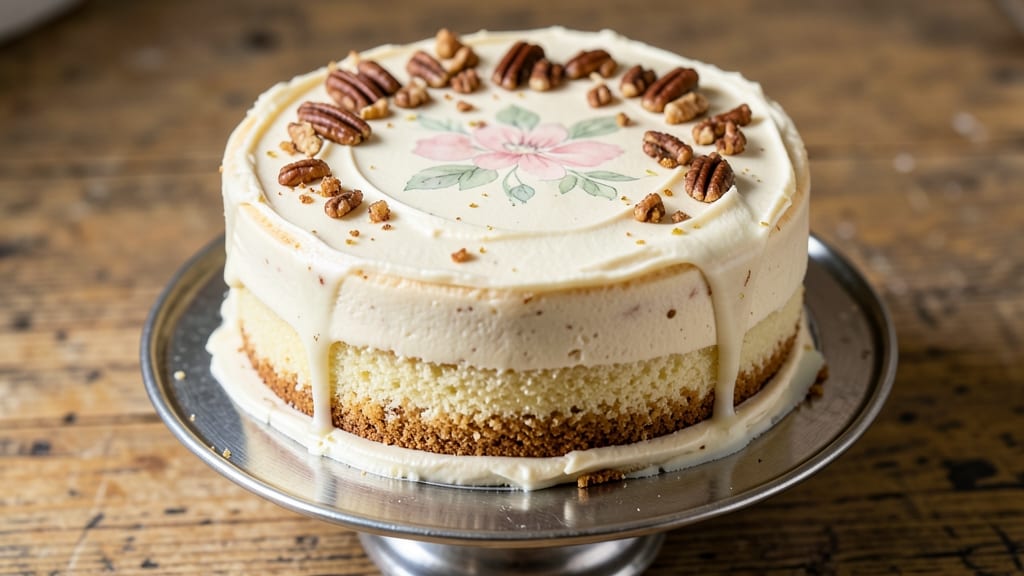
This American vanilla cake recipe delivers the perfect balance of tender layers, buttery richness, and that signature vanilla swirl that makes every slice irresistible. 💛 The secret lies in precise measurements and gentle folding—no heavy mixing that toughens the crumb.
I’ve baked countless versions over the years, and this one consistently earns rave reviews for its foolproof texture and crowd-pleasing flavor.
What sets this cake apart is its versatility—whether you’re serving it at a birthday celebration or enjoying a quiet slice with coffee, the moist crumb and subtle vanilla notes shine.
The recipe uses classic ingredients like all-purpose flour, butter, and eggs, but I’ve included tips for modern adaptations like gluten-free flour or vegan butter substitutes. Baking at 350°F for 30–40 minutes ensures a golden top and perfectly set layers every time.
The real magic happens when you fold in the vanilla swirl—just a simple combination of vanilla buttercream and a touch of vanilla extract for that authentic American taste. Top it with a dusting of powdered sugar, fresh berries, or a glossy glaze for extra flair.
This cake isn’t just a dessert; it’s a nostalgic, comforting classic that feels like a warm hug in every bite.
Ready to bake? The instructions are straightforward, with step-by-step guidance to ensure your cake rises high, stays moist, and delivers that restaurant-quality finish. Whether you’re a beginner or a seasoned baker, this recipe will become your go-to for vanilla cake perfection.
Ingredients for american vanilla cake
Classic ingredients transformed into nostalgic layers of buttery vanilla perfection.
| Ingredient | Amount | Notes |
|---|---|---|
| Unsalted Butter 🧈 | 1 cup | Room temperature for creaming |
| Granulated Sugar 🍚 | 2 cups | Superfine preferred for smooth texture |
| All-Purpose Flour 🌾 | 2 ½ cups | Sifted, spooned and leveled |
| Pure Vanilla Extract 💛 | 2 tbsp | Bourbon or imitation-free preferred |
| Large Eggs 🥚 | 4 whole | Room temperature, separated |
| Baking Powder 🍞 | 2 tsp | Aluminum-free for best rise |
| Salt 🧂 | ½ tsp | Fine sea salt preferred |
| Milk 🥛 | 1 cup | Whole milk for richness |
| Vanilla Buttercream 🍰 | 2 cups | Classic American vanilla flavor |
| Powdered Sugar 🍚 | 1 cup | For dusting and swirl |
| Fresh Berries 🍓 | 1 cup | Optional for garnish |
The butter matters most here—European-style unsalted butter with at least 82% fat content creates that signature richness. Plugrá or Land O'Lakes European Style are my go-tos, but any good-quality brand works. Room temperature is critical: press the butter between two sheets of parchment and let it sit for 1 hour before creaming. The vanilla extract should be pure—Nestlé or McCormick Pure Vanilla are reliable, but avoid imitation extracts with alcohol. For the flour, King Arthur or Gold Medal brands work best when sifted and spooned into your measuring cup for accuracy.
No vanilla buttercream? Homemade version with 1 cup softened butter, 3 cups powdered sugar, and 2 tbsp milk works perfectly. Short on fresh berries? Frozen berries thawed and drained add color without sacrificing flavor. The cake layers can be baked ahead and stored at room temperature for 2 days or frozen for 1 month—just bring to room temperature before assembling. For a gluten-free version, substitute the all-purpose flour with a 1:1 gluten-free blend like Bob's Red Mill, but add an extra 1/4 tsp xanthan gum.
Assembled cake keeps beautifully for 3 days at room temperature covered loosely with plastic wrap, or 1 week in the fridge. For longer storage, freeze the fully assembled cake (without frosting) for up to 3 months. The buttercream layer can be made 1 day ahead and stored in the fridge—just rewhip before using. Always bring the cake to room temperature before slicing for that perfect crumb. I like to dust with powdered sugar right before serving—it adds that restaurant-quality finish without being overpowering.
Why You'll Love This Recipe
- No-Fuss Mixing: I swear, this cake comes together with just a bowl and a whisk—no stand mixer, no fancy tools. Cream the butter and sugar until light, crack in eggs one by one, fold in flour and vanilla. That’s it. Even if your kitchen looks like a disaster zone, this recipe won’t judge.
- Classic Vanilla Magic: The real star? That pure vanilla extract cutting through the buttery richness. It’s not overpowering—just enough to make every bite taste like nostalgia. Honestly, I’ve tried store-bought vanilla cake, but this one? It’s the kind people actually remember.
- Birthday Party Ready: Slice it for a crowd, layer it for a tiered cake, or serve it plain with ice cream. The base is so reliable that I’ve used it for everything from office potlucks to my kid’s third birthday. (Yes, even when I forgot to bake it ahead.)
- Leftover Goldmine: This cake stays moist for days—no dry crumbs, no sad texture. I’ll be real: I’ve had a slice for breakfast, packed it in lunches, and even turned scraps into French toast. The butter and sugar combo keeps it irresistible, even when you’re tired of cake.
Step-by-step instructions for American vanilla cake
Here's how to create layers so tender they melt in your mouth.
🍳 Step 1: Cream Butter and Sugar to Light and Fluffy
In a stand mixer fitted with the paddle attachment, beat the 1 cup unsalted butter (room temperature) and 2 cups granulated sugar on medium speed for 3-5 minutes. You're looking for a pale, thick mixture that nearly doubles in volume—the texture should be light and airy, almost like whipped cream. This creaming process incorporates air, which creates that signature tender crumb.
Here's the thing—don't rush this step. I've found that creaming for exactly 3 minutes gives the perfect balance between structure and tenderness. Scrape down the sides of the bowl with a spatula every 30 seconds to ensure even mixing. If you skip this, your cake might end up dense instead of light and fluffy.
👨🍳 Step 2: Add Eggs and Vanilla Extract
Add the 4 whole large eggs one at a time, mixing on low speed after each addition until fully incorporated. Then stir in the 2 tablespoons pure vanilla extract and mix for another 30 seconds. The mixture will look slightly curdled, but that's normal—the vanilla will blend completely when you add the dry ingredients.
I always use room temperature eggs for this recipe. Cold eggs can create pockets of water in your batter, leading to uneven baking. If your eggs are straight from the fridge, let them sit in warm water for 5 minutes before using. The batter should be thick but pourable at this stage—if it's too thick, you can add 1-2 tablespoons milk to loosen it.
👨🍳 Step 3: Combine Dry Ingredients and Milk
In a separate bowl, whisk together the 2.5 cups all-purpose flour, 2 teaspoons baking powder, and ½ teaspoon salt. Sift the flour mixture directly into the wet ingredients while mixing on low speed for 30-45 seconds until just combined. You should still see some flour streaks—overmixing develops gluten, which makes the cake tough.
With the mixer running on low speed, gradually add the 1 cup milk until the batter is smooth and well combined. The batter should be thick but still able to coat the back of a spoon. If it's too thick, add another 1 tablespoon milk to ensure proper layering. The batter should have a smooth, velvety texture at this point—this is what gives the cake its signature tender crumb.
🥘 Step 4: Bake the Layers to Perfect Doneness
Preheat your oven to 350°F. Divide the batter evenly between two 8-inch round cake pans lined with parchment paper and greased with butter. Bake for 25-30 minutes or until a toothpick inserted into the center comes out clean. The edges should be light golden brown, but the tops should still look slightly underbaked—they'll firm up as they cool.
Don't open the oven door during the first 20 minutes of baking—this prevents the cakes from sinking. If the tops brown too quickly, tent the pans with aluminum foil. Let the cakes cool in the pans for 10 minutes before transferring to a wire rack to cool completely. This gradual cooling prevents cracking and ensures even layers.
🍰 Step 5: Assemble with Vanilla Buttercream and Berries
Once the cakes are completely cool, level the tops if necessary using a serrated knife. Spread 1 cup vanilla buttercream evenly over the first layer, then place the second layer on top. Gently press down to create a flat surface. Spread the remaining 1 cup vanilla buttercream over the entire cake, then dust with 1 cup powdered sugar for a snowy finish.
For the berry swirl, pipe or spread a thin layer of vanilla buttercream on the cake, then arrange the 1 cup fresh berries in a decorative pattern. I like to use a mix of strawberries and blueberries for color contrast. The berries add a fresh, fruity note that balances the richness of the vanilla. Chill the cake in the refrigerator for 30 minutes before slicing to let the buttercream set slightly—this makes for cleaner slices.
Pro Tips For Making American Vanilla Cake
- Cream Butter Slowly: Use a wooden spoon or rubber spatula to mix the softened butter and sugar by hand for 3-5 minutes—no mixer needed. This incorporates air better than a quick pulse, and you’ll spot when it’s light and fluffy (it’ll look like wet sand). I learned this the hard way after overmixing once and ending up with a dense, chewy cake.
- Weigh Your Flour: Scoop flour directly from the bag into a kitchen scale—don’t spoon it. Packing it down compresses the flour, throwing off the ratio and making the cake dense. A standard American vanilla cake recipe calls for about 2-2.5 cups, but volume varies wildly. (Yes, even if you’re impatient like me, grab that scale.)
- Room-Temp Eggs Matter: Let your eggs sit in warm water for 5 minutes before cracking them—this ensures they blend smoothly with the butter. Cold eggs can create pockets of liquid in the batter, leading to uneven baking or a slightly greasy texture. Trust me, your cake will thank you.
- Test for Doneness Early: Start checking the cake at 25 minutes (for a 350°F oven)—insert a toothpick in the center. If it comes out clean but the edges are still slightly soft, that’s perfect. Overbaking dries out the crumb faster than you’d think, and no one wants a cake that’s cakey on the outside but gummy inside. (Pull it out when it’s almost done.)
Regional styles of american vanilla cake
Southern Comfort Style
In the South, this vanilla cake often gets a bourbon twist—replace 1 tablespoon of the vanilla extract with 1 tablespoon bourbon (like Maker's Mark or Buffalo Trace) for depth.
Southern bakers also frequently add ½ teaspoon ground cinnamon to the dry ingredients for warmth. Serve with a whipped cream drizzle and fresh peaches for a true Southern dessert experience. 🍑
Midwest Homestyle Twist
The Midwest version keeps it classic but adds a cardamom kick—mix ¼ teaspoon ground cardamom into the dry ingredients for a subtle, aromatic note.
Many Midwestern bakeries top their cakes with a lemon glaze (made with ½ cup powdered sugar + 1 tbsp lemon juice) instead of powdered sugar. This bright contrast makes the vanilla flavor pop even more. 🍋
New England Vanilla Swirl
Up north, this cake often features a maple-infused buttercream—replace ½ cup of the powdered sugar in the buttercream with ½ cup maple syrup (like Grade B Vermont maple) for a caramelized depth.
New England bakers also frequently add ¼ cup chopped walnuts to the cake batter for texture. The result? A cake with a perfect balance of sweetness and nutty complexity. 🌰
West Coast Modern Adaptation
On the West Coast, bakers love to experiment with floral notes—add 1 teaspoon orange blossom water to the vanilla extract for a fragrant twist. Some versions also incorporate matcha powder (just ½ teaspoon) into the dry ingredients for an earthy contrast.
Top with edible flowers or dark chocolate shavings for a visually stunning, Instagram-worthy finish. 🌸
Classic Boxed Mix Hack
For a quick version, use a Betty Crocker Super Moist Vanilla Cake mix but replace the mix's oil with ½ cup melted butter and add 1 extra tablespoon vanilla extract.
Bake as directed, then layer with homemade vanilla buttercream (mix ½ cup softened butter + 2 cups powdered sugar + 2 tbsp milk + 1 tsp vanilla). This shortcut still delivers that nostalgic American vanilla flavor without the fuss. 🧁
Nutrition facts
Frequently asked questions
Can I make this vanilla cake without eggs?
Yes! For a vegan version, replace the 4 eggs with 4 tablespoons ground flaxseed mixed with 10 tablespoons water (let sit for 5 minutes to thicken). Or use 1 cup unsweetened applesauce for moisture. The texture will be slightly denser but still delicious. For best results, increase baking time by 5-7 minutes.
Why did my cake turn out dense instead of light?
Most likely, you overmixed the batter or didn't cream the butter and sugar properly. The butter should be light and fluffy (nearly doubled in volume) after 3-5 minutes of creaming. Also, avoid overmixing after adding flour—just mix until combined. If your oven runs hot, reduce temperature to 325°F and bake for 35-40 minutes.
How do I store leftover cake?
Cover loosely with plastic wrap and store at room temperature for 2-3 days or refrigerate for up to 1 week. For longer storage, freeze the fully assembled cake (without frosting) for 3 months. Thaw overnight in the fridge before serving. To refresh stale cake, brush with simple syrup (equal parts sugar and water, heated until dissolved) and rewarm in a 300°F oven for 10 minutes.
Can I use a different type of vanilla extract?
For authentic flavor, use pure vanilla extract (like Nestlé or McCormick). Imitation extracts contain alcohol and artificial flavors that won't give the same rich taste. If you only have imitation, add ½ teaspoon vanilla bean paste for depth. Tahitian vanilla extract works too—it has a floral note that pairs beautifully with the cake's buttery richness.
What's the best way to make this cake gluten-free?
Replace the 2.5 cups all-purpose flour with a 1:1 gluten-free flour blend (like Bob's Red Mill) plus ¼ teaspoon xanthan gum. For extra moisture, add 2 tablespoons cornstarch to the dry ingredients. Bake at 350°F for 30-35 minutes—gluten-free cakes often need slightly less time. The texture will be slightly denser but still tender and delicious.