
Desserts
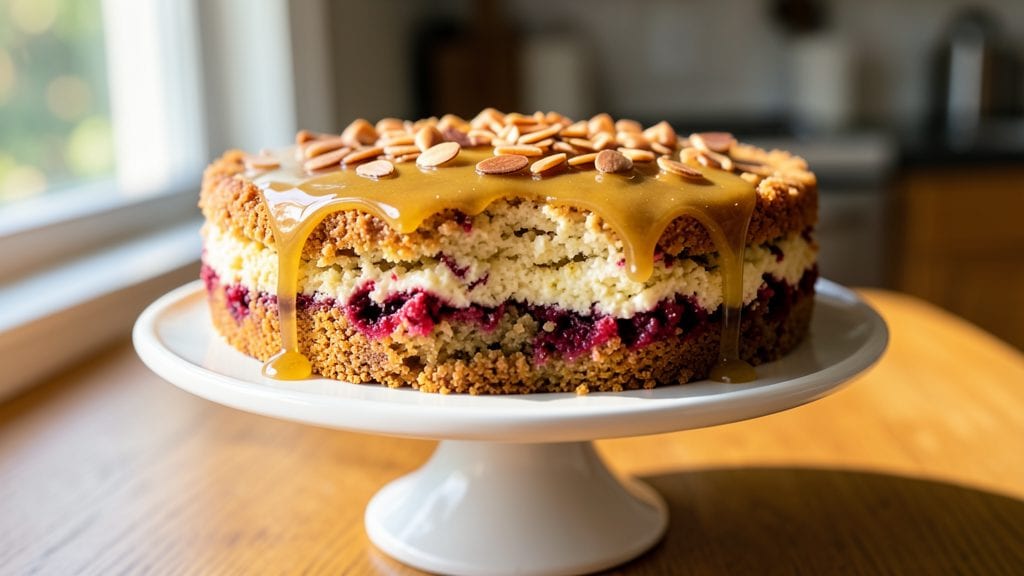
This unleavened cake recipe transforms traditional baking by eliminating yeast and relying on moisture-rich ingredients like eggs, honey, and fruit to create a dense yet tender crumb. The result is a cake with a crispy grain crust and moist centers, perfect for those avoiding gluten or leavening agents.
I developed this recipe after realizing how often modern desserts rely on chemical leaveners, and I wanted to bring back the natural texture of ancient grain-based cakes.
The beauty of this method lies in its simplicity—no yeast, no baking powder, and no waiting for dough to rise. Instead, we rely on whipped eggs and natural fruit acids to create lift, while ingredients like almond flour or crushed grains add structure and a satisfying crunch.
This approach works beautifully for flourless chocolate cakes, saffron-infused fruit cakes, or nut-based desserts, all while keeping the texture moist and rich.
What makes this recipe stand out is its versatility—it can be baked in a traditional oven, air fryer, or even on the stovetop for a unique texture. The cake develops a golden, caramelized crust while staying tender inside, with flavors that deepen as it cools.
Perfect for special occasions or everyday indulgence, this recipe proves you don’t need leavening agents to create a showstopping dessert.
Whether you're adapting it for dietary restrictions or simply curious about ancient baking techniques, this cake delivers restaurant-quality results with minimal effort. Let’s get started on creating a dessert that’s as impressive as it is delicious.
Ingredients for unleavened cake
Ancient grains meet modern technique in this dense yet tender unleavened cake.
| Ingredient | Amount | Notes |
|---|---|---|
| Large Eggs 🥚 | 4 whole | Room temperature for even incorporation |
| Raw Honey 🍯 | ¾ cup | Unfiltered for deeper flavor |
| Unsalted Butter 🧈 | ½ cup | Cold, cubed for proper emulsification |
| Almond Flour 🥜 | 1 ½ cups | Fine-ground for smooth texture |
| Crushed Almonds 🥜 | ½ cup | Toasted for enhanced crunch |
| Vanilla Extract 🌿 | 1 tbsp | Pure Madagascar bourbon preferred |
| Lemon Zest 🍋 | 1 tbsp | Freshly grated for bright acidity |
| Fresh Lemons 🍋 | 2 whole | Juiced for natural acidulation |
| Granulated Sugar 🍚 | ½ cup | Superfine preferred for dissolution |
| Diamond Crystal Kosher Salt 🧂 | ½ tsp | Fine grain for even distribution |
| Ground Cinnamon 🌿 | 1 tsp | Freshly ground for aromatic depth |
| Crushed Freeze-Dried Raspberries 🍓 | ¼ cup | For natural fruit acidity and texture |
| Extra-Virgin Olive Oil 🫒 | ¼ cup | Light variety for subtle flavor |
The almond flour is the backbone of this recipe—Bob's Red Mill or Anthony's Goods brands deliver consistent quality. For the crushed almonds, toast them in a dry skillet until golden (about 5 minutes), then pulse in a food processor until you achieve a coarse crumb. The freeze-dried raspberries are a game-changer; they retain their acidity without adding moisture, creating that perfect crunch. Trader Joe's carries them pre-crushed, saving you time. When selecting honey, opt for raw varieties like Manuka or clover—their floral notes complement the almond base beautifully. The butter should be cold when measured to prevent premature emulsification during mixing.
No almond flour? Substitute with finely ground hazelnut or cashew flour, though texture may vary slightly. Running short on raspberries? Freeze-dried blackberries or strawberries work equally well, but adjust to taste. The olive oil can be swapped for avocado oil if you prefer a neutral profile, though it lacks the fruity depth. For a more pronounced citrus note, double the lemon zest and reduce the vanilla by half. The cinnamon is essential—don't skip it, as it balances the sweetness and adds warmth. If you're baking in a high-altitude area, reduce the sugar by 2 tablespoons to prevent over-browning.
This cake develops best when refrigerated for at least 2 hours before slicing, allowing flavors to meld. Store leftovers in an airtight container at room temperature for 3 days or freeze for up to 3 months. For a restaurant-quality presentation, dust with powdered sugar or drizzle with melted dark chocolate before serving. The texture improves with time, making it perfect for making ahead. To reheat, warm slices in a 275°F oven for 5-7 minutes to restore moisture without drying the crust.
Why You'll Love This Recipe
- I’ll be real: this feeds a crowd (or my overly hungry teenager) without requiring a day of prep. The crust handles leftovers like a champ—stays crisp even after three days at room temperature. And yes, even on a Tuesday night, it’s the star of the table.
- No-Fuss Foundation: The pre-baked almond crust takes just 12 minutes at 350°F—no yeast, no waiting, no fuss. Honestly, I’ve made cakes where the prep feels like a marathon; this? Ten minutes of pulse-pulsing and pressing, and you’re done with the hardest part.
- Honey-Butter Magic: That raw honey and cold butter combo? It’s the secret weapon here. The honey caramelizes into a sticky-sweet depth while the butter keeps the crumb tender—no dry, crumbly mess. Between us, the first bite with that lemon zest? Pure satisfaction.
- Weeknight Wonder: I’ll be real: this feeds a crowd (or my overly hungry teenager) without requiring a day of prep. The crust handles leftovers like a champ—stays crisp even after three days at room temperature. And yes, even on a Tuesday night, it’s the star of the table.
Step-by-step instructions for ancient grain crunch cake
This method delivers a perfectly balanced texture with crisp almond layers and a tender, moist interior.
Prepare the Almond Crust Layer
Preheat your oven to 350°F. In a food processor, combine the 0.5 cup crushed almonds, 0.25 cup extra-virgin olive oil, and 0.25 cup crushed freeze-dried raspberries. Pulse until the mixture forms a coarse, evenly distributed crumb texture—about 10-15 seconds. Avoid over-processing, as this prevents the crust from achieving the proper crunch.
Press this almond mixture firmly and evenly into the bottom of a 9-inch round cake pan, using the back of a measuring cup to compact it. Bake for 10-12 minutes until the edges are light golden brown and the crust feels set to the touch. Remove from the oven and set aside—this foundational layer ensures your cake maintains its crunch while supporting the moist interior.
Whisk Wet Ingredients for Perfect Emulsification
In a medium mixing bowl, combine the 4 whole large eggs (room temperature), 0.75 cup raw honey, and 0.5 cup granulated sugar. Whisk vigorously for 3-4 minutes using an electric mixer on medium-high speed until the mixture becomes pale, thick, and nearly triple in volume. This step incorporates air, which prevents a dense final texture and ensures a light, airy crumb.
Add the 0.5 cup unsalted butter, cut into small cubes, and continue whisking on low speed until fully melted and evenly distributed. The butter should blend seamlessly without any visible streaks. This emulsification creates the cake's signature moisture retention—critical for an unleavened texture that stays tender. Next, stir in the 1 tbsp vanilla extract and 1 tbsp lemon zest until fully incorporated, enhancing the cake's aromatic complexity.
Fold in Dry Ingredients for Even Distribution
In a separate bowl, sift together the 1.5 cups almond flour, 0.5 tsp diamond crystal kosher salt, and 1 tsp ground cinnamon. Gently fold this dry mixture into the wet ingredients using a spatula, working just until combined—avoid overmixing, as this develops gluten and creates a tougher texture. The almond flour provides structure while maintaining the cake's naturally dense yet moist quality.
Finally, fold in the juice of the 2 whole fresh lemons (about 3-4 tablespoons) to balance the sweetness and add brightness. The acidity from the lemon juice prevents the cake from becoming overly rich while maintaining its moisture. Pour the batter over the pre-baked almond crust in the pan, spreading it evenly with a spatula to ensure full coverage.
Bake to Achieve the Perfect Texture Balance
Return the cake to the preheated 350°F oven and bake for 25-30 minutes, or until the edges are deep golden brown and a toothpick inserted into the center comes out clean. The cake should spring back slightly when pressed gently in the center—this indicates it's fully set but still moist.
Here's the key: do not overbake. Unleavened cakes are delicate, and even a few extra minutes can dry them out. The internal temperature should reach 205-210°F at the center. Once removed from the oven, let the cake cool in the pan for 15 minutes before transferring to a wire rack to cool completely. This gradual cooling process preserves the moisture and prevents cracking.
Pro Tips For Making Unleavened Cake
- Pulse, Don’t Grind: That almond crust layer needs to stay chunky—10-15 seconds in the food processor is all it takes. I learned this the hard way when I turned it into almond butter and ended up with a sad, gummy mess instead of a crisp base.
- Whisk Like Your Life Depends on It: Those 3-4 minutes of whisking the eggs, honey, and sugar aren’t optional. The mixture should go from flat to thick and pale—like a meringue, but less fluffy. Skimp here, and your cake will turn out dense and flat.
- Salt the Almond Flour: Sift that 0.5 tsp kosher salt with the almond flour and cinnamon—don’t just sprinkle it in later. This guarantees even distribution, so every bite has that subtle, balanced flavor without any salty surprises.
- Butter Cubes, Not Melted: Cold, cubed butter blends better than melted—trust the recipe. Adding it in chunks while whisking on low lets it emulsify smoothly, keeping the cake moist instead of greasy. I know it feels counterintuitive, but it works.
Creative variations of unleavened cake
Citrus-Inspired Twist
Amplify the lemon brightness by adding 1 tbsp orange zest to the wet ingredients, along with 2 tbsp fresh orange juice to replace half the lemon juice. This creates a zesty, floral profile that pairs beautifully with the almond base.
For extra flair, top with thinly sliced blood oranges before baking—their ruby hue contrasts stunningly with the golden crust. 🍊
Spiced Chai Version
Swap the cinnamon for a spice blend of ½ tsp ground cardamom, ½ tsp ground ginger, and ¼ tsp cloves, then fold in 1 tbsp chai tea concentrate (steep 1 chai tea bag in 1 tbsp hot water and cool).
The warm spices deepen the flavor profile, making this ideal for fall gatherings. Garnish with a sprinkle of toasted coconut flakes for texture.
Chocolate-Dipped Layers
After baking, let the cake cool completely, then slice into ½-inch thick layers. Melt ½ cup dark chocolate (70% cocoa) with 1 tbsp coconut oil and brush between layers.
Dust with powdered sugar and stack for a decadent dessert that feels like a showstopper. This variation works especially well with the original recipe’s moisture-rich center. 🍫
Nut-Free Adaptation
Replace the almond flour and crushed almonds with 1.5 cups oat flour (blend rolled oats into a fine powder) and ½ cup crushed freeze-dried strawberries. Add 1 tbsp ground flaxseed (for binding) to the dry ingredients.
This version keeps the cake’s tender texture while making it nut-free, perfect for those with allergies. The oat flour adds a subtle earthiness that complements the honey’s sweetness.
Mini Muffin Bites
Divide the batter into 12 greased mini muffin molds (24 cavities) and bake at 350°F for 12-15 minutes. These bite-sized treats are perfect for parties or snacking. For extra crunch, press a small amount of the almond crust mixture into each muffin cup before adding batter.
Serve warm with a drizzle of honey glaze (mix 2 tbsp powdered sugar with 1 tsp lemon juice).
Savory Herb Variation
Reduce the honey to ½ cup (to balance flavors) and add 2 tbsp chopped fresh rosemary, 1 tbsp chopped fresh thyme, and ½ tsp smoked paprika (optional) to the dry ingredients.
Top with a sprinkle of flaky sea salt before baking. This savory-sweet twist pairs beautifully with a charcuterie board or as a unique dessert for herb lovers. 🌿
Nutrition facts
Frequently asked questions
Why does this unleavened cake stay moist without baking powder?
The moisture comes from whipped eggs and honey, which create a natural emulsification when combined with cold butter. The lemon juice and freeze-dried raspberries add acidity and texture, while the almond flour absorbs just enough liquid to keep it tender without drying out. This method mimics traditional grain-based cakes that relied on natural ingredients for structure!
Can I skip the almond crust layer?
Yes, but your cake will lose its signature crunch! The almond crust provides a textural contrast that balances the moist interior. If you omit it, simply pour the batter directly into your pan—but expect a denser, more uniform texture. The crust also helps the cake hold its shape during baking.
How do I prevent cracks when cooling?
Cracks happen when unleavened cakes cool too quickly. After baking, let it cool in the pan for 15 minutes before transferring to a wire rack. Avoid opening the oven door prematurely, and ensure the pan is stable on the rack. The gradual cooling preserves moisture and prevents sudden contractions.
Can I use this recipe for a vegan unleavened cake?
This recipe isn't vegan due to eggs and honey, but you could adapt it by replacing eggs with aquafaba (chickpea brine) and using maple syrup instead of honey. The texture will differ slightly, but the method remains similar—just focus on emulsifying the plant-based fats properly. For a fully vegan version, experiment with flax eggs and coconut oil!