
Main Courses
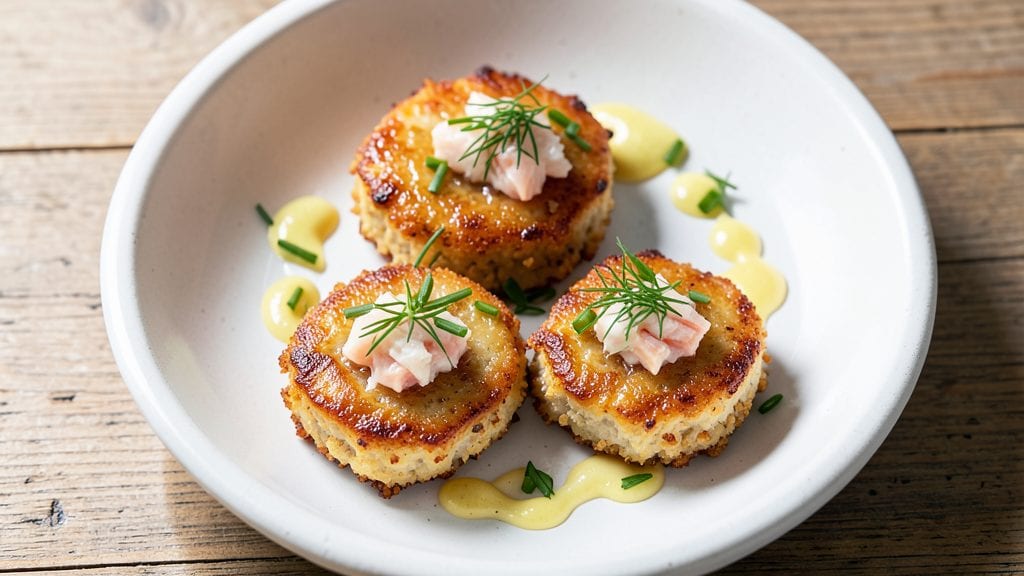
Creating salmon crab cakes that deliver both a crispy crust and flaky salmon requires precision in technique and ingredient balance. This recipe fuses two premium proteins—rich, buttery salmon and sweet, briny crab—into golden, tender patties that hold together perfectly.
The secret lies in proper binding and careful cooking to avoid dryness while achieving that coveted crunch.
What sets these crab cakes apart is the dual-texture approach: a crisp exterior from proper pan-frying and a moist interior thanks to a well-structured mixture of flaked salmon, fresh crab meat, and carefully measured binders.
We'll use a combination of panko breadcrumbs and egg to create that satisfying crunch without compromising tenderness. The recipe also incorporates fresh herbs and a touch of lemon zest to brighten the flavors and prevent the fish from overcooking.
By following this method, you'll achieve perfectly formed crab cakes with a golden-brown crust that shatters slightly when cut, revealing moist, flaky salmon and crab within. The result is a restaurant-quality dish that's impressive enough for dinner guests but simple enough for weeknight meals.
Serve with classic tartar sauce or a lemon-dill aioli for the ultimate seafood experience.
This recipe delivers on both texture promises—crispy on the outside and flaky within—while keeping preparation straightforward. The key steps include proper mixing, gentle shaping, and precise cooking temperatures to ensure perfect doneness every time.
Whether you're serving these as an appetizer or a main course, they'll be the star of your meal.
Ingredients for salmon crab cakes
Premium seafood meets precise technique for crab cakes with perfect crispy crust and flaky salmon fusion.
| Ingredient | Amount | Notes |
|---|---|---|
| Fresh Atlantic Salmon Fillet 🐟 | 12 oz | Skinless, deboned, flaked finely |
| Fresh Lump Crab Meat 🦀 | 8 oz | Backfin or claw meat preferred |
| Japanese Panko Breadcrumbs 🍞 | ¾ cup | Light and crispy for texture |
| Large Eggs 🥚 | 2 whole | Cold, beaten thoroughly |
| Fresh Chives 🌿 | 2 tbsp | Finely chopped, for freshness |
| Fresh Dill 🌿 | 1 tbsp | Finely chopped, bright flavor |
| Lemon Zest 🍋 | 1 tbsp | Freshly grated, aromatic |
| Extra-Virgin Olive Oil 🫒 | 2 tbsp | High quality, for crisping |
| Unsalted Butter 🧈 | 2 tbsp | Cold, for pan-frying |
| Diamond Crystal Kosher Salt 🧂 | 1 tsp | Fine grain, seasoning |
| Freshly Ground Black Pepper 🌶️ | ½ tsp | Light hand, enhances flavor |
| Mayonnaise 🥫 | 2 tbsp | Duck egg preferred for richness |
| Capers 🌿 | 1 tbsp | Chopped, briny contrast |
| Lemon Juice 🍋 | 1 tbsp | Freshly squeezed, brightens |
| All-Purpose Flour 🌾 | 1 tbsp | For dredging, light coating |
The salmon and crab are the stars here—freshness is non-negotiable. For the salmon, Alaskan or Atlantic fillets from your fishmonger yield the best texture when flaked. Look for bright, translucent flesh with minimal fat. Costco or Whole Foods often carry pre-flaked salmon, but flaking it yourself ensures no bones or tough pieces. The crab meat should be lump-style—backfin or claw meat adds the most texture. If using canned crab, opt for high-quality brands like Wild Seafood and drain thoroughly. Both proteins should be chilled until ready to mix to maintain integrity.
No panko? Japanese-style breadcrumbs are essential for that shatter-crisp crust, but you can toast regular breadcrumbs in a dry pan for 3-4 minutes to mimic the texture. Substituting the fresh herbs with 1 tsp dried dill and 1 tsp dried chives works in a pinch, though the flavor won't be as vibrant. The mayonnaise acts as a binder—duck egg mayo adds richness, but regular works fine. For a lighter version, replace half with Greek yogurt or sour cream. The capers and lemon juice can be swapped for 1 tbsp chopped cornichons and 1 tsp white wine vinegar if unavailable. Always measure the flour precisely—too much will make the cakes dense.
Store the crab cakes in an airtight container between layers of parchment paper for up to 2 days in the refrigerator. For longer storage, freeze them uncooked on a tray first, then transfer to a bag for 1 month. Reheat gently in a skillet with a touch of butter for 2-3 minutes per side to restore crispiness. These hold well for 1 hour at room temperature before serving, making them ideal for appetizer platters. Serve immediately after cooking for peak texture—waiting even 5 minutes can compromise the crust.
Why You'll Love This Recipe
- No-Fuss Assembly: I’ll be real—this isn’t one of those recipes where you spend 20 minutes prepping. Just flake that 12 oz fresh Atlantic salmon fillet and 8 oz lump crab meat together, toss in the mayonnaise, lemon juice, and chives, and boom. The Japanese panko breadcrumbs and egg wash make the coating a breeze, and you’re done in under 20 minutes of active time. Even my roommate, who thinks "cooking" means microwaving frozen meals, can handle this.
- Crispy Outside, Luxe Inside: Between the butter and olive oil sizzle and the panko crust, these cakes get that perfect golden sear, but it’s what’s inside that’ll have you licking your plate. The flaked salmon and crab meat stay tender, while the lemon zest, dill, and capers add a briny, bright punch that makes every bite feel like a mini seafood feast. Trust me, the crispy edge with the creamy center? Chef’s kiss.
- Weeknight Crowd-Pleaser: These aren’t just for fancy dinners—they’re the kind of dish that disappears at a party without you having to play host. Serve them with a simple green salad and a squeeze of lemon, and you’ve got a meal that’s feeds a crowd without the fuss. My friends always ask for the recipe, and honestly? It’s the easiest way to impress without spending hours in the kitchen. Even my picky aunt, who only eats "safe" foods, devours these.
- Leftovers That Shine: I used to dread leftovers, but these crab cakes? They’re better the next day. Reheat them gently in a skillet with a splash of olive oil to revive that crisp, or pop them in the oven at 350°F for 5 minutes. They’ll hold up in the fridge for up to 2 days between parchment paper layers, so you can meal prep ahead and still serve something that tastes fresh. And if you’re feeling ambitious, freeze the uncooked patties for up to 1 month—just cook from frozen, adding a minute or two to the pan-frying time. Zero waste, zero stress.
Step-by-step instructions for salmon crab cakes
Here's the method for achieving that perfect balance of crispy crust and flaky salmon-crab fusion.
Prepare the Salmon-Crab Mixture
In a large mixing bowl, combine the 12 oz fresh Atlantic salmon fillet and 8 oz fresh lump crab meat. Using your hands or a fork, break down the salmon into fine flakes that resemble the texture of the crab meat. This ensures even distribution and uniform cooking.
Add the 2 tbsp mayonnaise, 1 tbsp capers, 1 tbsp lemon juice, 1 tbsp lemon zest, 2 tbsp finely chopped fresh chives, and 1 tbsp finely chopped fresh dill to the bowl. Mix gently but thoroughly to incorporate all ingredients. The mayonnaise binds the mixture while the lemon and herbs brighten the flavors. Avoid overmixing to preserve the delicate texture of the crab and salmon.
Season the mixture with 1 tsp diamond crystal kosher salt and 0.5 tsp freshly ground black pepper. Taste and adjust the seasoning if needed—you want a balance of saltiness, brightness, and subtle brininess from the capers. The mixture should be cohesive but still hold its shape when pressed together.
Form and Coat the Crab Cakes
Transfer the salmon-crab mixture to a clean, dry surface and divide it into 4 equal portions (about 4 oz each). Shape each portion into a ½-inch thick patty, gently pressing down to create a smooth, even surface. The thickness is critical—too thin and they'll overcook; too thick and the center may remain underdone.
Place the 0.75 cup Japanese panko breadcrumbs in a shallow dish. In another dish, beat the 2 whole large eggs until fully combined. Dip each crab cake into the beaten eggs, allowing excess to drip off, then press it firmly into the panko breadcrumbs, coating all sides evenly. The panko will create that coveted crispy crust while the egg helps bind the mixture.
For extra flavor, lightly brush the top of each coated crab cake with 2 tbsp extra-virgin olive oil using a pastry brush. This step enhances browning and adds a subtle richness to the crust. Arrange the crab cakes on a plate and let them rest for 10 minutes at room temperature. This allows the coating to adhere better and prevents them from falling apart during cooking.
Pan-Fry to Golden Perfection
Heat a large skillet over medium heat and add 2 tbsp unsalted butter and 2 tbsp extra-virgin olive oil. Allow the butter to melt and the oil to shimmer—this ensures even heat distribution and prevents sticking. Once the mixture is hot but not smoking, carefully place the crab cakes in the skillet, leaving 1 inch of space between each.
Cook the crab cakes undisturbed for 3-4 minutes per side, or until they develop a deep golden brown crust and the edges begin to crisp. Press down gently on the crab cakes during the first minute of cooking—this prevents them from curling and ensures even contact with the pan. The internal temperature should reach 145°F when measured with an instant-read thermometer, indicating the salmon is fully cooked and flaky.
Transfer the cooked crab cakes to a wire rack set over a baking sheet to drain any excess butter. Tent loosely with aluminum foil and let them rest for 5 minutes before serving. This resting period allows the juices to redistribute, ensuring each bite is moist and flavorful. Serve immediately while the crust is still crispy and the interior remains tender.
Pro Tips For Making Salmon Crab Cakes
- Press for Flatness: That ½-inch thickness isn’t just a suggestion—it’s the difference between a perfect bite and a sad, overcooked pancake. Use a small plate as a guide to press each patty evenly. I learned this the hard way when my first batch turned into salmon-crab domes that never cooked through.
- Salt the Crab Early: Taste the lump crab meat before mixing—it’s often briny enough that you might skip the 1 tsp kosher salt later. If it’s fresh and mild, add the salt to the crab first, then fold in the salmon. Trust me, your seasoning will be spot-on the first time.
- Don’t Crowd the Pan: Three crab cakes in a skillet? Nope. That 1-inch gap between each one keeps the heat where it needs to be for a crisp crust. I used to jam them in like sardines, and they’d steam instead of sizzle—now I wait patiently for the first batch to brown before adding the next.
- Cold Eggs Matter: Whip those 2 large eggs straight from the fridge—they’ll coat the crab cakes more evenly than lukewarm eggs, which just slide off. Cold eggs also help the panko stick like glue, so resist the urge to microwave them for convenience. (Yes, even if you’re impatient like me.)
Dietary considerations for this recipe
Gluten-Free Adaptation
For a gluten-free version, swap the Japanese panko breadcrumbs for 1 cup gluten-free breadcrumbs or finely crushed gluten-free cornflakes like Kellogg's Rice Krispies. I use Bob's Red Mill gluten-free breadcrumbs for a similar texture—just ensure they're 100% certified gluten-free.
This change keeps the crispy crust while accommodating dietary needs. 🌟
Lower-Fat Option
Reduce the richness by cutting 1 tbsp of the mayonnaise and replacing it with an equal amount of light Greek yogurt. This keeps the binding without adding excess fat.
I also use 1 tbsp less butter in the pan-frying step, relying on the olive oil for crispiness. The texture remains tender while staying lighter. 💛
Dairy-Free Adjustment
Skip the butter entirely and use 1 tbsp extra-virgin olive oil for both frying and brushing. For the egg coating, whisk 2 tbsp aquafaba (chickpea brine) with 1 tsp cornstarch as a vegan binder. This mimics the egg's structure while keeping the dish dairy-free. The crust still crisps beautifully! ⚡
Allergen-Free Considerations
For a nut-free version, verify your panko is nut-free (most are, but always check labels). If shellfish allergies are a concern, replace the crab with 8 oz cooked shrimp, finely chopped.
I also recommend using duck egg mayo if egg allergies are present, as it's less likely to trigger reactions than chicken eggs. Always label dishes clearly when serving. 💡
Lower-Sodium Option
Reduce the kosher salt to ½ tsp and skip the capers entirely. Instead, add 1 tsp lemon zest and 1 tbsp fresh dill for brightness. I also use low-sodium mayonnaise like Hellmann's Low Sodium to maintain flavor without excess sodium. Taste before adding extra salt—your palate will adjust! 🍋
Nutrition facts
Frequently asked questions
Why does my salmon crab cake mixture fall apart when shaping?
The mixture may be too wet or underbound. Ensure you've flaked the salmon finely and mixed in all 2 tbsp mayonnaise thoroughly. If it's still crumbly, add ½ tbsp all-purpose flour at a time until it holds together. Overmixing can also weaken the texture, so mix just until combined. The mixture should cling when pressed gently but still look slightly loose—this ensures a tender bite!
How do I prevent my crab cakes from curling while cooking?
Press each cake gently down with a spatula during the first 1 minute of cooking to flatten it against the pan. This prevents curling and ensures even heat distribution. Also, avoid moving the cakes too soon—they need 3-4 minutes per side to develop that golden crust. A well-shaped patty with even thickness helps too!
Can I make these crab cakes ahead of time?
Yes! Form and coat the crab cakes but skip cooking. Store them uncooked in an airtight container with parchment paper between layers for up to 2 days in the fridge. For longer storage, freeze them on a tray first, then transfer to a bag for 1 month. Reheat gently in a skillet with butter for 2-3 minutes per side to restore crispiness.
What’s the best way to check if the crab cakes are fully cooked?
Use an instant-read thermometer to check the thickest part—the internal temperature should reach 145°F. The edges should also be golden brown and crispy, while the center looks slightly translucent but opaque. Overcooking dries them out, so pull them off the heat just as they hit that temp!