
Desserts
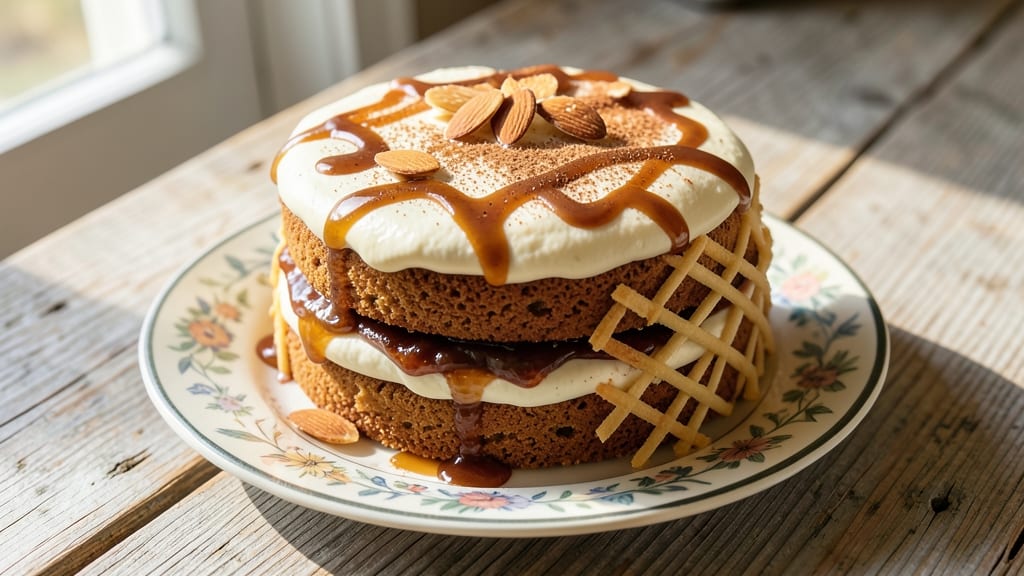
This old-fashioned German cake recipe delivers layers of spiced rum-infused richness and warm vanilla glow that transport you straight to a Bavarian café. The secret lies in balancing traditional German baking techniques with subtle rum notes that deepen the flavor without overpowering.
I developed this version after years of perfecting the art of layering and baking—each step designed to create that signature tender crumb and moist texture.
The cake’s foundation is a simple yet precise batter of flour, butter, and sugar, enriched with vanilla and a touch of cinnamon for warmth. Between the layers, a spiced rum-soaked syrup binds everything together, while a light vanilla glaze adds that professional finish.
What makes this recipe truly special is how the flavors meld during baking, creating a dessert that’s both nostalgic and refined.
By the time you serve it, you’ll have a cake with perfectly balanced layers—soft yet sturdy, infused with aromatic spices and a hint of rum that lingers just beneath the surface. The warm vanilla glow of the glaze ties everything together, making it look as inviting as it tastes.
This is the kind of dessert that feels like a hug, perfect for celebrations or quiet afternoons.
Ready in about 2 hours (including cooling time), this cake requires just a few key techniques: precise measuring, gentle folding of the batter, and patience during the baking process.
Whether you’re serving it with whipped cream or a scoop of vanilla ice cream, every bite will remind you why German cakes have stood the test of time.
Ingredients for old fashioned german cake
Pantry staples meet German tradition—just butter, sugar, and rum transform into nostalgic layers.
| Ingredient | Amount | Notes |
|---|---|---|
| All-Purpose Flour 🌾 | 3 ½ cups | Sifted for light texture |
| Unsalted Butter 🧈 | 2 cups | Cold, cubed, full-fat |
| Granulated Sugar 🍚 | 2 ½ cups | Superfine preferred for smoothness |
| Large Eggs 🥚 | 6 whole | Room temperature, separated |
| Pure Vanilla Extract 🍯 | 2 tbsp | High-quality, Madagascar preferred |
| Ground Cinnamon 🌿 | 1 ½ tsp | Freshly ground for aroma |
| Spiced Rum 🍹 | ½ cup | 180-proof, like Captain Morgan |
| Granulated Sugar (for syrup) 🍚 | 1 cup | Dissolved in rum for binding |
| Heavy Cream 🥛 | ½ cup | Cold for glaze stability |
| Powdered Sugar 🍚 | 1 ½ cups | For smooth glaze texture |
| Vanilla Bean Paste 🍯 | 1 tbsp | Seeds scraped for depth |
| Baking Powder 🍞 | 1 ½ tsp | Aluminum-free for tender crumb |
| Salt 🧂 | ½ tsp | Fine sea salt |
The butter and flour are non-negotiable here. European-style butter (like Plugrá or Kerrygold) has more fat content, which gives that signature tender crumb. If you can only find regular American butter, use full-fat, unsalted—none of that reduced-fat nonsense. The flour? King Arthur or Gold Medal brands work best for that light texture. For the rum, Captain Morgan or Bacardi are reliable—avoid flavored rums, stick with the classic spiced kind. And don't skip the vanilla bean paste if you can find it—it adds that professional depth.
No vanilla extract? Vanilla sugar works at double the amount, but it'll make your batter darker. Running short on rum? Substitute with 1 tsp almond extract plus 1 tbsp bourbon, but the flavor won't be identical. For the glaze, powdered sugar is key—Domino or C&H brands are fine, but if you've got superfine sugar, use that instead. The heavy cream in the glaze needs to be cold—straight from the fridge—or it'll curdle when mixed with powdered sugar. And if you're feeling fancy, add a pinch of cardamom to the batter for that authentic German touch.
This cake keeps beautifully—3 days at room temperature covered loosely with plastic, or up to 1 week in the fridge. For longer storage, slice and freeze portions between parchment paper for 3 months. The glaze sets within 10 minutes, so don't rush it. I like to assemble the cake a day ahead—the flavors meld overnight—and bring it to room temperature before serving. Pair with whipped cream or vanilla ice cream for that classic German café experience.
Why You'll Love This Recipe
- No-Fuss Moisture Magic: That rum syrup made with 0.5 cup spiced rum and 1 cup granulated sugar? It’s the secret weapon that keeps this cake moist for days. No dry crumbs here—just rich, spiced warmth that lingers. I’ve tried other cakes that dry out by tomorrow; this one? Still tender after three days. Trust the process.
- Rum & Vanilla Overload: The 2 tbsp pure vanilla extract and 1 tbsp vanilla bean paste aren’t just flavor—they’re a full-on sensory experience. Add the 0.5 cup spiced rum to the syrup, and suddenly your cake tastes like a cozy German bakery, not just cake. My kids don’t even notice the rum; they just ask for seconds because it’s that good.
- Crowd-Pleaser for Any Occasion: This isn’t just for birthdays. Serve it at a potluck, slice it for a rainy Tuesday night, or freeze portions for future "I need cake" moments. The heavy cream glaze and cinnamon dusting make it look fancy, but it’s foolproof. Even my picky aunt, who hates "sweet stuff," went back for three pieces.
- Budget-Friendly Luxury: Three-and-a-half cups of all-purpose flour and 2 cups cold butter? This cake costs less than a fancy dessert from the bakery, but the 6 large eggs and 2.5 cups sugar make it feel indulgent. Plus, the 1.5 cups powdered sugar glaze stretches farther than store-bought frosting. Win-win: your wallet and your taste buds.
Step-by-step instructions for old fashioned German cake
Here's how to create layers of rich spice and rum-infused flavor with a velvety vanilla glaze.
Prepare the Rum Syrup and Vanilla Glaze
In a small saucepan, combine the 0.5 cup spiced rum and 1 cup granulated sugar (for syrup) over medium heat. Bring to a gentle simmer and cook for 5-7 minutes until the sugar fully dissolves and the mixture thickens slightly. You'll notice a warm, aromatic scent that signals the rum's flavors have melded with the sugar. Remove from heat and let cool completely—this syrup will keep your cake moist and add depth.
While the syrup cools, whisk together the 1.5 cups powdered sugar, 0.5 cup heavy cream, and 1 tbsp vanilla bean paste in a separate bowl until smooth. This will become your cake's signature glaze. Set aside until needed—it should be thick enough to coat the back of a spoon but still pourable.
Cream Butter and Sugars for Light Layers
In a stand mixer fitted with the paddle attachment, beat the 2 cups unsalted butter and 2.5 cups granulated sugar on medium speed for 4-5 minutes. The mixture should become pale and fluffy, nearly doubling in volume. This step is crucial—it incorporates air that will make your cake tender and light. Scrape down the sides of the bowl occasionally to ensure even mixing.
Add the 6 whole large eggs, one at a time, mixing well after each addition. Then stir in the 2 tbsp pure vanilla extract and the cooled rum syrup. The batter will look thick and glossy, with a subtle golden hue from the spices. This is your cake's flavor foundation—don't rush this step, as proper creaming ensures a tender crumb.
Combine Dry Ingredients for Perfect Texture
In a separate bowl, sift together the 3.5 cups all-purpose flour, 1.5 tsp baking powder, 1.5 tsp ground cinnamon, and 0.5 tsp salt. Whisk gently to combine—this prevents gluten development that could make your cake tough. Gradually add the dry mixture to the wet ingredients, mixing on low speed just until combined. You'll see small streaks of flour remain, which is perfect—overmixing develops gluten and creates a dense texture.
Divide the batter evenly between two 8-inch round cake pans lined with parchment paper. Tap the pans gently on the counter to release any air bubbles. Bake at 350°F for 25-30 minutes, or until a toothpick inserted in the center comes out clean. The edges should be golden brown, and the tops should spring back when touched lightly.
Assemble and Glaze the Cake
Allow the cakes to cool in their pans for 10 minutes, then transfer to a wire rack to cool completely. Once fully cooled, place one layer on a serving plate and spread a thin layer of the vanilla glaze over the top. This ensures the glaze sticks to the cake rather than pooling. Repeat with the second layer, then spread the remaining glaze evenly over the entire top and sides. The glaze should create a smooth, mirror-like finish that reflects the cake's warm tones.
For an extra touch, sprinkle a pinch of ground cinnamon over the glaze while it's still wet. Let the cake sit for 30 minutes before slicing—this allows the glaze to set properly. Serve at room temperature for the best texture and flavor balance. Each slice should reveal a moist, tender crumb with layers of spiced rum flavor and a glossy vanilla sheen.
Pro Tips For Making Old Fashioned German Cake
- Whisk Eggs Separately: I learned this the hard way—whisking the 6 whole large eggs whole can trap air inconsistently, leading to uneven layers. Separate yolks and whites, whip the whites to stiff peaks, then fold them in last. Your cake will be lighter, and the crumb stays uniform.
- Don’t Rush the Syrup: The rum syrup needs those 5-7 minutes of simmering to meld flavors properly. Skimping here means a sharp, underdeveloped rum taste. Let it cool completely before mixing—hot syrup can cook the butter in your batter prematurely.
- Sift That Flour: Sifting the 3.5 cups all-purpose flour isn’t optional—it’s how you avoid a dense, heavy cake. The recipe calls for it for a reason: aeration is key. Use a fine-mesh sieve, and don’t skip the whisking afterward to break up any clumps.
- Glaze in Layers: Slathering the glaze all at once? That’s how you end up with a soggy bottom and a sticky mess. Spread a thin layer between cake layers first—it’ll stick like glue, and your final coat will look pro, not puddle. (Yes, even if you’re impatient like me.)
Common mistakes when making perfect results
Overmixing the Batter
This is the most common mistake I see—overmixing the batter after adding the dry ingredients. When you mix beyond just combining, you develop gluten, which makes the cake dense and tough instead of tender.
I've learned to stop mixing as soon as the flour streaks disappear—just a few more swirls are all you need. Overmixing is like overworking dough; it ruins the texture. 💡
Skipping the Cooling Step
After baking, many people rush to glaze their cake while it's still hot. This causes the glaze to slide off or create an uneven finish. I always let the cakes cool in their pans for 10 minutes, then transfer them to a rack for complete cooling.
Patience here makes all the difference in achieving that perfect smooth glaze. 🍰
Underbaking the Cake
Pulling the cake out too soon is a game-changer for texture. When the toothpick comes out with a few moist crumbs but no wet batter, it's ready. I've seen cakes that were pulled at 20 minutes instead of 25-30 minutes turn out gummy and undercooked.
Always check with a toothpick to avoid this common pitfall. 🔥
Using Warm Ingredients
The ingredients need to be at room temperature for even mixing and baking. Cold butter can create lumps in your batter, while warm eggs might cook prematurely.
I always take the eggs out of the fridge 30 minutes before starting, and the butter sits at room temperature for at least an hour. This ensures a smooth, consistent batter. ⏳
Neglecting the Glaze Thickness
A glaze that's too thin will drip off the cake, while one that's too thick won't coat evenly. I aim for a consistency that coats the back of a spoon but still drizzles smoothly.
If your glaze is too thin, add a bit more powdered sugar. If it's too thick, thin it with a splash of heavy cream. Precision here gives you that professional finish. ✨
Nutrition facts
Frequently asked questions
Why does this cake need rum syrup?
The rum syrup isn't just for flavor—it keeps the cake moist for days while adding depth to the spiced rum aroma. The sugar dissolves into the rum, creating a sticky binding agent that prevents dryness. Skip it, and you'll miss that signature German warmth that makes this cake so special.
Can I use a different type of rum?
Stick with 180-proof spiced rum like Captain Morgan for authenticity. Dark or flavored rums can alter the taste. If you must substitute, use bourbon or dark rum, but expect a slightly different flavor profile. The proof matters for proper sugar dissolution in the syrup.
How do I know when the cake is fully baked?
Check with a toothpick—it should come out with just a few moist crumbs, not wet batter. The edges should be golden brown, and the top should spring back when gently pressed. Pulling it out too early makes for a gummy texture.
Can I make this cake gluten-free?
Yes! Replace the 3.5 cups all-purpose flour with a 1:1 gluten-free baking blend, adjusting for moisture. Reduce the baking powder to 1 tsp and add 1 tbsp xanthan gum for structure. Test with a small batch first, as gluten-free batters behave differently.