
Desserts
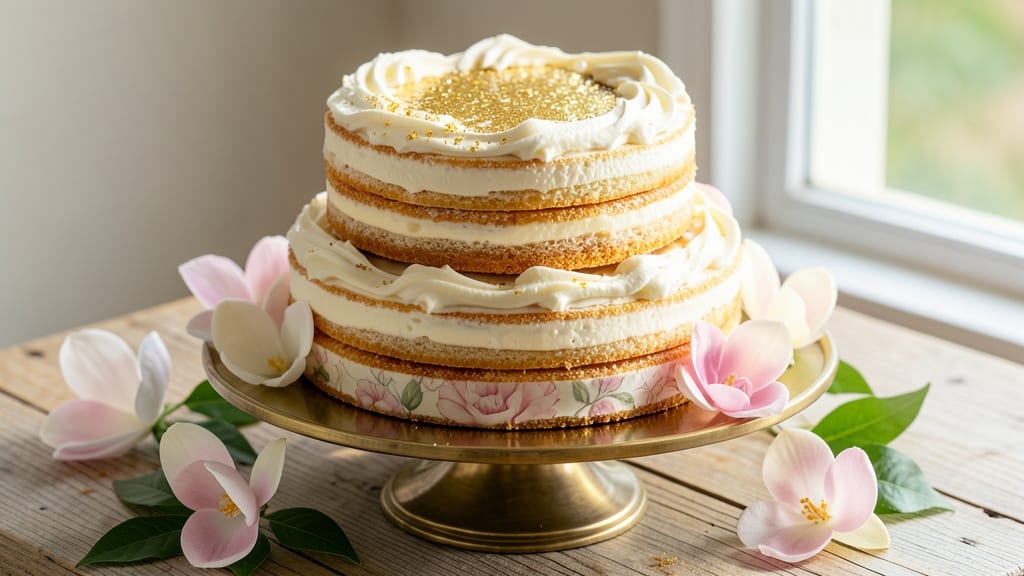
This Magnolia white cake recipe delivers the legendary light-as-air texture that makes it a Southern classic—all thanks to a buttermilk secret that keeps every bite tender and moist. I’ve baked this version countless times for weddings and family gatherings, and the difference between this and store-bought?
Night and day. The cake rises high, stays fluffy, and holds its shape without being dense, while the buttermilk trick ensures it never dries out.
The real magic happens in the layers: a delicate vanilla cake with a subtle crumb that practically melts in your mouth, paired with a velvety buttercream that’s smooth enough to pipe but sturdy enough to hold decorations.
What sets this apart is the room-temperature butter and proper mixing technique—no overmixing, no guessing—just precise steps that guarantee a foolproof result every time. Even beginners walk away with a showstopper.
By the time you’re done, you’ll have a cake that’s golden, perfectly domed, and light enough to feel like a cloud, all while staying rich and flavorful.
The frosting is where the real artistry comes in—whether you choose classic buttercream or a tangy cream cheese glaze, it’ll complement the cake’s vanilla notes beautifully. This isn’t just dessert; it’s the centerpiece of any celebration.
Serve it with a cup of Southern sweet tea or fresh berries for a touch of elegance, and you’ll have a cake that tastes like it came from a Magnolia Bakery—without the wait. Let’s get baking.
Ingredients for magnolia white cake
Buttermilk magic and room-temperature butter. That’s all you need for this legendary Southern white cake.
| Ingredient | Amount | Notes |
|---|---|---|
| All-Purpose Flour 🌾 | 3 cups | Sifted for lightness, no substitutions |
| Unsalted Butter 🧈 | 2 cups | Room temperature, European preferred |
| Granulated Sugar 🍚 | 2 ½ cups | Superfine for smoother texture |
| Buttermilk 🥛 | 1 ½ cups | Homemade or store-bought, full-fat |
| Pure Vanilla Extract 🌿 | 2 tbsp | Bourbon or Madagascar preferred |
| Baking Powder 🧂 | 2 ½ tsp | Double-acting, fresh |
| Salt 🧂 | ½ tsp | Fine sea salt |
| Large Eggs 🥚 | 4 whole | Room temperature, separated |
| Vegetable Oil 🫒 | ½ cup | Light, neutral flavor |
| Powdered Sugar 🍚 | 4 cups | For buttercream, sifted |
| Heavy Whipping Cream 🥛 | 1 ½ cups | Cold, full-fat |
| Vanilla Bean Paste 🌿 | 1 tbsp | Seeds scraped for depth |
| Lemon Zest 🍋 | 1 tsp | Fresh, organic preferred |
| Cake Flour 🌾 | ½ cup | Optional for finer crumb |
The butter is non-negotiable—European-style melts better, giving you that signature tender crumb. Costco or Whole Foods carry the best brands, but any unsalted will work if it’s truly room temp (not warm). For the buttermilk, homemade (milk + vinegar) beats store-bought every time—it’s tangier and more stable. The vanilla extract? Bourbon or Madagascar adds depth that imitation can’t match. If you’re using cake flour, Bob’s Red Mill is my go-to, but all-purpose works if you’re in a pinch—just whisk it well.
No buttermilk? Mix 1 cup milk + 1 tbsp vinegar, let sit 5 minutes. Out of vanilla? Vanilla bean paste or even almond extract at half the amount works. The powdered sugar for buttercream can be swapped for superfine sugar sifted with cornstarch if you’re desperate, but it won’t be as smooth. For the eggs, room temperature is critical—cold eggs cause lumps. The lemon zest adds a bright note—organic lemons have more flavor, but conventional works too. Pro tip: Toast your powdered sugar in a dry pan for 2 minutes to remove any moisture before whipping buttercream.
This cake keeps beautifully—3 days at room temp covered loosely, or 1 week refrigerated in layers separated by parchment. For longer storage, freeze the unfrosted layers for 3 months. The buttercream? 3 days refrigerated, but bring it to room temp before re-whipping. I always bake two 9-inch pans and freeze one—perfect for last-minute celebrations. The frosting can be made 2 days ahead; just re-whip before using.
Why You'll Love This Recipe
- Buttercream Perfection: That ultra-smooth buttercream with vanilla bean paste and lemon zest? It’s not just frosting—it’s the kind of velvety blanket that makes every bite feel like a hug. The 2 cups of room-temperature butter and 1.5 cups of heavy whipping cream come together in minutes, and honestly, once you taste it, you’ll never go back to basic vanilla.
- No-Fuss Assembly: I’ve baked cakes where the layers were a disaster, but this one? Even if your crumb coat isn’t perfect, the simple syrup brush keeps it moist for days. And that optional 0.5 cup of cake flour? It’s the secret weapon for a finer crumb without extra fuss. Trust me, it’s foolproof.
- Crowd-Pleasing Magic: This cake isn’t just for birthdays—it’s the star of brunch, potlucks, or even a lazy Sunday afternoon. The buttermilk and vanilla extract make it rich but not heavy, so it’s loved by everyone, from picky kids to dessert snobs. Plus, the layers freeze beautifully for up to 3 months, so you can bake once and enjoy all week.
- Budget-Friendly Luxury: You’d never guess it costs less than a takeout run, but the combination of all-purpose flour, unsalted butter, and granulated sugar gives you a showstopper. That 2 tbsp of vanilla extract? A little goes a long way, and it’s worth every penny for that signature Southern sweetness.
Step-by-step instructions for Magnolia white cake
Here's how to create that signature Southern lightness—every crumb fluffy and tender.
Prepare the Cake Batter for Maximum Lightness
Preheat your oven to 350°F and grease two 9-inch round cake pans with 0.5 cup vegetable oil, then line the bottoms with parchment circles. I like to use a silicone brush for even coating—this prevents sticking and ensures clean release later. Set the pans aside while you prepare the batter.
In a large mixing bowl, whisk together the 3 cups all-purpose flour, 0.5 cup cake flour, 2.5 teaspoons baking powder, and 0.5 teaspoon salt. Sift the dry ingredients directly into the bowl to aerate them—this creates a lighter crumb. Make a well in the center and set aside.
In a separate bowl, beat the 2 cups unsalted butter and 2.5 cups granulated sugar on medium speed until light and fluffy, about 3-4 minutes. The mixture should nearly triple in volume and become pale. Add the 4 whole large eggs, one at a time, mixing well after each addition. Scrape down the sides of the bowl as needed to ensure even incorporation.
Pour in the 1.5 cups buttermilk, 2 tbsp pure vanilla extract, and 1 teaspoon lemon zest. Mix on low speed just until combined—overmixing develops gluten and makes the cake dense. Gradually add the dry ingredients to the wet, mixing on low until just combined. The batter should be smooth but slightly thick, like heavy pudding. This is the secret to that signature Magnolia texture—don't overwork it.
Bake the Layers to Perfect Doneness
Divide the batter evenly between the prepared pans, smoothing the tops with a spatula. Tap each pan firmly on the counter 3-4 times to release any air bubbles—this prevents domed tops. Bake for 25-30 minutes, or until a toothpick inserted in the center comes out clean. Rotate the pans halfway through baking for even browning.
Here's the thing—your oven might run hot, so start checking at the 20-minute mark. The edges should be set, but the center should still look slightly underbaked. Overbaking dries out the cake, so remove it as soon as that toothpick test passes. Let the cakes cool in the pans for 10 minutes, then transfer to a wire rack to cool completely. This gradual cooling prevents cracking.
While the cakes cool, prepare the buttercream. In a stand mixer fitted with the paddle attachment, beat the 2 cups unsalted butter (softened) until creamy, about 2 minutes. Gradually add the 4 cups powdered sugar, mixing on low speed until incorporated. Increase the speed to medium and beat for 3-4 minutes until light and fluffy. Add the 1.5 cups heavy whipping cream, 2 tbsp pure vanilla extract, 1 tbsp vanilla bean paste, and 1 teaspoon lemon zest. Beat on high speed for another 2-3 minutes until thick and glossy. Scrape the sides of the bowl as needed.
Assemble the Cake with Confidence
Once the cakes are completely cool, level the tops if necessary using a serrated knife. Place the first layer on a cake stand or plate and spread a generous layer of buttercream—about 1 cup—over the top. This is your foundation, so don't skimp. Place the second layer on top and repeat with another 1 cup of buttercream. Press gently to create a smooth surface.
For the crumb coat, apply a thin layer of buttercream over the entire cake using an offset spatula. Chill the cake in the refrigerator for 15 minutes—this firms up the buttercream so it holds its shape. After chilling, apply the final layer of buttercream, smoothing it with long, even strokes. Use a bench scraper to create clean edges and a polished finish. For extra flair, pipe a simple border or rosettes around the base using leftover buttercream.
Here's where the magic happens: brush the top and sides of the cake with a simple syrup made by dissolving 2.5 cups granulated sugar in 0.5 cup hot water. This keeps the cake moist for days. If you're feeling fancy, dust the top with powdered sugar or garnish with fresh berries. Serve at room temperature for the best texture—this cake is best enjoyed within 2-3 days of baking.
Pro Tips For Making Magnolia White Cake
- Whisk Dry Ingredients First: Sift the 3 cups all-purpose flour, 0.5 cup cake flour, 2.5 tsp baking powder, and 0.5 tsp salt directly into the bowl before making the well. I learned this the hard way—skipping the sift leads to dense pockets in the crumb, no matter how gently you mix later.
- Check Butter at 350°F: Your 2 cups unsalted butter should be room temperature—press a thumb into it; if it leaves a slight indent but holds shape, you’re golden. Too cold? The cake will sink. Too soft? The buttercream will seize up later. (Yes, even if you’re impatient like me.)
- Tap Pans Before Baking: After filling the pans, tap them 3-4 times firmly on the countertop to pop air bubbles. I used to skip this and ended up with domed tops that looked like I’d forgotten to level them. A quick tap fixes it—no fuss, no wasted batter.
- Buttercream Needs Chill Time: That 15-minute fridge break before final frosting isn’t optional. The buttercream will slide off the spatula like a greased pig if you rush it. Trust me, your cake’s edges will thank you—smooth, sharp, and professional-looking.
Flavor customization for this recipe
Citrus Zest Twist
Brighten up your classic Magnolia white cake by swapping the 1 teaspoon lemon zest for a mix of 1 tsp orange zest and ½ tsp lemon zest. The orange adds a subtle sweetness that complements the vanilla without overpowering it.
I like to zest 1 small organic orange and 1 organic lemon right before mixing—freshness makes the difference. This variation works beautifully for spring or summer celebrations. 🍊
Spiced Vanilla Infusion
Elevate your vanilla profile by adding ¼ tsp ground cinnamon and ⅛ tsp ground nutmeg to both the cake batter and buttercream. The warmth of these spices pairs perfectly with the buttermilk and butter.
I use Penzeys spices for their pure, high-quality blends. This spiced version tastes like a cozy autumn day—ideal for Thanksgiving desserts. 🍂
Coffee-Infused Depth
For coffee lovers, replace ½ cup of the buttermilk with ½ cup strong brewed coffee (cooled) in the cake batter. Add 1 tbsp instant coffee granules to the buttercream for a subtle, consistent flavor.
This variation adds complexity without bitterness. I use Starbucks Via instant for reliability. Perfect for brunch cakes or coffee pairings. ☕
Cream Cheese Frosting Swap
Skip the buttercream entirely and use a cream cheese frosting instead—mix 8 oz cream cheese (softened), 1 cup unsalted butter, 4 cups powdered sugar, 1 tbsp vanilla extract, and 1 tsp lemon zest.
This tangy contrast balances the cake’s sweetness beautifully. I let the frosting sit for 1 hour before using to ensure smoothness. Ideal for a more sophisticated touch. 🧀
Chocolate-Dipped Delight
For a decadent twist, dip the cooled cake layers in dark chocolate ganache before frosting. Melt 8 oz dark chocolate (70% cocoa) with ½ cup heavy cream and let it cool slightly.
Dip the cake layers halfway, then frost as usual. This creates a stunning visual contrast while adding rich chocolate notes. Use Ghirardelli chocolate for the best results. 🍫
Nutrition facts
Frequently asked questions
Why does this cake recipe use buttermilk instead of regular milk?
Buttermilk creates the signature light, tender crumb that makes this cake legendary. The acidity in buttermilk reacts with baking soda (if used) or baking powder to produce extra carbon dioxide, helping the cake rise higher while keeping it moist. Regular milk lacks this acidity, so the cake can turn out denser. For best results, use full-fat buttermilk—homemade (milk + vinegar) works best if you can't find store-bought.
How do I know when the cake is fully baked?
Check for doneness at the 20-minute mark by inserting a toothpick into the center. It should come out clean or with just a few moist crumbs. The edges should be set, but the center should still look slightly underbaked—this ensures a moist crumb. Overbaking dries out the cake, so remove it as soon as the toothpick test passes.
Can I make this cake ahead of time?
Bake the layers up to 3 days ahead and store them wrapped tightly at room temperature. For longer storage, freeze the unfrosted layers for 3 months. Just let them thaw at room temperature before frosting. The buttercream can be made 2 days ahead and stored in an airtight container—re-whip before using.
What’s the best way to level uneven cake layers?
Use a serrated knife and a straight edge like a cake board. Place the knife at a slight angle and gently rock it across the cake to create an even surface. If the layer is domed, start cutting from the center outward to maintain symmetry. This ensures your frosting layer looks smooth and professional.
Why does the recipe call for European-style butter?
European butter has a higher fat content (around 82%) compared to American butter (80%), which means it melts more smoothly and creates a lighter, fluffier crumb. While American butter works, European butter delivers that signature tender texture the Magnolia white cake is famous for. Costco or specialty stores often carry it.