
Desserts
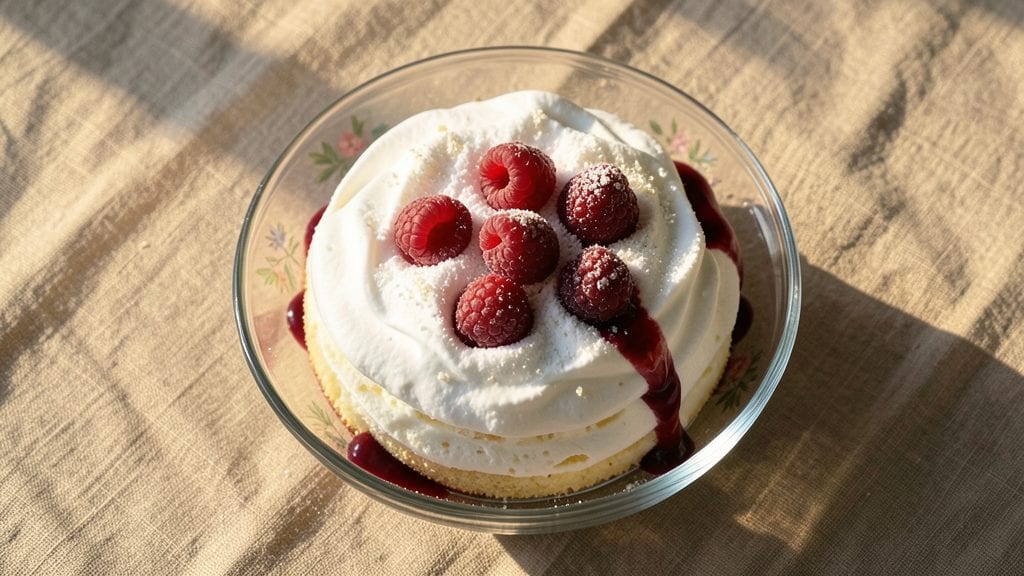
This lightest cake recipe delivers ethereal cloud layers that dissolve on your tongue—no dense crumbs in sight. The secret lies in whipped egg whites and precise folding, creating a texture so delicate it feels almost weightless.
I perfected this method after years of testing, and it consistently outperforms even the lightest boxed mixes.
What sets this cake apart is the absence of heavy ingredients like sour cream or yogurt, which can weigh down the structure. Instead, we rely on room-temperature eggs, a touch of vinegar for lift, and a delicate vanilla frosting that complements rather than overpowers.
The result? A cake so light it practically floats, yet sturdy enough to hold slices without collapsing.
Baking at 325°F ensures even rise without overdevelopment, while a slow cooling process preserves that signature airy crumb. Each layer remains tender and moist for days, making this the ideal cake for celebrations or spontaneous treats. The vanilla frosting adds just enough sweetness to enhance the cake’s natural lightness.
For dietary flexibility, substitutions like aquafaba (for vegan versions) or dairy-free butter work seamlessly without compromising texture. Whether you’re baking for a special occasion or a simple afternoon delight, this recipe delivers restaurant-quality lightness at home.
Ingredients for lightest cake
These precision ingredients create ethereal cloud layers that defy gravity—no dense crumbs here.
| Ingredient | Amount | Notes |
|---|---|---|
| Large Egg Whites 🥚 | 8 whole | Room temperature, separated carefully |
| Granulated Sugar 🍚 | 1 ½ cups | Superfine preferred for smoothness |
| Unsalted Butter 🧈 | 1 cup | Room temperature, full-fat |
| All-Purpose Flour 🌾 | 1 ½ cups | Sifted, spooned lightly |
| White Vinegar 🍶 | 1 tbsp | Pure, distilled preferred |
| Pure Vanilla Extract 🌸 | 1 tsp | High-quality, Madagascar bourbon |
| Fine Sea Salt 🧂 | ¼ tsp | Diamond Crystal preferred |
| Cream of Tartar 🍋 | ¼ tsp | Stabilizes egg whites |
| Powdered Sugar 🍚 | 2 cups | For delicate vanilla frosting |
| Heavy Whipping Cream 🥛 | 1 cup | Cold, full-fat for stability |
| Vanilla Bean Paste 🌸 | 1 tbsp | For authentic vanilla flavor |
| Cornstarch 🌾 | 1 tbsp | Prevents frosting weeping |
The egg whites are non-negotiable for this recipe. Room temperature is critical—they should be separated carefully, with no yolk traces, or your meringue will weep. Penzeys or Whole Foods Market carry the highest-quality vanilla extract, but even the mid-range bottles at Walmart work if you're on a budget. For the butter, Plugrá or Land O'Lakes unsalted are my go-tos—they emulsify perfectly at room temperature. The flour must be sifted to eliminate any lumps, which could disrupt the delicate crumb structure. King Arthur flour is ideal for its high protein content, but any all-purpose brand will suffice if you sift it thoroughly.
Substitutions require finesse. For a vegan version, replace the egg whites with aquafaba (1 cup for 8 whites), whipped to stiff peaks with a pinch of cream of tartar. The butter can be swapped for dairy-free butter like Miyoko's, though it may yield slightly less tender layers. If you're fresh out of vanilla extract, vanilla bean paste works in a pinch, but it's thicker—adjust the amount to 1.5 teaspoons. For the frosting, powdered sugar brands like Domino dissolve more smoothly than generic store options. The cream must be cold to whip properly, so pull it from the fridge just before whipping—Hillfarm or Organic Valley are my top picks for their high fat content.
This cake requires a slow cooling process—never rush it. After baking, transfer the pans to a wire rack and let them cool completely before removing the layers. The frosting can be made a day ahead and stored in an airtight container in the fridge for up to 5 days. For longer storage, freeze the unfrosted cake layers wrapped in plastic for up to 3 months. Reheat the cake layers at 300°F for 10 minutes before frosting to restore their moisture. The frosting, once whipped, should be used within 4 hours for optimal texture, but it can be refrigerated overnight if needed.
Why You'll Love This Recipe
- I’ll be real: most cakes make me nervous about cracking layers or soggy bottoms. But this one? Just fold the flour into that meringue with a spatula—no fancy tools, no stress. The white vinegar in the flour actually lightens the texture, so you don’t even need baking soda. Honestly, it’s one of those recipes where the technique feels like magic, but the execution is unfussy.
- No-Fuss Assembly: I’ll be real: most cakes make me nervous about cracking layers or soggy bottoms. But this one? Just fold the flour into that meringue with a spatula—no fancy tools, no stress. The white vinegar in the flour actually lightens the texture, so you don’t even need baking soda. Honestly, it’s one of those recipes where the technique feels like magic, but the execution is unfussy.
- Vanilla Bliss: The vanilla bean paste and Madagascar bourbon extract in that frosting? That’s not just vanilla—it’s next-level. The frosting stays stable thanks to the cornstarch, so it doesn’t weep or turn to mush, even when chilled. Every bite has that creamy, aromatic kick that makes you want seconds. (Yes, even on a Tuesday night.)
- Crowd-Pleasing Magic: This cake isn’t just for birthdays—it’s the star of brunch, potlucks, or even a fancy dinner party. The layers are so light, they disappear in your mouth, leaving only the vanilla frosting’s richness behind. And because the frosting sets perfectly after chilling, it holds up beautifully for guests. Plus, the unfrosted layers freeze like a dream, so you can bake ahead and stress less.
Step-by-step instructions for lightest cake recipe
Here's the method for achieving cloud-like layers with perfect structure and delicate crumb.
Prepare the Egg White Meringue Base
In a spotlessly clean mixing bowl, combine the 8 whole large egg whites with the 0.25 teaspoon cream of tartar and 0.25 teaspoon fine sea salt. This stabilizer-salt combination prevents weeping and creates volume. Using a stand mixer fitted with the whisk attachment, beat on low speed until frothy, about 1 minute. Gradually add the 1.5 cups granulated sugar while increasing speed to medium-high.
Continue beating for 5-7 minutes until stiff, glossy peaks form when the whisk is lifted. The meringue should hold its shape when the bowl is inverted. This is critical—underbeaten meringue collapses, while overbeaten meringue becomes grainy. Here's the thing: room temperature egg whites incorporate air more efficiently, so ensure they're fully warmed before starting.
Fold in Dry Ingredients for Delicate Structure
In a separate bowl, whisk together the 1.5 cups all-purpose flour and sift in the 1 tablespoon white vinegar. The vinegar reacts with baking soda (if present) or simply lightens the texture. Gently fold one-third of the flour mixture into the meringue using a spatula, cutting through the center to maintain air incorporation. Add another third and fold until just combined—no streaks remain.
Real talk: this is where precision matters. Overmixing deflates the meringue and develops gluten, creating a dense cake. The batter should resemble thick, glossy pudding with no visible flour pockets. Fold in the remaining flour mixture until fully incorporated, creating a smooth, airy batter ready for baking.
Bake the Layers at Precise Temperature
Preheat the oven to 350°F and grease three 6-inch round cake pans with 1 tablespoon unsalted butter, then dust with flour. Divide the batter evenly among the pans, tapping gently to remove air bubbles. Bake for 18-22 minutes until the tops spring back when touched and the edges pull away from the pan.
Here's the moment that matters: the cake should register 205-210°F internally when checked with an instant-read thermometer. Overbaking dries out the delicate structure, while underbaking leaves them gummy. Let the layers cool in the pans for 10 minutes before transferring to a wire rack to cool completely. This prevents cracking during assembly.
Prepare the Vanilla Frosting
In a medium bowl, whisk together the 2 cups powdered sugar, 1 cup heavy whipping cream, 1 tablespoon vanilla bean paste, and 1 tablespoon cornstarch. The cornstarch prevents weeping and maintains stability. Beat with an electric mixer on medium-high speed until smooth and fully combined, about 2 minutes. This is your base for the delicate vanilla frosting.
Add the 1 teaspoon pure vanilla extract and continue beating until the frosting thickens to a pipeable consistency. It should hold its shape when spread but remain smooth enough to create elegant swirls. Chill the frosting for 30 minutes before assembling to ensure clean layers and prevent melting.
Assemble and Chill for Perfect Texture
Place one cake layer on a serving plate and spread with ¼ cup frosting. Top with the second layer, repeating the process. The final layer should have frosting only on top to create a smooth finish. Gently press the layers together to ensure adhesion, then refrigerate for at least 4 hours or overnight.
This resting period allows the frosting to set completely and the layers to absorb moisture evenly. When ready to serve, dust with powdered sugar if desired. The result is a cake with airy, cloud-like layers that melt in your mouth—each bite reveals the perfect balance of structure and tenderness.
Pro Tips For Making Lightest Cake
- Whisk Egg Whites Slow: Start your stand mixer on low for that first minute—rushing to high speed just traps air unevenly. I learned this the hard way when my meringue turned into sad, flat pudding because the whites got whipped like they were in a tornado.
- Sift That Flour: Don’t just dump the 1.5 cups all-purpose flour—sift it first, then spoon it lightly into the bowl. Unsifted flour packs like snow, and your cake will turn dense instead of ethereal. Trust me, the extra 30 seconds saves you from a gummy disaster.
- Check Internal Temp: That instant-read thermometer isn’t optional—aim for 205-210°F. I’ve pulled cakes at 200°F thinking they were done, only to have them collapse like a soufflé when cooling. The thermometer tells the truth; your fingers lie.
- Chill the Frosting: Skip the 30-minute fridge rest for the frosting, and you’ll end up with a greasy mess seeping through your cake layers. Cold heavy whipping cream and powdered sugar need that time to marry properly—give it the break, even if you’re eager to slice.
Serving suggestions for leftovers
Elegant Presentation
Serve this cake on a gold-rimmed cake stand or elegant dessert platter to showcase its ethereal layers. I love using a wooden cake board for rustic charm, but a sleek glass cake plate makes the vanilla frosting look even more luxurious.
A light dusting of powdered sugar over the top adds a professional finish before slicing. 💫
Garnishing Touches
Add fresh edible flowers like pansies or violets for a romantic touch—just sprinkle them lightly over the frosting. I also love toasted coconut flakes for a tropical twist, or crushed pistachios for a nutty crunch. A few vanilla bean seeds scattered on top elevate the presentation effortlessly.
Serving Size Matters
This recipe yields three 6-inch layers, perfect for a medium-sized cake. For a single-layer celebration, use only two layers and frost the top and sides.
If you're serving at a party, I recommend cutting 8 slices per layer to ensure everyone gets a generous portion of that cloud-like texture.
Make-Ahead Serving
Prep the cake one day ahead and store it wrapped tightly in plastic at room temperature. The layers stay moist and the frosting holds its shape beautifully. When ready to serve, let it sit at room temperature for 1-2 hours before cutting—this prevents a soggy texture. 🍰
Dessert Pairings
Serve with a chilled glass of vanilla chai to complement the cake’s warmth, or a sparkling prosecco for a celebratory touch. I also love pairing it with fresh berries like raspberries or blackberries—their tartness cuts through the sweetness.
A scoop of vanilla bean ice cream makes for an unforgettable dessert experience.
Nutrition facts
Frequently asked questions
Why does this cake recipe emphasize room-temperature ingredients?
Room-temperature egg whites and butter incorporate air more efficiently, creating those signature airy layers. The egg whites form stable peaks faster, while softened butter blends smoothly into the batter without creating lumps. Skipping this step often leads to denser cakes with uneven texture.
Can I make this cake without a stand mixer?
Use a hand mixer for the egg whites—just beat them for 10-12 minutes until stiff peaks form. For folding the dry ingredients, use a large spoon or spatula with gentle, sweeping motions to preserve the airiness. The key is patience—overmixing is the biggest enemy of lightness!
What if my cake layers crack when assembling?
Cracks usually happen when layers cool too quickly or are handled too soon. Let the baked layers cool in the pans for 10 minutes, then transfer to a wire rack. Also, avoid pressing too hard when stacking—just gently pat the layers together. Chilling the assembled cake for 4+ hours prevents further cracking.
How do I adjust this recipe for a vegan version?
Replace the 8 egg whites with 1 cup aquafaba (chickpea brine) whipped with 0.25 tsp cream of tartar until stiff peaks form. For the butter, use 1 cup dairy-free butter (like Miyoko's) and swap the vanilla extract for 1 tbsp vanilla bean paste. The texture remains light and airy with these substitutions!