
Soups & Stews
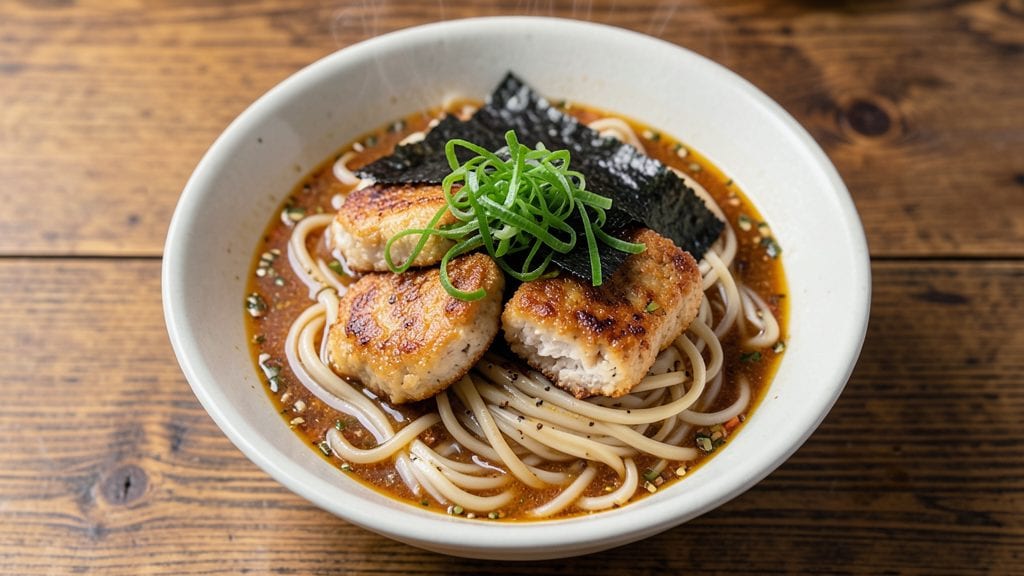
This fish cake ramen recipe delivers the perfect harmony of textures and flavors—crispy golden fish cakes on top, silky broth beneath, and all the classic toppings in between.
I developed this version after years of experimenting with Japanese ramen shops in Portland, where the balance between umami-rich broth and crunchy toppings always left me craving more.
The secret lies in baking the fish cakes until they're perfectly crispy while keeping the broth simmering at just the right temperature to maintain its velvety texture.
What sets this recipe apart is the attention to detail in every component. The fish cakes are made with finely chopped white fish, cornstarch for that signature crunch, and a touch of egg to bind everything together.
Meanwhile, the broth simmers with a blend of dashi, soy sauce, and a hint of miso for depth, while the ramen noodles cook just until they're tender but still have a slight bite.
This isn't just ramen—it's a restaurant-quality experience you can recreate at home with simple techniques and pantry staples.
By the time you're done, you'll have a bowl that's rich in umami from the broth, crispy from the fish cakes, and fresh from the toppings of soft-boiled eggs, green onions, and nori. The contrast between the textures—crunchy, silky, creamy—makes every bite exciting.
This recipe is foolproof, with clear steps for prepping the fish cakes ahead of time and assembling everything just before serving. Whether you're cooking for a weeknight dinner or a special occasion, this ramen will impress.
For those following a pescatarian diet, this recipe is a game-changer, offering all the depth and satisfaction of traditional ramen without any meat. The fish cakes can be made in advance and reheated, making this a great option for meal prep.
Let's get started on creating your perfect bowl of fish cake ramen.
Ingredients for fish cake ramen
Pantry staples meet Japanese comfort food—crispy fish cakes and velvety broth await.
| Ingredient | Amount | Notes |
|---|---|---|
| White Fish Fillets 🐟 | 1 ½ lb | Cod or haddock preferred, skinless |
| Cornstarch 🌾 | ½ cup | For crispy texture, not flour |
| Large Eggs 🥚 | 2 whole | Cold, for binding fish cakes |
| Green Onions 🧅 | ½ cup | Chopped, for garnish |
| Nori Sheets 🍣 | 4 whole | Toasted, cut into strips |
| Ramen Noodles 🍜 | 8 oz | Fresh or dried, preferred |
| Dashi Powder 🍲 | 2 tbsp | Instant or homemade |
| Soy Sauce 🍶 | ½ cup | Light or dark preferred |
| White Miso Paste 🧈 | 1 tbsp | For umami depth |
| Chicken Broth 💧 | 4 cups | Low-sodium preferred |
| Sesame Oil 🫒 | 1 tbsp | Toasted, for aroma |
| Soft-Boiled Eggs 🥚 | 2 whole | 6-minute cook time |
| Vegetable Oil 🫒 | 2 tbsp | For frying fish cakes |
| Sesame Seeds 🌾 | 1 tbsp | Toasted, for garnish |
| Salt 🧂 | 1 tsp | Adjust to taste |
The fish is non-negotiable here. Cod or haddock stays flaky when cooked—tilapia gets mushy. Grab fresh fillets from the seafood counter at Whole Foods or your local fishmonger, not frozen blocks. If you're using frozen, thaw overnight in the fridge. The cornstarch is key for that signature crunch—don't substitute with flour, it won't crisp up the same. For the dashi, Marukome brand is my go-to, but any instant dashi works in a pinch. The miso? White miso is sweeter and pairs better with the delicate fish flavor.
No cod? Pollock or tilapia work too, but expect slightly less flakiness. Running low on nori? Dried seaweed snacks from Asian markets will do—just tear into strips. The ramen noodles can be fresh or dried, but fresh cooks faster (about 3 minutes vs. 5). For the broth, low-sodium chicken broth is crucial—you're adding soy sauce and miso, so you don't want extra salt. Short on sesame oil? A dash of toasted sesame seeds adds flavor without the aroma. The fish cakes can be prepped ahead and baked just before serving—they're even better the next day.
Store the fish cakes in the fridge for up to 2 days before baking. The broth keeps for 5 days in the fridge or 3 months frozen. For meal prep, assemble everything except the fish cakes and broth—store separately and combine when ready to eat. The nori strips and sesame seeds should be toasted fresh before serving (takes 30 seconds in a dry pan). This ramen reheats beautifully—just warm the broth and crisp the fish cakes again in the oven. Leftovers? Double the batch and freeze portions for quick weeknight dinners.
Why You'll Love This Recipe
- Crispy in Minutes: I’ll be honest—those fish cakes take three minutes per side and turn into golden, crackling perfection. No frying pan skills required, just medium-high heat and a little patience. The cornstarch trick? Game-changer. It’s the only reason these hold their shape and stay crispy even after that first bite.
- Umami Bomb: That broth is dangerously addictive. Dashi powder, miso paste, and soy sauce work together like a flavor symphony, while the soft-boiled eggs add that creamy, rich contrast. Plus, the nori sheets? They’re not just garnish—they pack a salty-savory punch that ties everything together. One bowl and you’ll be reaching for seconds.
- Leftovers? No Problem: The broth keeps for five whole days in the fridge, and those fish cakes? Crisp them up again in the oven if they soften. Need a quick lunch? Reheat the broth, toss in some noodles, and pop a fish cake on top. My kids swear by this for lazy school nights, and honestly? It’s my secret weapon for feeding a crowd without the fuss.
- Budget-Friendly Luxury: You’re getting restaurant-quality flavors without the price tag. A pound of fish fillets and a few pantry staples (like that miso paste and dashi powder) make this feel like a splurge, but it’s actually one of my most affordable go-tos. The sesame seeds and nori might seem fancy, but they’re cheap and transform the dish instantly. Worth every penny.
Step-by-step instructions for crispy fish cake ramen
Here's how to create perfectly crispy fish cakes with a rich, balanced ramen broth.
Prepare the Fish Cake Batter
Cut the 1.5 lb white fish fillets into ½-inch cubes and transfer to a large bowl. Add the 2 whole large eggs and 1 tsp salt, mixing gently until just combined. The fish should look evenly coated but still retain its shape.
In a separate bowl, whisk together the 0.5 cup cornstarch with 2 tablespoons vegetable oil. Gradually sprinkle this mixture over the fish, tossing gently to coat each piece evenly. The cornstarch will create that signature crispy exterior we're after. Let the batter rest for 10 minutes at room temperature while you prepare the next components.
Fry the Fish Cakes to Golden Perfection
Heat 1 tablespoon vegetable oil in a non-stick skillet over medium-high heat until shimmering. Working in batches to avoid crowding, add the fish cakes and cook for 3-4 minutes per side until they develop a deep golden brown crust and the edges begin to crisp. The internal temperature should reach 145°F when checked with an instant-read thermometer.
Transfer the cooked fish cakes to a paper towel-lined plate to drain excess oil. Here's the thing - don't press them down with the paper towels or they'll lose their shape. Instead, let them drain naturally while you prepare the ramen broth. The crispy exterior should hold firm enough to stack or serve whole.
Build the Umami-Packed Broth
In a separate pot, combine the 4 cups chicken broth, 2 tablespoons dashi powder, ½ cup soy sauce, and 1 tablespoon white miso paste. Bring to a gentle simmer over medium heat, then reduce to a bare simmer and let cook uncovered for 10 minutes to allow flavors to meld. You'll notice the aroma become more complex as the miso dissolves completely.
Meanwhile, cook the 8 oz ramen noodles according to package instructions until al dente. Drain and set aside, reserving ½ cup of the starchy pasta water. This water will be our secret weapon for adjusting the broth consistency later. The noodles should be tender but still have a slight bite to them.
Assemble and Garnish the Ramen
Divide the cooked ramen noodles among four bowls. Ladle the hot broth over each serving until just covered. Here's where it gets good - add 1-2 fish cakes to each bowl, arranging them on top of the noodles. The contrast of crispy fish against silky noodles is what makes this dish special.
For the finishing touches, carefully place 1 soft-boiled egg in each bowl (halved lengthwise for presentation). Garnish with toasted nori strips (cut from the 4 whole nori sheets), 1 tablespoon sesame seeds, 1 tablespoon sesame oil drizzled around the edges, and the ½ cup chopped green onions. The visual contrast of dark nori against the light broth makes each bowl look restaurant-worthy.
Serve Immediately with Crispy Topping
Work quickly to serve this dish while the fish cakes remain crispy. The moment you assemble everything, the aroma of toasted sesame and umami broth will fill your kitchen. Each bite should deliver that satisfying crunch from the fish cake, followed by the rich, balanced broth and tender noodles.
Real talk - if you notice the fish cakes starting to lose their crispness after 5 minutes, simply pop them back in a 350°F oven for 2-3 minutes to restore their crunch. The beauty of this dish is that it's designed to be served immediately, so don't let it sit too long after assembly.
Pro Tips For Making Fish Cake Ramen
- Use Cold Eggs Only: Grab those eggs straight from the fridge—cold yolks bind the fish cakes better than room-temperature ones. I learned this the hard way after making a batch with eggs sitting out, and the cakes fell apart when frying. Keep them chilled until you’re ready to mix.
- Fry in Batches, Don’t Crowd: Medium-high heat is your friend, but too many fish cakes in the pan will steam instead of crisp. Work in small batches—just enough to leave gaps between them—so each piece gets that golden crust. After burning three batches, I finally figured out that patience here makes all the difference.
- Toast Nori Before Cutting: Dry-toast the nori sheets first—just a few seconds over a flame or in a hot pan—before cutting them into strips. This removes the fishy taste and adds a smoky depth that plain strips can’t match. Skip this, and you’ll notice the nori flavor overpowering the broth.
- Reserve Noodle Water Early: Drain the cooked noodles but save that starchy water—it’s liquid gold for adjusting the broth’s silkiness. A splash or two when ladling will prevent the noodles from turning mushy and keep the broth clinging to them. I used to ignore this, and my ramen always felt flat until I tried it.
Best sauces and condiments for fish cake ramen
Umami Boosters
For extra depth, add 1 tbsp fish sauce to the broth while simmering—it enhances the natural fish flavor without overpowering. I swear by Red Boat fish sauce for its balanced sweetness and saltiness.
Another trick is to stir in ½ tsp grated ginger during the final 2 minutes of simmering; it brightens the broth beautifully. 💛
Spicy Kick
If you love heat, sprinkle ½ tsp chili crisp (like Sichuan Peppercorn Chili Crisp) over the assembled bowls before serving. For a fresher option, mix 1 tsp gochujang into the broth during the last 5 minutes of simmering. Both add complexity without making the dish overwhelming.
Fresh Herbs
Swap the green onions for 1 tbsp chopped cilantro or 1 tbsp Thai basil for a brighter finish. I keep a small pot of Thai basil growing on my windowsill—it’s my secret weapon for adding freshness. Toss the herbs in just before serving to preserve their vibrant color and aroma.
Smoky Depth
Add ½ tsp smoked paprika to the fish cake batter for a subtle smoky flavor that pairs perfectly with the umami broth. I also like to toast ½ tsp smoked sesame seeds in a dry pan for 30 seconds before sprinkling them on top.
The smokiness elevates the dish to a whole new level.
Sweet Balance
Drizzle ½ tsp honey or 1 tsp mirin into the broth during the last 3 minutes of simmering to balance the saltiness. For a restaurant-quality touch, add 1 tsp black vinegar (like Kizakura) to the broth—it cuts through the richness while adding a tangy brightness.
Nutrition facts
Frequently asked questions
Why does my fish cake ramen broth taste bland?
The umami depth comes from the 1 tbsp white miso paste and 2 tbsp dashi powder in the broth. If it tastes bland, simmer longer (up to 15 minutes) to let flavors meld, or add a pinch of fish sauce during the last 2 minutes. The ½ cup soy sauce also boosts flavor—don’t skip it!
Can I make the fish cakes ahead of time?
Cook the fish cakes and let them cool completely, then store them in an airtight container in the fridge for up to 2 days. Reheat in a 350°F oven for 2-3 minutes to restore crispiness. This is perfect for meal prep—just assemble the ramen fresh!
What if my fish cakes get soggy?
Soggy fish cakes happen when they absorb too much moisture. Avoid pressing them with paper towels—let them drain naturally. If they do soften, crisp them up again in the oven at 350°F for 2-3 minutes. For extra crispiness, pat them dry with a clean towel before reheating.
Can I use dried ramen noodles instead of fresh?
Yes! Dried ramen noodles work perfectly—they just take 5 minutes to cook instead of 3 minutes for fresh. Cook them al dente and reserve ½ cup pasta water to adjust the broth consistency later. The texture difference is minimal, so don’t worry!