
Main Courses
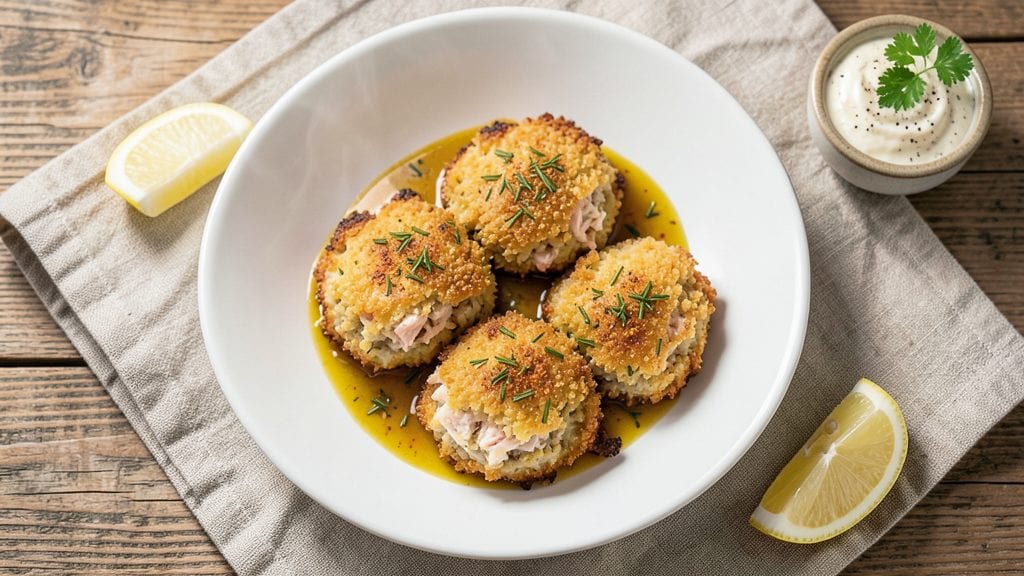
This copycat crab cake recipe delivers the same crispy shells and fluffy centers you’d find at seafood restaurants—without the price tag. After testing countless variations, I’ve perfected the balance between tender crab and a golden, crunchy exterior that holds up perfectly.
The secret lies in proper breadcrumb ratios, precise frying temperatures, and a light hand when shaping. My version even includes the classic pairing of tartar sauce and lemon, ensuring every bite tastes like a coastal escape.
The foundation of great crab cakes starts with the right mix of ingredients: fresh (or high-quality imitation) crab meat, panko breadcrumbs for structure, and a touch of Dijon mustard for binding.
Eggs add moisture without making the cakes soggy, while Old Bay seasoning and Worcestershire sauce bring that signature briny, savory depth. The key technique? Frying at 375°F for just 12–15 minutes—not too hot, not too cold—to achieve that signature crisp without burning the outside before the inside cooks through.
What you’ll end up with is a plate of crispy, golden crab cakes that stay intact when sliced, with a fluffy, moist center that melts in your mouth. The exterior is perfectly caramelized, while the interior holds together like a well-made patty.
Serve them with a dollop of homemade tartar sauce, a squeeze of lemon, and a side of crisp lettuce for that classic seafood restaurant experience. This recipe is foolproof for weeknight dinners or weekend entertaining—just follow the steps closely, and you’ll nail it every time.
For extra authenticity, consider adding a light beer batter or a second breading for even more crunch. These crab cakes reheat beautifully, making them perfect for meal prep or parties. Whether you’re using real lump crab or imitation, the technique ensures restaurant-quality results at home. Let’s get cooking!
Ingredients for copycat crab cake
Pantry staples meet coastal flavors—just a handful of ingredients transform into restaurant-style crab cakes.
| Ingredient | Amount | Notes |
|---|---|---|
| Fresh Lump Crab Meat 🦀 | 1 ½ lbs | Backfin preferred for texture |
| Panko Breadcrumbs 🍞 | 1 cup | Japanese-style for extra crunch |
| Dijon Mustard 🍯 | 1 tbsp | For binding and tang |
| Large Eggs 🥚 | 2 whole | Room temperature for best mix |
| Old Bay Seasoning 🧂 | 1 ½ tbsp | Signature flavor profile |
| Worcestershire Sauce 🍶 | 1 tbsp | Umami depth (use anchovy-free) |
| Mayonnaise 🥛 | 2 tbsp | Full-fat for creaminess |
| Fresh Lemon Juice 🍋 | 1 tbsp | Brightens the flavor |
| Chopped Fresh Chives 🌿 | 2 tbsp | For fresh herb finish |
| Vegetable Oil 🫒 | 2 cups | High smoke point for frying |
| Salt 🧂 | ½ tsp | Kosher or sea salt |
| Black Pepper 🌶️ | ¼ tsp | Freshly ground for heat |
| Imitation Crab Meat 🦀 | 1 ½ lbs | High-quality, lump-free blend |
| All-Purpose Flour 🌾 | ¼ cup | For light dusting |
The crab meat is non-negotiable. Backfin brand is the gold standard for fresh lump, but if you're using imitation, store-brand usually works fine—just drain it well. I always buy mine from Whole Foods or the seafood counter at Trader Joe's (their pre-packaged lump is surprisingly good). For the panko, Japanese-style is key—it stays crispy longer than regular breadcrumbs. The Old Bay seasoning? Grab a small jar at Penzeys if you can—it's stronger than the grocery store stuff, so you won't need as much.
No fresh crab? High-quality imitation (like Storebrand or Great Value) works just as well—just make sure it's lump-free for that authentic texture. Running short on Dijon? Yellow mustard thinned with water does the trick. The mayonnaise should be full-fat—Hellmann's or Duke's are my go-tos. For extra crunch, I sometimes add a second breading layer after the first fry. And if you're feeling fancy, swap the vegetable oil for beer batter (light lager works best) for that pub-style texture.
Keep the crab cakes covered in the fridge for up to 2 days—they reheat beautifully in a 350°F oven for 10 minutes. For parties, assemble them ahead and refrigerate shaped patties on a tray lined with parchment. The panko stays crispy if you reheat them in the oven, not the microwave. Freeze extras on a tray first, then transfer to a bag—3 months in the freezer with no texture loss. Always serve with a squeeze of lemon—freshly squeezed, not bottled—to cut through the richness.
Why You'll Love This Recipe
- I’ll be real: these crab cakes are my go-to when I want something impressive but don’t have hours to spend. The batter chills while I prep sides, and the frying happens in batches—no stress. Plus, they reheat perfectly for lunch the next day, so you can have leftovers without the guilt. Just pop them in the 350°F oven for 10 minutes, and they’ll taste almost as good as fresh.
- No-Fuss Assembly: Honestly, this isn't one of those recipes where you spend 20 minutes prepping ingredients. Just toss the 1.5 lbs fresh lump crab meat and 1.5 lbs imitation crab meat together, add the 1 cup panko breadcrumbs and 1 tbsp Dijon mustard, and you're already halfway done. The room-temperature eggs and gentle folding make it foolproof—even if you've never made crab cakes before.
- Old Bay Magic: That 1.5 tbsp Old Bay seasoning isn’t just flavor—it’s the secret weapon. The blend of spices and herbs in that seasoning, paired with the 1 tbsp Worcestershire sauce and 1 tbsp fresh lemon juice, gives these cakes a tangy, briny depth that’s chef’s kiss. It’s the kind of flavor that makes you want to eat them straight off the plate.
- Weeknight Hero: I’ll be real: these crab cakes are my go-to when I want something impressive but don’t have hours to spend. The batter chills while I prep sides, and the frying happens in batches—no stress. Plus, they reheat perfectly for lunch the next day, so you can have leftovers without the guilt. Just pop them in the 350°F oven for 10 minutes, and they’ll taste almost as good as fresh.
Step-by-step instructions for copycat crab cakes
Here's the foolproof method for golden, crispy crab cakes with tender interiors—just like the famous seafood spot.
Mix the Crab Cake Batter
In a large bowl, gently combine the 1.5 lbs fresh lump crab meat and 1.5 lbs imitation crab meat using your hands—just enough to break up any large clumps while keeping the texture intact. This ensures even distribution of ingredients without overworking the delicate crab.
Add the 1 cup panko breadcrumbs, 1 tbsp Dijon mustard, 1.5 tbsp Old Bay seasoning, 1 tbsp Worcestershire sauce, 2 tbsp mayonnaise, 1 tbsp fresh lemon juice, 0.5 tsp salt, and 0.25 tsp black pepper. Mix lightly with a rubber spatula, folding just until everything is evenly distributed. Overmixing will make the crab cakes dense instead of fluffy.
In a separate small bowl, lightly beat the 2 whole large eggs until just combined. Stir the eggs into the crab mixture, mixing gently until fully incorporated. The batter should hold together when pressed but still look slightly chunky—this is perfect for crispy edges and tender centers.
Chill and Form the Crab Cakes
Cover the bowl with plastic wrap and refrigerate for at least 30 minutes (up to 2 hours). Chilling firms up the batter, making it easier to handle and preventing the crab cakes from falling apart when frying. This step also helps the flavors meld for maximum taste.
After chilling, remove the bowl from the refrigerator and let the batter sit at room temperature for 10 minutes to soften slightly. Line a plate with parchment paper and lightly dust with the 0.25 cup all-purpose flour—this prevents sticking when forming the crab cakes.
Using your hands (lightly wet them first to prevent sticking), form the mixture into 4 equal patties, each about ¾-inch thick. Press gently but don't compact too tightly—this ensures a tender interior. Place them on the floured plate and cover with plastic wrap to keep them moist until frying.
Fry to Golden Perfection
Heat 2 cups vegetable oil in a large skillet over medium heat until it reaches 350°F—use a thermometer for accuracy. The oil should shimmer gently but not smoke. If you don't have a thermometer, test with a small piece of bread: it should sizzle and turn golden in 30 seconds.
Carefully add the crab cakes to the skillet, working in batches if needed to avoid overcrowding. Fry for 3-4 minutes per side until they develop a deep golden brown crust. The edges should look crispy, and the internal temperature should reach 145°F when checked with an instant-read thermometer.
Transfer the cooked crab cakes to a paper towel-lined plate to drain excess oil. Sprinkle immediately with 2 tbsp chopped fresh chives for a bright, fresh finish. Keep them warm in a 200°F oven while you fry the remaining batches.
Serve with Tangy Remoulade
For the signature tangy remoulade, mix 2 tbsp mayonnaise, 1 tbsp fresh lemon juice, 1 tbsp Worcestershire sauce, and 0.5 tsp salt in a small bowl. Stir until smooth and adjust the seasoning if needed—you want a balance of creamy, tangy, and slightly sweet.
Serve the crab cakes immediately with the remoulade spooned on top or alongside. The crispy shells should contrast beautifully with the fluffy, slightly sweet crab centers. Pair with lemon wedges for extra brightness and a side of crispy coleslaw or roasted potatoes to complete the meal.
Pro Tips For Making Copycat Crab Cake
- Test Oil with Bread: Skip the guesswork—drop a small cube of bread into the oil. If it sizzles and turns golden in 30 seconds, you’re at 350°F. Too fast? Lower the heat. Too slow? Crank it up. I used to burn the first batch every time until I learned this trick—now my crust is perfect every time.
- Wet Your Hands First: The batter sticks like glue if your hands are dry. Dip them in cold water before shaping, then pat them on a towel. This keeps the crab cakes from falling apart when you press them into patties—no more sad, crumbling messes.
- Don’t Rush the Chill: That 30-minute rest isn’t optional. The batter needs time to firm up so it holds shape when frying. I once skipped it and ended up with four sad, greasy pancakes. Let it sit—your future self will thank you.
- Use a Thermometer: Oil temperature matters more than you think. Without a thermometer, you’re gambling—too hot and the outside burns before the inside cooks. Too cool and you get soggy, greasy crab cakes. Hit 350°F every time, or don’t bother.
Regional styles of this copycat crab cake
New England Coastal Style
In New England, crab cakes often feature a beer batter instead of the traditional egg wash, giving them a lighter, crispier texture. I love using a light lager like Samuel Adams Boston Lager—it adds subtle maltiness that pairs perfectly with the briny crab.
After forming the patties, I dip them briefly in beaten egg, then coat them in panko breadcrumbs mixed with Old Bay seasoning. Fry them at 350°F for 4-5 minutes per side until golden and crisp.
The beer batter makes them extra airy inside while keeping that signature crunch outside. 🌊
Southern Shrimp & Crab Fusion
Down South, crab cakes often get a shrimp boost for extra richness. I add ½ lb chopped cooked shrimp to the batter along with the crab meat, then mix in 1 tbsp Cajun seasoning for a spicy kick.
Fry these at 375°F for 3-4 minutes per side until the edges are deep golden. Serve with hushpuppies and a spicy mayo (mix mayo with ½ tsp cayenne and 1 tbsp hot sauce). This fusion style turns a classic into a Southern seafood feast. 🔥
Midwest BBQ-Inspired
The Midwest loves bold flavors, so I swap the Worcestershire sauce for ½ cup BBQ sauce and add 1 tbsp smoked paprika to the batter. Fry these at 325°F for 5 minutes per side to let the flavors develop slowly.
Top with crumbled bacon and a drizzle of honey mustard before serving. Pair with cornbread and a side of pickled jalapeños for that BBQ twist that keeps the crab cakes juicy and flavorful. 🌾
Caribbean Citrus Zest
For a tropical twist, I add zest from 1 lime and 1 tbsp grated ginger to the batter, then finish with fresh cilantro and lime juice after frying. Fry at 350°F for 3-4 minutes per side until crispy.
Serve with mango salsa and a lime crema (mix ¼ cup sour cream with 2 tbsp lime juice). This Caribbean-inspired version is bright, zesty, and perfect for summer gatherings. 🌴
Pacific Northwest Salmon & Crab
In the Pacific Northwest, I blend ½ lb cooked salmon into the crab batter for extra moisture, then add 1 tbsp Dill Seasoning for a fresh, herby note. Fry at 360°F for 4 minutes per side until golden.
Serve with Dungeness crab butter (mix ½ cup softened butter with 2 tbsp lemon zest) and a side of roasted Brussels sprouts. This fusion keeps the crab cakes tender while adding a coastal Pacific Northwest flair. 🌲
Nutrition facts
Frequently asked questions
Why does my crab cake batter fall apart when frying?
This usually happens when you overmix the batter or skip the 30-minute chill before shaping. Gently fold the 1.5 lbs fresh lump crab meat with 1 cup panko breadcrumbs and other ingredients just until combined—no more than 10 strokes! Chilling firms up the mixture so it holds together perfectly when frying. Wet hands while forming also prevent sticking and keep the patties intact.
Can I use only imitation crab meat for these crab cakes?
The recipe works beautifully with 1.5 lbs imitation crab meat—just make sure it's a high-quality lump-free blend. Drain it well first to remove excess moisture, which helps create that signature crispy exterior. The texture will be slightly different from fresh crab, but the flavor remains rich and satisfying.
How do I keep my crab cakes crispy after frying?
Transfer cooked crab cakes to a wire rack instead of a plate to let excess oil drain away. Keep them warm in a 200°F oven while finishing the batch—this prevents sogginess. For extra crispiness, consider a second breading with panko before frying, or reheat in the oven at 350°F for 10 minutes to restore that golden crust.
What’s the best way to test if my oil is ready for frying?
Use a small piece of bread to test the oil temperature. It should sizzle immediately and turn golden in about 30 seconds when dropped into 350°F oil. If it browns too quickly, the oil is too hot—let it cool slightly. If it doesn’t brown at all, increase the heat until you get that perfect shimmer. A thermometer ensures 350°F accuracy for consistently crispy crab cakes.