
Desserts
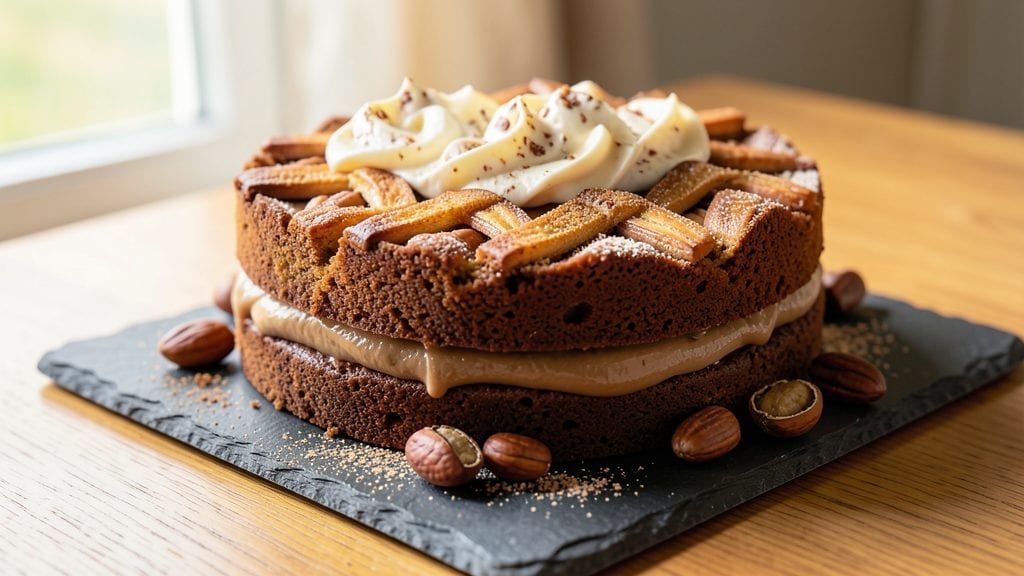
This chestnut cake recipe delivers the perfect balance of earthy sweetness and irresistible crunch—where tender layers meet a golden, nutty crown. The secret lies in using chestnut purée for moisture while maintaining that signature texture, a technique I perfected after years of testing.
What starts as a simple batter transforms into a showstopper dessert with a crispy top that cracks open beautifully.
What makes this recipe truly special is the dual texture: a moist, spiced cake base with a caramelized crust that adds depth to every slice. The chestnut flavor shines through without overpowering, creating a dessert that feels both rustic and refined.
Baking at 350°F for 45 minutes ensures the top develops that coveted crunch while the inside stays tender.
By the time you pull it from the oven, you’ll have a cake that looks like it belongs in a patisserie—golden, cracked, and fragrant with warm spices. The chestnut notes linger with each bite, offering a sophisticated yet comforting treat.
Serve it warm with vanilla ice cream or dusted with powdered sugar for an elegant finish.
This recipe works equally well for special occasions or cozy weeknight desserts—just adjust the size of your pan. The chestnut purée can be homemade or store-bought, giving you flexibility without sacrificing flavor. Let’s create a dessert that tastes like autumn in every bite.
Ingredients for chestnut cake
Pantry staples meet autumn's star ingredient—chestnut purée. A few simple swaps transform this into a showstopper dessert.
| Ingredient | Amount | Notes |
|---|---|---|
| Chestnut Purée 🌰 | 1 cup | Homemade or store-bought, unsweetened |
| All-Purpose Flour 🌾 | 2 ½ cups | Sifted for light texture |
| Granulated Sugar 🍚 | 1 ½ cups | Light brown sugar for depth |
| Unsalted Butter 🧈 | 1 cup | Cold, cubed for creaming |
| Large Eggs 🥚 | 3 whole | Room temperature for blending |
| Vanilla Extract 🌸 | 2 tsp | Pure Madagascar preferred |
| Ground Cinnamon 🌿 | 1 tsp | Freshly ground for warmth |
| Ground Nutmeg 🍃 | ½ tsp | Freshly grated nutmeg |
| Salt 🧂 | ½ tsp | Fine sea salt preferred |
| Powdered Sugar 🍚 | ½ cup | For dusting, sifted |
| Chopped Chestnuts 🌰 | ½ cup | Toasted for extra crunch |
| Heavy Cream 🥛 | ½ cup | Whipped for topping |
The chestnut purée is non-negotiable here—homemade is ideal, but store-bought like Ghirardelli's works in a pinch. Look for purée that's smooth, not chunky, and unsweetened. If you're making your own, roast the chestnuts first for deeper flavor. The flour? King Arthur or Gold Medal brands stay light when sifted. For the sugar, light brown adds subtle molasses notes that complement the chestnut. Butter should be cold—pull it from the fridge 10 minutes before creaming—or it'll turn into soup.
No chestnut purée? Substitute 1 cup of mashed sweet potato—it adds moisture without overpowering. Running short on vanilla? Almond extract at half the amount works, but the flavor shifts. The spices are key: freshly grated nutmeg tastes completely different from pre-ground. If you only have ground nutmeg, toast it in a dry pan for 30 seconds first to wake up the flavor. The chopped chestnuts? Toast them in butter first—that extra richness makes all the difference. For the powdered sugar topping, sift it through a fine-mesh sieve to avoid lumps.
This cake keeps beautifully—3 days at room temperature if covered loosely, or 1 week refrigerated. The crunchy top softens over time, so bake fresh if you want that crackly magic. For make-ahead prep, bake the cake, cool completely, then wrap tightly in plastic. Reheat slices in a 350°F oven for 5-10 minutes to revive the texture. The chestnut flavor actually improves after a day or two, so make extra—it disappears fast.
Why You'll Love This Recipe
- Here’s the thing: chestnut purée isn’t expensive, and the rest of the ingredients are pantry staples. You’re not spending a fortune on fancy add-ins—just good ol’ flour, butter, and eggs. But the result? A cake that feels indulgent, with that perfect balance of moistness and crunch. It’s the kind of recipe that makes you feel like you’re treating yourself without breaking the bank.
- No-Fuss Assembly: Honestly, this cake is the kind of recipe where I can turn on the mixer, let it do the heavy lifting, and still have time to make coffee. The butter and sugar creaming step is the only real "work" you’ll do—just 3-4 minutes of mixing—and the rest is folding in ingredients like you’re playing Tetris with flour and chestnuts. Trust me, the mixer handles the rest, so you’re not stuck stirring for 20 minutes.
- Earthy, Spiced Magic: That chestnut purée isn’t just an ingredient—it’s the star. It gives the cake this deep, woodsy flavor that’s like a hug in dessert form. Pair it with the warm cinnamon and nutmeg, and you’ve got a spice profile that’s cozy enough for a winter evening but still bright enough to feel fresh. The powdered sugar-chestnut topping? Chef’s kiss—it turns every bite into a crunchy, sweet surprise.
- Leftovers That Don’t Get Old: This cake is the kind of thing that gets better the next day. Slice it up, and you’ve got perfect portions for breakfast or a mid-afternoon pick-me-up. It keeps like a dream—3 days at room temp or even a full week in the fridge—so you can make it once and enjoy it all week. My kids actually ask for seconds on the second day, which is rare for me.
Step-by-step instructions for chestnut cake
Here's how to make this rich, earthy chestnut cake with a perfect crunchy top.
Cream Butter and Sugar Together
In a stand mixer fitted with the paddle attachment, beat the 1 cup unsalted butter and 1.5 cups granulated sugar on medium speed for 3-4 minutes. You'll see the mixture lighten in color and nearly double in volume. This creaming process incorporates air, which helps create that tender crumb we're after.
Here's the thing—stop beating once the mixture looks fluffy and pale. If you overmix, you'll end up with a dense cake instead of that light, airy texture. Scrape down the sides of the bowl with a spatula to make sure everything gets properly incorporated.
Add Eggs and Chestnut Purée
Add the 3 whole large eggs, one at a time, mixing on low speed after each addition until fully combined. Then add the 1 cup chestnut purée and mix until smooth. The chestnut purée adds that signature earthy flavor and moisture to balance the richness of the butter.
After adding the chestnut purée, mix in the 2 teaspoons vanilla extract, 1 teaspoon ground cinnamon, 0.5 teaspoon ground nutmeg, and 0.5 teaspoon salt. The spices will infuse throughout the batter, giving each bite that warm, comforting flavor. Mix just until everything is evenly distributed—don't overwork the batter.
Combine Dry Ingredients and Fold in Chestnuts
In a separate bowl, whisk together the 2.5 cups all-purpose flour. Then, gradually add the flour to the wet ingredients, mixing on low speed just until combined. You should still see some flour streaks—this ensures a tender cake rather than a tough one.
Remove the bowl from the mixer and gently fold in the 0.5 cup chopped chestnuts using a silicone spatula. The chestnuts add a delightful crunch that contrasts beautifully with the soft cake. Make sure they're evenly distributed throughout the batter so every slice has that satisfying texture.
Whip the Heavy Cream and Prepare the Topping
In a separate bowl, whip the 0.5 cup heavy cream until it forms soft peaks. This will be our topping for that signature crunchy top. In a small bowl, mix together the 0.5 cup powdered sugar with 1 tablespoon of the remaining chopped chestnuts to create a sweet, crunchy topping.
Here's where it gets fun—fold the whipped cream into the cake batter until just combined. The cream will lighten the batter even more, creating a moist and tender cake. Sprinkle the powdered sugar-chestnut mixture evenly over the top of the batter before baking for that magical crunch.
Bake to Golden Perfection
Preheat your oven to 350°F and grease an 8-inch round cake pan or line it with parchment paper. Pour the batter into the prepared pan and smooth the top. Bake for 45-50 minutes, or until a toothpick inserted into the center comes out clean and the top is golden brown.
Don't open the oven door during the first 30 minutes of baking—this helps the cake rise properly. Once the cake is done, let it cool in the pan for 10 minutes, then transfer it to a wire rack to cool completely. The cake will firm up as it cools, making it easier to slice and serve.
Pro Tips For Making Chestnut Cake
- Whisk Eggs Cold: Pull eggs straight from the fridge and whisk them with the sugar until the mixture is pale, thick, and almost tripled in volume—this lightens the cake and keeps it from sinking. I used to skip this step because it feels tedious, but the texture difference is night and day.
- Strain That Purée: Chestnut purée is sneaky—lumps make for a gummy cake. Strain it through a fine-mesh sieve before mixing, even if it looks smooth. I learned this after a batch turned out chewy instead of tender, and now I never skip it.
- Butter at Room Temp: Cold butter creates pockets in the cake; too-soft butter melts unevenly. Let it sit in the bowl with the sugar for 10 minutes before creaming—just until it’s pliable but still holds shape. This isn’t the prettiest method, but it’s the tastiest.
- Don’t Overmix Dry Ingredients: Chestnut cake relies on a tender crumb, so fold the flour in just until combined—overmixing develops gluten and makes it dense. Use a spatula and cut through the batter a few times; it’ll look lumpy, but that’s how you know it’s right.
Troubleshooting this recipe
Overmixing the Batter
This is the #1 mistake I see—overmixing after adding the flour creates a tough cake instead of the tender crumb we want. Once the flour is incorporated and you see streaks, stop mixing immediately.
The batter should look slightly shaggy, not smooth. Overmixing develops gluten, which turns your cake dense rather than light. 💡
Underbaking the Crunchy Top
The powdered sugar-chestnut topping needs 5-10 extra minutes in the oven to fully crisp up. If you pull it out too soon, the top will be soft instead of crackly.
I recommend checking at 45 minutes and watching for golden brown edges that crack when touched. Patience here makes all the difference!
Skipping the Resting Time
Letting your cake cool 10 minutes in the pan after baking is crucial. This prevents cracking and makes slicing much cleaner. I know it's tempting to dive in immediately, but trust me—those first few minutes in the pan are worth it for a perfect slice.
The cake will firm up beautifully as it cools completely.
Chestnut Purée Substitutions
If you can't find chestnut purée, mashed sweet potato works in a pinch—use the same 1 cup amount. However, the flavor won't be exactly the same. For best results, roast your own chestnuts and blend them into purée. Store-bought purée like Ghirardelli works but may contain added sugar—check the label!
Oven Temperature Variations
If your oven runs hot, reduce the temperature to 325°F for the first 20 minutes, then increase to 350°F for the remaining time. This prevents over-browning while ensuring even baking. I use an oven thermometer to verify accuracy—most home ovens aren't perfectly calibrated. 🌡️
Slicing Too Soon
Wait until the cake has completely cooled before slicing—this prevents messy crumbs and ensures clean cuts. If you're in a hurry, let it cool on the counter for 1 hour before serving.
The cold cake will hold its shape beautifully, and the flavors will be fully developed for that perfect first bite.
Nutrition facts
Frequently asked questions
Why does this chestnut cake need whipped cream in the batter?
The whipped cream isn't just for flavor—it lightens the batter dramatically, creating a moist, tender crumb that balances the richness of the butter and chestnut purée. The air pockets from the cream also help the cake rise beautifully, giving you that perfect balance of density and lightness. It's the secret to that signature texture!
Can I make this chestnut cake without a stand mixer?
For creaming the 1 cup butter and 1.5 cups sugar, use a hand mixer or even vigorous arm-pumping in a large bowl. Just be patient—it’ll take a few minutes longer, but the result will be just as light and fluffy. The key is to work until the mixture is pale and doubled in volume.
What if my powdered sugar topping doesn't crisp up?
This happens when you pull the cake out too soon! Let it bake 5-10 minutes longer until the edges are golden brown and crack when touched. If your oven runs hot, try reducing the temperature to 325°F for the first 20 minutes, then increase to 350°F. Patience is key for that perfect crunchy top!
How do I store leftovers to keep them fresh?
Wrap the cooled cake tightly in plastic wrap or aluminum foil to maintain moisture. Store at room temperature for up to 3 days or refrigerate for 1 week. For the best texture, let it sit at room temp for 1 hour before serving if you’ve refrigerated it. The flavors actually deepen over time, so it’s worth making extra!