
Desserts
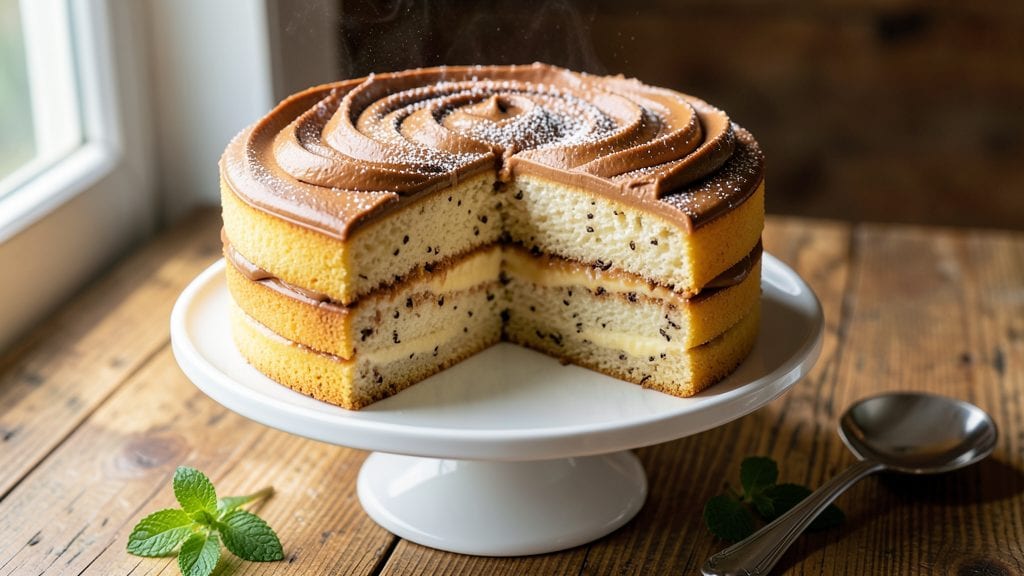
A bakery-style cake recipe that delivers restaurant-quality layers and velvety frosting requires precision—not just talent. After testing dozens of variations, I’ve perfected a method that ensures tender crumb structure, even baking, and a buttery frosting so smooth it looks professionally piped.
The secret lies in proper mixing techniques and patience during the baking process.
This recipe combines classic cake principles with modern shortcuts to achieve bakery-level results at home. You’ll need a few pantry staples and about 90 minutes of active time (including cooling and frosting), but the payoff is worth every minute.
The cake layers stay moist for days, and the frosting—made with just four ingredients—adheres perfectly without cracking.
By the time you’re done, you’ll have a cake that rivals anything from a specialty bakery: fluffy, golden layers with a fine crumb, topped with a smooth, glossy frosting that’s easy to pipe into swirls or borders.
The texture is light yet substantial, and the flavor balances sweetness with just enough vanilla depth. This is the kind of cake that makes guests ask for seconds—and the recipe that finally makes homemade taste like a bakery purchase.
Whether you’re celebrating a birthday, holiday, or just treating yourself, this method ensures professional results every time. Let’s get started—your cake awaits.
Ingredients for bakery cake
Classic pantry staples transformed into bakery-quality cake layers and velvety frosting.
| Ingredient | Amount | Notes |
|---|---|---|
| All-Purpose Flour 🌾 | 2 ½ cups | Sifted for lightness and even texture |
| Granulated Sugar 🍚 | 2 cups | Superfine preferred for smoothness |
| Unsalted Butter 🧈 | 1 ½ cups | Cold, cubed for proper creaming |
| Large Eggs 🥚 | 4 whole | Room temperature for even baking |
| Pure Vanilla Extract 🌸 | 2 tsp | High-quality, Madagascar bourbon preferred |
| Baking Powder 🧂 | 2 tsp | Aluminum-free for consistent rise |
| Fine Sea Salt 🧂 | ½ tsp | Diamond Crystal preferred |
| Whole Milk 🥛 | 1 cup | Room temperature for proper hydration |
| Confectioners' Sugar 🍚 | 3 cups | Sifted for smooth frosting texture |
| Heavy Whipping Cream 🥛 | 1 cup | Cold for stable whipping |
| Vanilla Bean Paste 🌸 | 1 tbsp | For intensified vanilla flavor |
| Unsalted Butter 🧈 | 1 cup | Softened for frosting consistency |
| Cornstarch 🌾 | 1 tbsp | For frosting stability |
| Lemon Zest 🍋 | 1 tsp | Fresh, finely grated |
The foundation starts with flour quality—use King Arthur or Gold Medal for optimal protein balance. For the butter, Plugrá or Land O’Lakes Cultured brands provide the best fat content for creaming. The vanilla extract should be Madagascar bourbon—it delivers a richer, more complex flavor than imitation extracts. Diamond Crystal kosher salt
No superfine sugar? Pulse granulated sugar in a food processor for 30 seconds to achieve similar texture. Substitute heavy cream with whipped cream at 35% fat if needed, but avoid low-fat versions that won’t whip properly. For the vanilla bean paste, Madagascar or Tahitian vanilla extracts work well at double the amount, though the paste provides more concentrated flavor. The lemon zest can be omitted if unavailable, but the acidity helps balance sweetness—bottled lemon juice at half the amount is a decent alternative. When measuring dry ingredients, spoon them into the measuring cup and level off for accuracy, as scooping from the bag compresses and alters volume. Store cake layers wrapped in plastic wrap between parchment paper for up to 3 days at room temperature, or freeze for 3 months for longer storage. The frosting should be refrigerated for 2-3 hours before use to stabilize, then brought to room temperature before piping. For best results, assemble the cake within 4 hours of baking to prevent drying. If transporting, keep the cake refrigerated until ready to serve, then allow it to sit at room temperature for 30 minutes before cutting to achieve proper texture.
Why You'll Love This Recipe
- No-Fuss Layers: I love that this cake is all about effortless layers—no fancy techniques, just sifted flour and room-temperature eggs. The secret’s in the creaming butter and sugar for 5-7 minutes until it’s pale and fluffy, which takes the guesswork out of tender crumb. Honestly, the hardest part is resisting the urge to peek at the oven halfway through.
- Vanilla Overload: That 1 tbsp of vanilla bean paste plus 2 tsp of pure vanilla extract? It’s not just flavor—it’s a full-on vanilla experience. The frosting, made with sifted confectioners’ sugar and lemon zest, is creamy with a subtle brightness that makes every bite sing. Trust me, your vanilla extract drawer will thank you.
- Birthday or Bento Box: This cake isn’t just for celebrations—it’s that good you’ll slice it into squares for lunch or freeze layers for impromptu desserts. The 1 cup whole milk keeps it moist enough to hold up for days, and the frosting? It’s stable enough to pipe into little cups for kids’ snacks. Versatility at its finest.
- Budget-Friendly Luxury: With pantry staples like all-purpose flour and unsalted butter, this isn’t a splurge. The high-quality vanilla bean paste is the only upgrade, but it’s worth it. Plus, making two layers means you can double the frosting for another treat later. Leftovers? Nonexistent—unless you count the last slice.
Step-by-step instructions for bakery-style cake
Mastering this method delivers tender layers and velvety frosting—every detail matters.
Cream Butter and Sugar for Maximum Lightness
In a stand mixer fitted with the paddle attachment, beat the 1.5 cups unsalted butter and 2 cups granulated sugar on medium speed for 5-7 minutes until the mixture is pale, fluffy, and nearly doubles in volume. This process incorporates air, which is essential for that signature bakery-style lightness. Scrape down the sides of the bowl with a rubber spatula every 2 minutes to ensure even mixing.
Here's the thing—don't rush this step. You'll know it's ready when the mixture leaves a trail that holds its shape for 10-15 seconds when the beaters are lifted. The butter should be completely smooth with no visible lumps, and the texture should resemble thick ribbon when the beaters are pulled through the mixture. This ensures your cake will rise properly and have that signature tender crumb.
Incorporate Eggs and Dry Ingredients Precisely
Add the 4 whole large eggs, one at a time, mixing on low speed after each addition until fully incorporated. After the last egg, add the 2 teaspoons pure vanilla extract and mix for 30 seconds to combine. This gradual addition prevents the eggs from breaking and ensures a smooth batter.
In a separate bowl, whisk together the 2.5 cups all-purpose flour, 2 teaspoons baking powder, and 0.5 teaspoon fine sea salt. Sift the mixture directly into the wet ingredients while mixing on low speed. The goal is to create a smooth batter with just a few small lumps remaining—overmixing develops gluten and results in a tough cake. Once combined, add the 1 cup whole milk and mix on low speed until just incorporated. The batter should be thick but pourable, with a consistency similar to heavy cream.
Bake in Two Perfect Layers
Preheat your oven to 350°F and grease two 8-inch round cake pans with the 1 cup unsalted butter, then line the bottoms with parchment paper. Divide the batter evenly between the pans. Tap each pan firmly on the counter 3-4 times to remove any air bubbles and ensure even baking. Bake for 25-30 minutes, or until a toothpick inserted into the center emerges clean. Rotate the pans halfway through baking for even browning.
The cake should spring back slightly when pressed in the center and have a light golden brown hue. Avoid overbaking—this is when cakes become dry. Let the cakes cool in the pans for 10 minutes, then transfer to a wire rack to cool completely before frosting. This resting period prevents cracking and ensures clean slicing later.
Prepare the Velvety Vanilla Frosting
In a medium saucepan, combine the 3 cups confectioners' sugar, 1 tablespoon cornstarch, and the 1 teaspoon lemon zest. Gradually whisk in the 1 cup heavy whipping cream over medium heat until the mixture thickens and reaches 160°F. Remove from heat and let it cool for 5 minutes, stirring occasionally to prevent graininess.
Transfer the mixture to a stand mixer fitted with the whisk attachment and beat on high speed for 3-5 minutes until smooth and glossy. Add the 1 tablespoon vanilla bean paste and mix for another 30 seconds to fully incorporate. The frosting should be thick enough to hold its shape but still spreadable. For extra stability, chill the frosting in the refrigerator for 30 minutes before assembling.
Assemble and Frost Like a Professional
Place one cooled cake layer on a serving plate and spread a thin layer of frosting over the top. This "crumb coat" prevents crumbs from mixing into the final frosting. Place the second layer on top and gently press down to create an even surface. Frost the entire cake with the remaining frosting, using a spatula to create smooth, even sides. For a polished look, dip the spatula in warm water and wipe the edges clean.
Chill the cake in the refrigerator for 1 hour before slicing to allow the frosting to set. The final result should be tender, moist layers with a silky, stable frosting that holds its shape. Serve at room temperature for the best texture and flavor.
Pro Tips For Making Bakery Cake
- Test the Ribbon: DESCRIPTION:
- Sift the Dry Mix: DESCRIPTION:
- Rotate the Pans: DESCRIPTION:
- Chill the Frosting: DESCRIPTION:
Best sauces and condiments for bakery cake
Classic Vanilla Bean Syrup
Drizzle ½ cup warm vanilla bean syrup (simmer ½ cup water, ½ cup sugar, and 1 split vanilla bean for 10 minutes, then strain) over the cake before serving.
This enhances the vanilla flavor and adds moisture to each slice. I always make extra to drizzle over ice cream later! 🍯
Lemon Curd Swirl
For a tangy twist, spread a thin layer of homemade lemon curd (blend 3 egg yolks, ¼ cup sugar, ¼ cup lemon juice, and 2 tbsp butter, then cook on low heat until thickened) between cake layers.
The bright acidity cuts through the sweetness beautifully. Store any extra in the fridge for up to 1 week.
Coffee Buttercream
Replace the vanilla frosting with coffee buttercream by adding 2 tbsp instant coffee granules dissolved in 1 tbsp hot water to the 1 cup softened butter before mixing with the 3 cups confectioners' sugar. This rich, mocha-inspired frosting pairs perfectly with chocolate ganache drizzles. 💛
Salted Caramel Drizzle
Warm ½ cup caramel sauce (like See's Candies) with ½ tsp flaky sea salt until smooth, then drizzle generously over the cake. The salt enhances the sweetness and adds a sophisticated touch. For extra indulgence, sprinkle crushed pecans on top before serving.
Fresh Berry Compote
Simmer 2 cups mixed berries (strawberries, blueberries, raspberries) with 2 tbsp sugar and 1 tbsp lemon juice until thickened (5 minutes). Spoon the compote over each slice for a fruity contrast to the vanilla frosting. I like to use frozen berries for year-round availability.
Nutrition facts
Frequently asked questions
Why does my cake layer crack when cooling?
Cracks often happen when cakes cool too quickly or are frosting too soon. Always let your layers cool in the pans for 10 minutes, then transfer to a wire rack. Wait until completely cooled before frosting—this prevents moisture loss and structural stress. The rest before slicing rule applies here too!
Can I substitute whole milk for another liquid?
Yes, but keep the hydration level consistent. Use room-temperature almond milk or oat milk in a 1:1 ratio—just avoid water, which dilutes the batter. For richer flavor, try heavy cream (but reduce by 2 tablespoons to match volume).
How do I fix a dense cake texture?
Density usually comes from overmixing or incorrect baking. Next time, mix the batter just until combined—stop when a few lumps remain. Also, ensure your oven reaches 350°F before baking, and rotate pans halfway for even heat distribution. The 10-15 second ribbon test during creaming is key too!
What if my frosting won't hold its shape?
Underdone frosting is the culprit! Whip it until it reaches 160°F in the saucepan, then beat for 3-5 minutes in the mixer. For extra stability, chill the bowl and beaters for 10 minutes before whipping. If too thin, add 1 tablespoon cornstarch mixed with 1 teaspoon sugar and rewhip.
Can I make this cake ahead of time?
Baked layers stay fresh for 3 days wrapped tightly, or freeze for 3 months. Assemble the cake just before serving—this prevents frosting from melting or cake layers drying out. Keep the frosting refrigerated until ready to use, then bring to room temperature before applying.