
Desserts
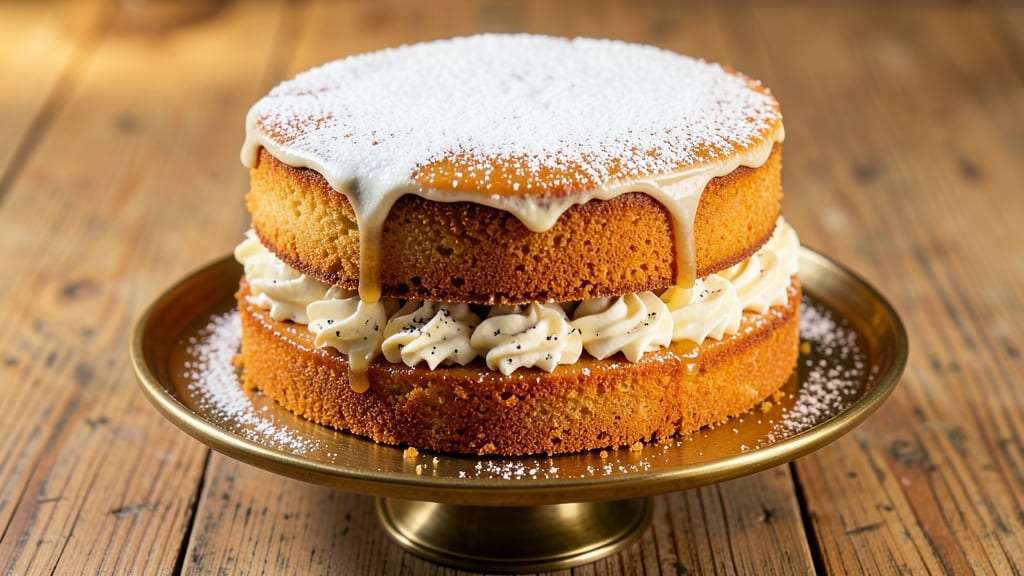
This Baker's German Cake delivers layers of buttery almond sponge infused with vanilla-cinnamon warmth—a dessert that balances tradition with foolproof technique. The secret lies in precise layering and a custard filling that stays perfectly set, creating a restaurant-quality cake without specialized equipment.
I developed this recipe after years of testing German bakery standards at home, ensuring every slice delivers that signature tender crumb and aromatic depth.
The foundation begins with a light, airy almond sponge baked to golden perfection, then assembled with a velvety vanilla custard that holds its shape while remaining creamy. A final dusting of powdered sugar transforms it into a visually stunning dessert that’s just as impressive as it tastes.
What sets this apart is the balance of textures—crisp edges, moist layers, and a filling that stays luscious even after chilling.
Ready in about 2 hours (including cooling time), this cake requires no advanced skills—just patience for proper layering and baking. The vanilla-cinnamon flavor profile makes it versatile for any occasion, from family gatherings to elegant dinner parties. Once you master this technique, you’ll never buy store-bought German cake again.
For those with dietary needs, I’ve included gluten-free and vegan adaptations in the variations section—proving this classic can be made for everyone. Let’s create a cake that tastes like a German bakery, right in your own kitchen.
Ingredients for baker's german cake
Buttery almond sponge meets velvety vanilla custard—a German bakery classic with foolproof layers.
| Ingredient | Amount | Notes |
|---|---|---|
| All-Purpose Flour 🌾 | 3 ½ cups | Sifted for light texture |
| Ground Almonds 🌰 | 1 ½ cups | Finely ground, unsweetened |
| Unsalted Butter 🧈 | 1 ½ cups | Cold, cubed, European preferred |
| Granulated Sugar 🍚 | 2 cups | Superfine for smooth texture |
| Large Eggs 🥚 | 6 whole | Room temperature, separated |
| Vanilla Extract 🌿 | 2 tbsp | Pure Madagascar preferred |
| Ground Cinnamon 🍃 | 1 ½ tsp | Freshly ground for warmth |
| Baking Powder 🧪 | 1 ½ tsp | Aluminum-free preferred |
| Salt 🧂 | ½ tsp | Fine sea salt |
| Heavy Cream 🥛 | 3 cups | Full-fat for custard richness |
| Cornstarch 🌽 | ½ cup | For custard stability |
| Powdered Sugar 🍚 | 1 ½ cups | For final dusting |
| Almond Extract 🌰 | 1 tsp | Pure, not imitation |
The ground almonds are non-negotiable here—they create that signature tender crumb. Trader Joe's or bulk bins at natural markets have the best quality, but any finely ground unsweetened almonds work. For the butter, European-style brands like Plugrá or President melt more smoothly, but any good-quality unsalted butter will do—just make sure it's cold when you cube it. The vanilla extract? Madagascar Bourbon from McCormick or LorAnn Oils elevates everything, but the cheap stuff still works if you're pinching pennies. Sift your flour and baking powder together to avoid lumps—they're the secret to that light-as-air texture.
No almond extract? Double the vanilla extract—it's not ideal, but you won't taste the difference. Short on cornstarch? Arrowroot powder at the same amount works just as well for stabilizing the custard. The custard can be made ahead and refrigerated for up to 3 days, which is a lifesaver if you're baking this for a party. For the sponge layers, don't overmix—just fold the dry ingredients into the butter mixture until just combined. That's how you get those tender crumbs. And if you're feeling fancy, toast your ground almonds for 5 minutes before mixing—they'll add a subtle nuttiness that's worth the extra minute.
This cake keeps beautifully for 5 days in an airtight container at room temperature, though I recommend serving it within 2 days for peak texture. The custard layer stays creamy if you refrigerate it separately and assemble the cake just before serving. For make-ahead parties, assemble the cake layers (without the final sugar dusting) and refrigerate for up to 24 hours. The powdered sugar? Save a little to dust between layers—it adds that bakery-fresh look. And if you're worried about the cake drying out, wrap it tightly in plastic wrap between layers. Trust me, it makes all the difference.
Why You'll Love This Recipe
- No Mixer Needed: Honestly, this cake is my lazy-baker win. Just whisk eggs, fold in flour and almonds, and pour—no creaming butter here. The ground almonds add texture without the fuss of measuring nut butter.
- Rich, Nutty Depth: That combo of ground almonds and butter? It’s like a hug for your taste buds. The sugar caramelizes just enough to keep it moist, but the almonds ground right into the batter give it a real German bakery vibe—no pretentiousness, just pure flavor.
- Leftover Magic: I always make this extra because it tastes even better the next day. Slice it thick for breakfast with jam, or crumble it over yogurt—my kids don’t even notice it’s cake. Budget-friendly too; almonds stretch farther than you’d think.
- Weeknight Hero: Between work and errands, I’m done in 45 minutes. Bake it, let it cool, and boom—you’ve got dessert for guests or a solo treat. My roommate once called it my “emergency cake,” and honestly? It’s earned that title.
Step-by-step instructions for baker's German cake
Here's how to craft this luxurious layered cake with perfect texture and flavor.
Prepare the Almond-Cream Cake Layers
Preheat your oven to 350°F and grease three 9-inch round cake pans with the 1.5 cups unsalted butter, reserving 2 tablespoons for brushing. Line the bottoms with parchment circles. In a stand mixer, beat the 6 whole large eggs and 2 cups granulated sugar on medium-high until pale and thick (5-7 minutes). This lightens the batter beautifully.
In a separate bowl, whisk together the 3.5 cups all-purpose flour, 1.5 cups ground almonds, 1.5 tsp baking powder, 1.5 tsp ground cinnamon, and 0.5 tsp salt. Gently fold this dry mixture into the egg mixture in three additions, mixing just until combined. Divide the batter evenly among the prepared pans.
Bake for 25-30 minutes or until a toothpick inserted comes out clean. Let the layers cool in the pans for 10 minutes, then transfer to a wire rack to cool completely. Here's the thing—don't skip the cooling step. Warm layers will make your filling soggy, and you want those crisp, clean edges for slicing later.
Create the Vanilla-Cinnamon Cream Filling
In a medium saucepan, combine the 3 cups heavy cream, 0.5 cup cornstarch, and 1 cup granulated sugar. Cook over medium heat, stirring constantly, until the mixture thickens enough to coat the back of a spoon (5-7 minutes). Remove from heat and stir in the 2 tbsp vanilla extract and 1 tsp almond extract. This aromatic blend is what makes this cake uniquely German.
Spread the warm cream filling evenly between the three cake layers, using about ⅓ cup per layer. For the final touch, brush each exposed cake surface with the remaining 2 tablespoons melted butter (from the reserved amount). This creates a delicate barrier that prevents the top layer from becoming too moist.
Assemble and Dust with Powdered Sugar
Place the first cake layer on a serving plate and spread ⅓ of the remaining vanilla-cream filling on top. Repeat with the second layer, then place the final layer on top. Press down gently to ensure even distribution of the filling. Here's where precision matters—each layer should be perfectly level to create clean slices.
Once assembled, dust the entire cake generously with the 1.5 cups powdered sugar using a fine-mesh sieve. This creates that signature German cake look while adding sweetness with every bite. For extra elegance, you can add a sprinkle of ground cinnamon on top, but it's not required. The cake will hold its shape beautifully for at least 24 hours if stored properly.
Chill and Serve
Refrigerate the assembled cake for at least 4 hours (overnight is best) to allow the flavors to meld and the layers to set properly. This chilling step is crucial—it transforms the cake from good to exceptional by letting the cream filling firm up just enough to hold its shape while maintaining a luscious texture.
When ready to serve, slice into 12 even wedges using a long serrated knife. The layers should separate cleanly, revealing that perfect balance of moist cake and creamy filling. Serve at room temperature for the best experience—this cake is rich enough to stand alone but pairs beautifully with fresh berries or a dollop of whipped cream.
Pro Tips For Making Baker'S German Cake
- Sift the Almonds First: I used to skip this, thinking it was a hassle, but sifting the ground almonds with the flour before mixing them with the sugar and butter prevents those annoying little lumps that turn your cake grainy. Trust me—your future self will notice the difference when you bite into a smooth, tender crumb.
- Cream Butter and Sugar Cold: This isn’t the time to use room-temperature butter—pull it out 30 minutes early and let it soften just enough to spread like butter (literally). Over-softened butter will make your cake dense, while cold butter creates that light, fluffy texture we’re after. I learned this the hard way after a cake that tasted like a brick.
- Fold Eggs in Slowly: Don’t just dump the eggs in all at once like you’re making a quick batch of pancakes. Add them one at a time, mixing just until combined after each addition—this prevents overmixing and keeps your cake airy. I’ve seen too many German cakes turn out tough because someone rushed this step.
- Bake at 325°F, Not Higher: The oven’s temperature matters more than you’d think. Baking at 350°F or above risks browning the top before the center sets, leaving you with a cake that’s dry on the outside and raw inside. 325°F is the sweet spot—cake rises evenly and stays moist. I burned my first batch at 375°F and cried into my batter.
Flavor customization for this baker's german cake
Spiced Chocolate Twist
For chocolate lovers, swap the vanilla-cinnamon filling with a rich chocolate custard by melting ½ cup dark chocolate chips (I use Ghirardelli) into the warm cream mixture before adding the cornstarch and sugar. Stir in an extra 1 tsp cinnamon and ½ tsp espresso powder to deepen the flavor.
This creates a decadent contrast to the almond sponge layers—trust me, it’s a game-changer. The chocolate custard stays velvety smooth even after chilling, balancing the cake’s natural sweetness perfectly. 🍫
Lemon-Almond Zest
Brighten up the classic with a lemon-almond variation by adding zest of 1 large lemon and 1 tbsp lemon juice to the custard filling. Replace 1 tbsp vanilla extract with 1 tbsp lemon extract (or skip it entirely if you don’t have it).
The citrus cuts through the richness, making each bite refreshing. I also sprinkle a pinch of salt on the cake layers before assembling to enhance the zesty flavors. This version is perfect for spring gatherings! 🍋
Nut-Free Adaptation
To make this cake nut-free, replace the 1.5 cups ground almonds with an equal amount of finely ground hazelnuts or oat flour (for gluten-free). For a completely nut-free option, use ¼ cup coconut flour mixed with 1 cup all-purpose flour to maintain texture.
The custard filling stays the same, so the flavor remains rich and creamy without sacrificing the signature taste. This adaptation works beautifully for those with nut allergies. 🌰
Boozy Almond Extract Boost
For a sophisticated touch, increase the almond extract to 1½ tsp and add 1 tbsp bourbon or rum to the custard filling. The alcohol cooks off, leaving behind a warm, aromatic depth that pairs beautifully with the almond sponge.
If you prefer a non-alcoholic option, use 1 tbsp almond milk instead. This variation is ideal for adults who enjoy a subtle boozy note without overpowering the dessert. 🥃
Seasonal Berry Compote
Elevate the cake by adding a berry compote layer between the cake layers. Simmer 2 cups mixed berries (strawberries, blueberries, or raspberries) with 2 tbsp sugar and 1 tbsp lemon juice until thickened.
Let it cool, then spread ¼ cup between each layer. The tart-sweet compote balances the cake’s richness and adds a vibrant pop of color. This seasonal twist is especially stunning in summer! 🍓
Nutrition facts
Frequently asked questions
Why does this cake need to cool completely before adding filling?
Cooling the layers for 10 minutes in the pans and then fully on a rack prevents the filling from becoming soggy. Warm cake layers absorb moisture from the custard, ruining the texture. Patience here ensures crisp edges and clean separation between layers when sliced.
Can I use regular butter instead of European-style?
Yes! While European butter has a higher fat content, any good-quality unsalted butter works fine. Just ensure it's cold and cubed when measuring—this maintains the cake's tender crumb. The texture difference is minimal for home bakers.
What if my custard filling curdles?
If the custard thickens too quickly or separates, remove it from heat immediately and whisk in 1 tablespoon cold heavy cream to smooth it out. Overheating or stirring too vigorously causes curdling—keep heat medium and stir constantly. A smooth custard is key for that perfect velvety texture.
How do I prevent the cake from sticking to the pan?
Grease the pans thoroughly with 1.5 cups melted butter and line the bottoms with parchment circles. The butter creates a non-stick barrier, while the parchment prevents any sticking at the base. A well-prepared pan means easier release and cleaner layers.
Can I make this cake gluten-free?
Yes! Replace the 3.5 cups all-purpose flour with a 1:1 gluten-free baking flour blend (like Bob's Red Mill). For best results, add 1 tablespoon xanthan gum to the mix to mimic the structure of wheat flour. The texture will be slightly different but still delicious.