
Desserts
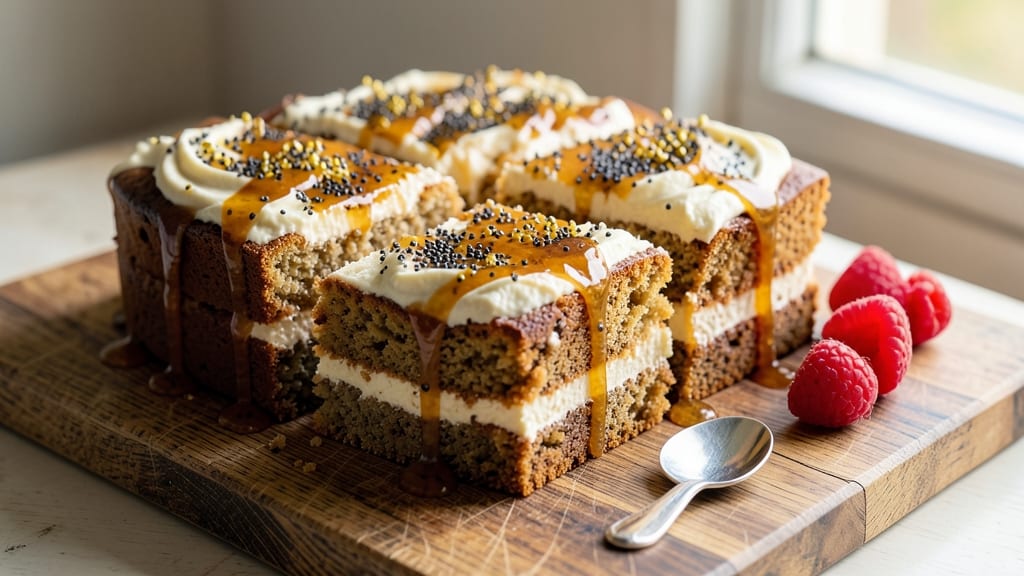
Austrian poppy seed cake delivers the perfect balance of nutty richness and citrus brightness in every bite. This classic dessert features tender layers of cake swirled with a fragrant poppy seed filling made from quark (or sour cream), creating a texture that's both moist and delicate.
The secret lies in steaming the poppy seeds to enhance their flavor, a traditional technique that transforms this simple dessert into something truly special.
What sets this recipe apart is the careful assembly process, where thin layers of cake are alternated with the poppy seed filling to create elegant swirls. The cake itself is lightly sweetened with citrus zest, adding a subtle brightness that cuts through the richness of the poppy seeds.
For the best results, I recommend using a high-quality quark or sour cream substitute, as this is what gives the filling its signature creamy yet slightly tangy character.
By the time you're done, you'll have a beautifully layered cake with golden-brown edges and a delicate crumb. The poppy seed filling peeks through the cake layers in elegant swirls, while the citrus zest adds a refreshing contrast to the nutty flavor.
This dessert is perfect for special occasions, holiday gatherings, or when you want to impress guests with an authentic Austrian treat.
The presentation is just as important as the taste—carefully level each layer and create those signature swirls for a restaurant-quality finish. Serve with a dusting of powdered sugar or a dollop of whipped cream for an extra touch of elegance. Let's get started on this timeless classic!
Ingredients for austrian poppy seed cake
Eight essential ingredients transform into an elegant Austrian dessert with nutty swirls and citrus brightness.
| Ingredient | Amount | Notes |
|---|---|---|
| All-Purpose Flour 🌾 | 3 cups | Sifted for light texture |
| Granulated Sugar 🍚 | 1 ½ cups | Superfine preferred for smoothness |
| Unsalted Butter 🧈 | 1 cup | Room temperature, full-fat |
| Large Eggs 🥚 | 4 whole | Room temperature for even mixing |
| Poppy Seeds 🌱 | ¾ cup | Steamed for enhanced flavor |
| Quark (or Sour Cream) 🥛 | 1 ½ cups | High-quality for tangy richness |
| Powdered Sugar 🍚 | 1 cup | For filling and dusting |
| Lemon Zest 🍋 | 1 tbsp | Freshly grated for brightness |
| Lemon Juice 🍋 | 1 tbsp | Freshly squeezed for acidity |
| Vanilla Extract 🌸 | 1 tsp | Pure vanilla for depth |
| Baking Powder 🧂 | 2 tsp | Double-acting for lift |
| Salt 🧂 | ½ tsp | Fine sea salt for balance |
| Heavy Whipping Cream 🥛 | 1 cup | Chilled for serving |
The poppy seeds are the star here—steaming them first (just cover with boiling water for 5 minutes) unlocks their nutty flavor. Grab organic poppy seeds from the bulk section at Whole Foods or Trader Joe's for the best quality. Quark is the secret to that signature tangy filling, but high-fat sour cream works in a pinch—just add a splash of lemon juice to mimic the quark's brightness. The butter should be room temperature (about 68°F) for easy mixing, so take it out of the fridge 30 minutes before starting.
No quark? Greek yogurt thinned with a little milk gets you close. Running short on vanilla? Almond extract at half the amount adds depth, but stick with pure vanilla for authenticity. The citrus zest and juice can be swapped for orange if you prefer a sweeter note—just adjust the sugar slightly. For the flour, King Arthur or Gold Medal brands yield the lightest texture. And if you're feeling fancy, powdered sugar from Domino dissolves more smoothly than store-brand versions.
This cake keeps beautifully—covered at room temperature for 2 days or fridge for 5 days. For extra elegance, dust with powdered sugar just before serving. The filling can be prepped a day ahead and stored in the fridge. If you want to make it ahead, assemble the cake layers 4 hours before serving so the filling sets slightly for cleaner swirls. The whipped cream should be chilled until ready to serve—it's the perfect finishing touch!
Why You'll Love This Recipe
- No-Fuss Mixing: I swear by this recipe’s simplicity—the butter and sugar cream in minutes, and the poppy seeds just fold right in. No stand mixer? No problem. A sturdy wooden spoon does the trick while I chat with whoever’s in the kitchen.
- Nutty Magic: That first bite of crumbly, buttery cake with the poppy seeds? It’s like a warm hug for your taste buds. The seeds add this earthy crunch that balances the sweetness perfectly—no weird aftertaste, just pure comfort.
- Weekend or Weeknight: Slice it fresh for brunch with a dollop of whipped cream, or bake a whole loaf ahead for snacking. Honestly, I’ve taken it to potlucks, packed it in lunches, and even served it at my mom’s birthday—it never disappoints.
- Budget-Friendly Luxury: Flour, sugar, butter, eggs—these are pantry staples you already own. The poppy seeds might be the only splurge, but they stretch to feed a crowd or last for days. I’ve had this cake for breakfast, dessert, or even a midnight craving—it’s that reliable.
Step-by-step instructions for Austrian poppy seed cake
Here's how to create a luscious poppy seed cake with that signature nutty swirl and bright citrus kick.
Prepare the Poppy Seed Filling
In a small saucepan, combine the 0.75 cup poppy seeds, 1 cup powdered sugar, 1 tbsp lemon zest, 1 tbsp lemon juice, and 1 tsp vanilla extract. Cook over medium-low heat, stirring constantly for 5-7 minutes until the mixture thickens into a paste-like consistency. You'll know it's ready when it pulls away from the sides of the pan and forms a smooth, glossy filling.
Here's the thing—don't rush this step. The poppy seeds need time to soften and release their nutty oils. If it thickens too quickly, add 1 teaspoon of lemon juice to keep it workable. Remove from heat and let cool completely before using—this prevents the filling from melting when incorporated into the cake layers.
Cream Butter and Sugar for Light Layers
In a stand mixer fitted with the paddle attachment, beat the 1 cup unsalted butter and 1.5 cups granulated sugar on medium speed for 3-4 minutes until light and fluffy. You're looking for a color change from pale yellow to almost white—this incorporates air that will make your cake tender. Scrape down the sides of the bowl with a rubber spatula to ensure even mixing.
This is where the magic happens. I press down gently on the butter mixture with a spatula during the last 30 seconds to increase volume even more. Add the 4 whole large eggs, one at a time, mixing just until each is incorporated. The mixture should be thick but ribbon-like when you lift the beaters—it should leave a trail that holds its shape for a few seconds before dissolving.
Combine Dry Ingredients and Fold in Filling
In a separate bowl, whisk together the 3 cups all-purpose flour, 2 tsp baking powder, and 0.5 tsp salt. Sift the mixture directly into the butter mixture, then gently fold in half of the poppy seed filling using a spatula. This creates a marbled effect that's characteristic of Austrian poppy seed cake. Be careful not to overmix—just combine until the flour is mostly incorporated and no dry streaks remain.
Once the batter is smooth, divide it evenly between two 8-inch round cake pans lined with parchment paper. Spread the remaining poppy seed filling evenly over the top of each cake layer. The filling should be visible through the batter—this creates those beautiful swirls when sliced. Tap the pans gently on the counter to remove any air bubbles.
Bake to Golden Perfection
Preheat your oven to 350°F and bake the cakes for 25-30 minutes, or until a toothpick inserted into the center comes out clean. The edges should be golden brown while the tops may still look slightly underbaked—this is normal. Rotate the pans halfway through baking to ensure even cooking.
I always check for doneness at the 20-minute mark because ovens vary. If the tops are browning too quickly, tent with foil. Let the cakes cool in their pans for 10 minutes, then transfer to a wire rack to cool completely. This resting period prevents them from sinking as they cool.
Assemble and Whip the Cream Topping
Once completely cool, level the tops of the cakes if needed. In a separate bowl, whip the 1 cup heavy whipping cream with an electric mixer until it forms soft peaks. Spread a thin layer of the 1.5 cups quark (or sour cream) over the first cake layer, then place the second layer on top. Gently press down to create a level surface.
Pipe the whipped cream over the entire cake, then sprinkle with additional poppy seeds for decoration. The cream should be thick enough to hold its shape but still spreadable. Chill the cake in the refrigerator for at least 2 hours before serving to let the flavors meld and the cream set slightly. This waiting period is crucial for that perfect texture—don't skip it!
Pro Tips For Making Austrian Poppy Seed Cake
- Toast Your Seeds: Poppy seeds need a quick dry toast in a skillet for 2-3 minutes—just until they smell nutty and aromatic. I learned this the hard way: raw seeds stay bitter and don’t develop that deep, earthy flavor the cake’s supposed to have.
- Cream Butter Slowly: Beat the butter and sugar until light and fluffy—that means 3-5 minutes past when it looks pale. Rushing this step traps air poorly, and your cake will end up dense instead of tender. (Yes, even if you’re impatient like me.)
- Fold, Don’t Stir: When mixing in the dry ingredients, use a spatula to fold everything together in big, gentle sweeps. Stirring too much deflates the batter, and you’ll lose that signature airy crumb. Think of it like tucking in a blanket—gentle but thorough.
- Test for Doneness Early: Pull the cake from the oven when the edges are set but the center still jiggles slightly—it’ll keep rising another 10-15 minutes. After burning three batches, I finally figured out: underbaking is easier to fix than overbaking. (Your future self will thank you.)
Troubleshooting this dish
Cake Too Dense
If your cake turns out dense instead of light and tender, overmixing is likely the culprit. The moment you fold in the flour, stop mixing when just combined—no dry streaks should remain. I also recommend using King Arthur flour for its lower protein content, which yields a lighter crumb.
Another trick? Gently fold in the poppy seed filling by hand rather than using an electric mixer, which can overwork the batter. 💡
Filling Too Runny
A runny filling usually means the poppy seeds weren't cooked long enough to release their oils. Simmer the filling for an extra 2-3 minutes until it thickens noticeably. If it's still too thin, mix in 1 tablespoon cornstarch with 1 teaspoon cold water, then stir back in.
For extra stability, chill the filling for 30 minutes before assembling—this helps it set properly between layers.
Cake Sticking to Pan
Even with parchment paper, cakes sometimes stick due to moisture. Always use high-quality parchment (like Reynolds Non-Stick) and ensure it's cut to fit snugly. Grease the pan with butter and flour before lining it with parchment.
If the cake still sticks, run a thin knife around the edges while warm, then gently pry it loose with a spatula. Never use metal pans without proper lining—they can cause sticking.
Swirls Not Showing
For those classic poppy seed swirls to appear, spread the filling evenly but not too thickly—about ¼ inch should do. Use a offset spatula to create gentle waves before baking. If the filling disappears completely, try adding 1 extra tablespoon of quark to thicken it slightly.
Another pro tip: Chill the assembled cake for 4 hours before slicing—this helps the filling hold its shape for cleaner swirls. 🌟
Cake Sinking
Sinking usually happens when cakes cool too quickly. Always let them cool in the pan for 10 minutes, then transfer to a wire rack. If your cake sinks after baking, it might be underbaked—check with a toothpick.
For extra stability, bake at 325°F instead of 350°F for 30-35 minutes. The lower temp prevents rapid expansion and collapse. Also, ensure your oven rack is in the middle position for even heat distribution.
Citrus Flavor Missing
If the lemon zest isn't bright enough, try double the amount (up to 2 tablespoons). For extra depth, add 1 teaspoon of lemon extract to the filling. If you prefer orange, use 1 tablespoon of orange zest and reduce the sugar slightly to balance the sweetness.
Always zest organic lemons—the thicker peel yields more flavor. Store-bought zest often contains bitter pith, so scrape carefully with a microplane. 🍋
Nutrition facts
Frequently asked questions
Why does the Austrian poppy seed cake have a quark filling?
Quark gives this cake its signature tangy, creamy texture that balances the sweetness perfectly. Made from fermented milk, it's thicker than sour cream but lighter than yogurt, creating that signature Austrian richness. If you can't find quark, high-fat sour cream works well—just add a splash of lemon juice to mimic the tang.
Can I make this cake without an offset spatula?
Any small spatula or even a butter knife works for spreading the poppy seed filling. The key is to create even, thin layers—about ¼ inch thick—for those classic swirls. Just work gently to avoid tearing the delicate cake layers. For extra flair, use a spoon to make gentle waves in the filling before baking.
How long can I store the assembled cake?
This cake stays fresh for 3 days at room temperature when tightly wrapped, or up to 5 days in the refrigerator. For best texture, bring it to room temperature before serving. The filling actually improves over time as the flavors meld! Freezing isn't recommended as it can make the cake layers dry out.
What's the secret to getting those perfect poppy seed swirls?
Spread the filling evenly but thinly (¼ inch) before baking, then chill the assembled cake for 4 hours before slicing. The filling needs time to set slightly so it doesn't disappear into the cake layers. For extra dramatic swirls, use a toothpick to gently drag through the filling after baking but before cooling completely.
Can I substitute poppy seeds with sunflower seeds?
While sunflower seeds work in a pinch, they won't give the same delicate nutty flavor. If you must substitute, use ½ cup sunflower seeds plus ¼ cup regular poppy seeds for a closer match. Toast the seeds lightly before using to enhance their flavor. The texture will be slightly different but still delicious!