
Desserts
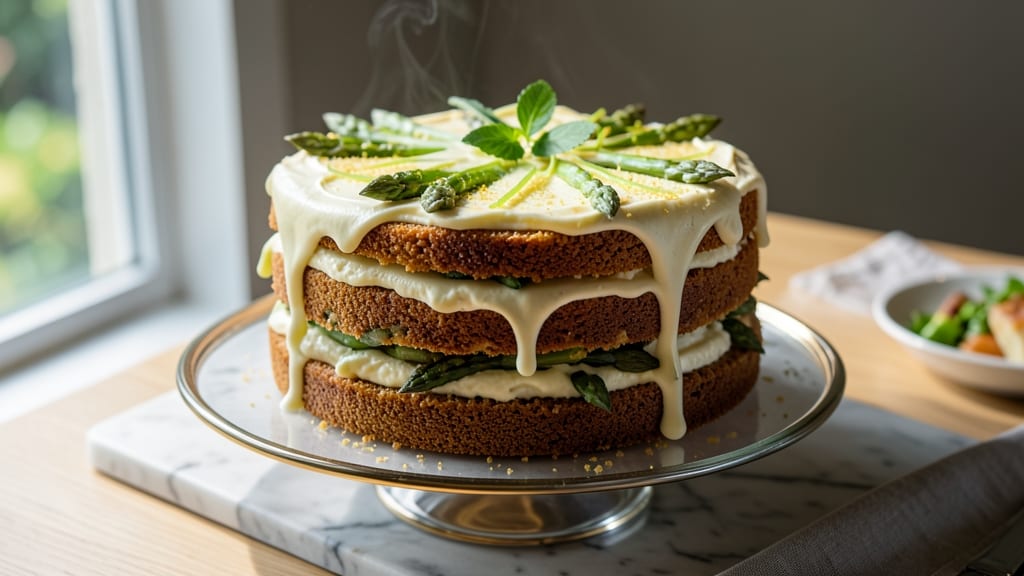
This asparagus cake recipe transforms humble spring vegetables into a stunning dessert with vibrant green layers and bright citrus notes. 🌿 The secret lies in blending tender asparagus puree into a delicate almond flour batter, creating a moist crumb with subtle earthy sweetness that pairs perfectly with lemon glaze.
I perfected this recipe after years of experimenting with vegetable-infused desserts, and it's become a showstopper at every gathering.
The cake's magic comes from its texture contrast—tender asparagus layers that stay moist while the crumb remains light and airy. Baking at 350°F for 35-40 minutes ensures even doneness, while a simple lemon glaze adds that essential zing.
This vegetarian-friendly recipe can even be adapted with flax eggs for a vegan version, making it versatile for any dietary preference.
What sets this apart is how the asparagus's natural sweetness shines through without overpowering the delicate almond flavor. The cake's earthy green layers create a visual spectacle that's as impressive as it is delicious, perfect for spring celebrations or when you want to serve something unexpected yet elegant.
Pair it with a fresh herb salad or whipped cream for a complete dessert experience. The bright citrus glaze cuts through the richness, balancing every bite with freshness. Ready to bake?
Ingredients for asparagus cake
Almond flour, tender asparagus puree, and bright citrus create this elegant spring dessert's signature earthy-sweet harmony.
| Ingredient | Amount | Notes |
|---|---|---|
| Fresh Asparagus Spears 🌿 | 1 ½ lb | Trimmed, tough ends removed |
| Almond Flour 🌰 | 2 cups | Superfine for smooth texture |
| Granulated Sugar 🍚 | 1 ½ cups | Organic preferred for purity |
| Unsalted Butter 🧈 | 1 cup | Cold, cubed for creaming |
| Large Eggs 🥚 | 4 whole | Room temperature for blending |
| Lemon Zest 🍋 | 2 tbsp | Fresh, organic preferred |
| Vanilla Extract 🌸 | 2 tsp | Pure Madagascar vanilla |
| Baking Powder 🧂 | 2 tsp | Diamond Crystal preferred |
| Salt 🧂 | ½ tsp | Fine sea salt |
| Lemon Juice 🍋 | ½ cup | Freshly squeezed |
| Powdered Sugar 🍚 | 1 cup | For glaze, sifted |
| Fresh Lemon 🍋 | 1 whole | For additional zest |
| Almond Extract 🌰 | ½ tsp | Optional, enhances flavor |
The asparagus is the star—fresh, vibrant spears from a local market or organic section yield the best flavor. Look for bright green, firm stalks with tightly closed tips. Trim the woody ends carefully to avoid bitterness. For the almond flour, Bob's Red Mill or Anthony's Goods brands produce the finest texture, crucial for that delicate crumb. The butter should be cold and cubed when measuring—this ensures proper creaming for aeration. Eggs at room temperature blend more smoothly, so take them out 30 minutes before mixing.
No fresh asparagus? Frozen asparagus works in a pinch, but thaw and drain well before puréeing. Substitute almond flour with gluten-free 1:1 baking flour if needed, though texture will differ slightly. For a more intense citrus flavor, add an extra tablespoon of zest. The glaze can be made ahead and stored in the fridge for 3 days—just whisk before using. If you prefer a richer glaze, add 1 tbsp heavy cream to the powdered sugar mixture. The almond extract is optional but elevates the flavor profile significantly.
The asparagus purée can be made up to 2 days ahead and stored in an airtight container in the fridge. The cake batter should be prepared no more than 4 hours before baking to maintain proper texture. Once baked, cool completely before glazing to prevent melting. Store wrapped at room temperature for 3 days or refrigerate for 5 days. The glaze can be reheated gently with a splash of water if it thickens. For a restaurant-quality presentation, dust with powdered sugar and garnish with edible flowers.
Why You'll Love This Recipe
- No-Fuss Prep: I swear by this recipe because it’s basically a one-bowl deal. Trim the asparagus, pulse the rest in a food processor, mix with almond flour and eggs—done. No sifting, no folding, no stress.
- Buttery-Garlicky Magic: The crispy edges on top? That’s the butter and sugar caramelizing while the tender asparagus inside stays bright and fresh. Honestly, I’ll take this over any sad, dry cake.
- Brunch or Snack: Serve it warm with a drizzle of honey for a fancy brunch, or slice it cold for a protein-packed snack. My kids ask for it after school—yes, even on a Tuesday night.
- Leftovers That Don’t Suffer: Unlike most cakes, this stays moist for days. I’ve reheated slices in the toaster and they’re still rich and satisfying. Plus, almond flour keeps costs down while packing flavor.
Step-by-step instructions for earthy green asparagus cake
Master this delicate balance of vibrant green layers and bright citrus notes with precise technique.
👨🍳 Step 1: Blanch and Process the Asparagus
Trim the tough ends from the 1.5 lb fresh asparagus spears, leaving you with approximately 12-15 inches of tender stalk per spear. Bring a large pot of salted water to a rolling boil and blanch the asparagus for exactly 2 minutes—this preserves their vibrant green color while softening them enough for processing.
Immediately drain and transfer the asparagus to an ice bath to stop the cooking process. Once cooled, pat them completely dry with paper towels. Working in batches, pulse the asparagus in a food processor until you achieve a finely chopped texture—think of it as a cross between purée and rough chop. You want to retain some texture for visual appeal while ensuring even distribution throughout the batter. Transfer the processed asparagus to a mixing bowl and set aside.
🍳 Step 2: Cream Butter and Sweeteners
In a stand mixer fitted with the paddle attachment, combine the 1 cup cold, cubed unsalted butter with the 1.5 cups granulated sugar. Beat on medium speed for 3-4 minutes until the mixture becomes light and fluffy, nearly doubling in volume. The butter should be completely incorporated with no visible lumps, and the color should lighten noticeably—this indicates proper aeration.
This creaming process is critical for achieving a tender cake with fine crumb structure. If your mixture doesn't lighten, your butter wasn't cold enough—next time, chill it for an additional 15 minutes before starting. Scrape down the sides of the bowl with a spatula to ensure even mixing as you proceed.
👨🍳 Step 3: Incorporate Wet Ingredients
Add the 4 whole large eggs, one at a time, mixing on low speed after each addition until fully incorporated. The mixture will appear slightly curdled at first, but this will resolve as you continue mixing. Stir in the 2 tbsp lemon zest, 2 tsp vanilla extract, 0.5 tsp salt, and 0.5 tsp almond extract (if using), mixing just until combined.
In a separate bowl, whisk together the 2 cups almond flour and 2 tsp baking powder. With the mixer on low speed, gradually add the dry ingredients to the wet mixture, mixing just until combined—you should still see some flour streaks. This prevents overdevelopment of gluten, which would make the cake dense. Gently fold in the processed asparagus using a rubber spatula until evenly distributed throughout the batter.
🥘 Step 4: Prepare and Bake the Cake
Preheat your oven to 350°F and grease two 9-inch round cake pans or line them with parchment paper. Divide the batter evenly between the pans. Bake for 25-30 minutes, or until a toothpick inserted into the center comes out clean and the edges pull away slightly from the pan. Rotate the pans halfway through baking for even browning.
Watch carefully in the last 5 minutes of baking—almond flour cakes can dry out quickly. If the tops begin to brown too quickly, tent loosely with foil. The cake should be golden on top but still slightly springy to the touch. Let the cakes cool in their pans for 10 minutes before transferring to a wire rack to cool completely.
🍽️ Step 5: Prepare Lemon Glaze and Assemble
While the cakes cool, prepare the lemon glaze by whisking together the 1 cup powdered sugar, 0.5 cup lemon juice, and additional 1 tbsp lemon zest from the second whole fresh lemon. The glaze should be smooth and pourable—if it's too thick, add 1-2 teaspoons water to reach a drizzling consistency.
Once the cakes are completely cool, level the tops if needed. Place one cake layer on a serving plate and spread a thin layer of lemon curd (if using) or simply drizzle with half the glaze. Top with the second cake layer and drizzle the remaining glaze over the top and sides. For extra presentation, garnish with additional lemon zest or fresh berries. Serve immediately for the best texture and flavor balance.
Pro Tips For Making Asparagus Cake
- Trim the Tough Ends: Snip off the woody bottoms of the asparagus spears—about 1.5 inches from the base—before blanching. I learned this the hard way when I skipped it and ended up with a cake that tasted like chewing on a tree branch instead of fresh spring greens.
- Blanching Matters: Shock the asparagus in ice water for exactly 2 minutes after boiling. Any longer, and it turns to mush; any shorter, and it stays crunchy like a sad salad. Drain well and pat dry with a towel—no one wants a soggy cake.
- Whisk Eggs Like Mad: Beat the eggs until they’re pale and thick enough to leave a trail on the whisk. My grandmother swore by this, and she was right: fluffy eggs incorporate better with the almond flour, giving the cake a lighter texture instead of a dense brick.
- Butter First, Then Sugar: Cream the butter and sugar together until the mixture is light and airy—about 3 minutes with a hand mixer. Skipping this step means the cake will taste like almond-flour pancakes instead of something delicate and buttery. (Yes, even if you’re impatient like me.)
Regional styles of this asparagus cake
Italian Spring Version
In Italy, asparagus cake often incorporates saffron-infused lemon glaze and a touch of ricotta cheese in the batter for extra richness. I've made this variation using 1 tbsp saffron threads steeped in ¼ cup warm water for 10 minutes, then strained into the glaze.
The saffron adds a delicate floral note that pairs beautifully with the asparagus's earthiness. For the batter, fold in ½ cup ricotta cheese after combining all ingredients—this creates a denser, more decadent texture while keeping the cake moist. 🌸
French Market-Style
French patisseries often use choux pastry instead of almond flour for a lighter, puffier texture. For this adaptation, replace the almond flour with 2 cups all-purpose flour and add 1 cup water and 1 cup whole milk to the batter.
The cake becomes more of a gâteau with a delicate crust. Top with a caramelized sugar glaze—mix 1 cup powdered sugar with 2 tbsp water and 1 tbsp honey, then drizzle over the cooled cake. Garnish with crispy fried shallots for a Parisian bistro touch. 🥖
German Asparagus Torte
German bakers often create a layered asparagus torte with a sour cream base and quark cheese for tanginess. Start with a 1-inch-thick layer of sour cream mixture (mix 1 cup sour cream with ½ cup sugar and 1 egg), then spread the asparagus-almond batter on top.
Bake in a 9-inch springform pan at 325°F for 45-50 minutes. The result is a dense, custard-like texture that contrasts beautifully with the cake's lighter layers. Serve with whipped cream and a dusting of powdered sugar. ❄️
Japanese Matcha Twist
For a modern fusion, add 1 tbsp matcha powder to the almond flour mixture for a vibrant green hue and earthy depth. The matcha enhances the asparagus's natural sweetness while adding a subtle umami note.
Replace the lemon glaze with a yuzu glaze—mix 1 cup powdered sugar with 2 tbsp yuzu juice (or sub 1 tbsp lemon juice + 1 tsp honey). Garnish with toasted sesame seeds and thinly sliced green tea-infused white chocolate.
This version is perfect for tea parties or spring celebrations. 🍵
Southern U.S. Citrus Cake
Southern bakers often add orange zest and a splash of bourbon to deepen the citrus flavor. Replace the lemon zest with 1 tbsp orange zest + 1 tbsp lemon zest, and add 1 tbsp bourbon to the wet ingredients.
For the glaze, mix 1 cup powdered sugar with 2 tbsp orange juice and 1 tbsp bourbon. Top with candied pecans for a Southern-inspired twist. This version has a warm, spiced depth that pairs well with strong black coffee. ☕
Scandinavian Cardamom Cake
Nordic bakers often incorporate cardamom for a warm, aromatic touch. Add 1 tsp ground cardamom to the dry ingredients and replace the vanilla with 1 tbsp cardamom-infused syrup (simmer ½ cup sugar with ½ cup water and 1 tsp cardamom pods for 5 minutes, then cool).
For the glaze, use lingonberry jam—warm ½ cup jam with 1 tbsp water and brush over the cooled cake. Garnish with crushed almonds for texture. This version is perfect for cozy brunches or holiday desserts. ❄️
Nutrition facts
Frequently asked questions
Can I use frozen asparagus instead of fresh?
Yes, but with some adjustments! Thaw and drain frozen asparagus completely before processing, and you may need to add an extra 1-2 tablespoons of lemon juice to compensate for any excess moisture. The texture will be slightly different but still delicious. For best results, use high-quality frozen asparagus with no ice crystals.
How do I make this recipe vegan?
Replace the eggs with 4 flax eggs (4 tbsp ground flaxseed + 10 tbsp water, mixed and rested for 5 minutes) and use vegan butter. For the glaze, substitute powdered sugar with coconut sugar and use agave syrup instead of lemon juice. The texture will be slightly denser but still moist and flavorful.
Why did my cake turn out dense instead of light?
Overmixing the batter or using warm butter are the most common culprits. Always cream cold butter and sugar until light and fluffy, and mix dry ingredients just until combined. Almond flour cakes are delicate—avoid overbaking (check at 25 minutes) and let them cool completely before glazing.
Can I make this cake in a different shape?
This recipe works beautifully in loaf pans, square pans, or even as cupcakes. For cupcakes, reduce baking time to 18-22 minutes and use a toothpick test. The texture will adapt well, though round layers are ideal for the dramatic green presentation.
How long can I store the cake?
Store wrapped at room temperature for 3 days or refrigerated for 5 days. The glaze may thicken slightly—simply whisk with a splash of warm water before serving. For longer storage, freeze the unglazed cake (up to 2 months) and thaw overnight before adding the glaze.