
Desserts
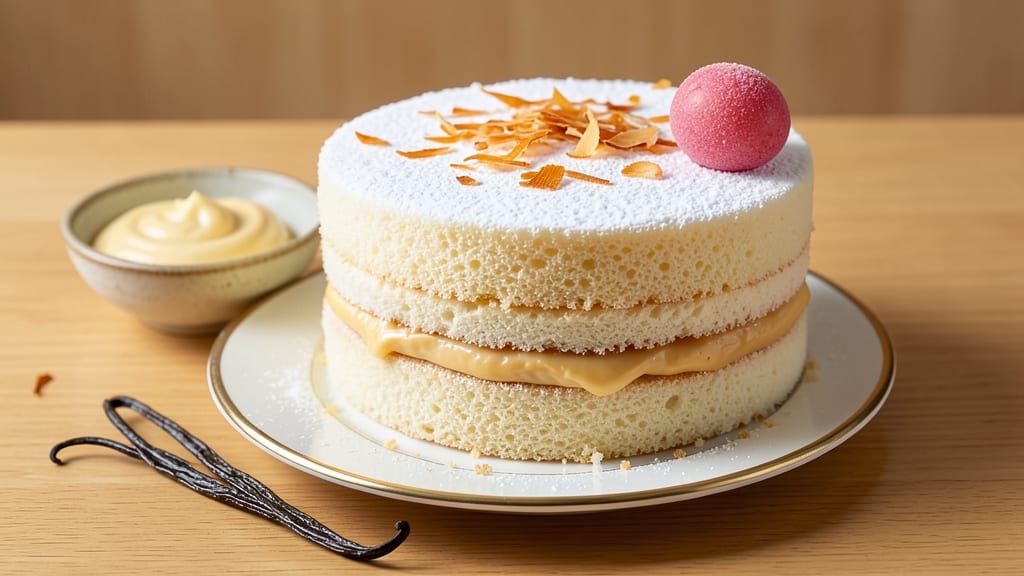
This Asian vanilla sponge cake delivers the perfect balance of delicate floral notes and light-as-air layers that crumble with every bite. 🌸 The secret lies in a refined technique that incorporates a touch of coconut milk for subtle richness while maintaining that signature fluffiness—inspired by traditional Asian baking methods but adapted for modern home kitchens.
What sets this recipe apart is the careful integration of vanilla bean paste, which infuses the cake with aromatic depth without overpowering the delicate sponge structure. The cake bakes to a golden finish with tender layers that separate effortlessly, making it ideal for celebrations or everyday indulgence.
For those who prefer modern twists, optional variations like pandan or matcha add vibrant complexity while keeping the same signature texture.
The result is a cake that’s both elegant and approachable—light enough to feel airy yet substantial enough to satisfy. Whether you’re serving it at a gathering or treating yourself to a quiet afternoon dessert, this recipe ensures a showstopping finish with minimal fuss.
Ready to create a cake that’s as impressive as it is delicious?
With just a few key techniques—proper mixing, precise baking, and gentle cooling—the process becomes straightforward, even for beginners. Let’s get started on a cake that’s as much about tradition as it is about innovation.
Ingredients for asian vanilla sponge cake
These refined ingredients transform into a delicate Asian vanilla sponge with floral elegance and airy perfection.
| Ingredient | Amount | Notes |
|---|---|---|
| All-Purpose Flour 🌾 | 2 ½ cups | Sifted for light texture |
| Granulated Sugar 🍚 | 1 ½ cups | Fine grain preferred |
| Unsalted Butter 🧈 | 1 cup | Room temperature, European-style |
| Large Eggs 🥚 | 4 whole | Room temperature, separated |
| Vanilla Bean Paste 🌿 | 2 tbsp | High-quality for authentic flavor |
| Coconut Milk 🥥 | ¼ cup | Full-fat for richness |
| Baking Powder 🧂 | 2 tsp | Diamond Crystal preferred |
| Salt 🧂 | ¼ tsp | Fine sea salt |
| Cornstarch 🌾 | 1 tbsp | For tender crumb |
| Rice Vinegar 🍶 | 1 tsp | White vinegar substitute |
| Pandan Extract (optional) 🌸 | ½ tsp | For floral variation |
| Matcha Powder (optional) 🍵 | 1 tsp | For earthy variation |
The vanilla bean paste is non-negotiable here—Madagascar bourbon beans deliver the most complex flavor profile. For sourcing, specialty baking stores like Sur La Table or Williams Sonoma carry high-quality pastes, but Amazon offers reliable options too. The coconut milk should be full-fat for that subtle richness; Thai Kitchen brand is widely available and performs consistently. If you're using pandan extract, Koyo Organic is a trusted brand with vibrant flavor. For matcha, Ippodo Tea provides ceremonial-grade powder that elevates the earthy notes without bitterness.
No vanilla bean paste? Pure vanilla extract at double the amount works, though the flavor will be subtler. Substituting coconut milk? Greek yogurt or cashew cream maintains moisture without altering texture. The rice vinegar is essential for tenderizing the flour proteins—substitute lemon juice at half the amount if unavailable. For the optional variations, pandan extract can be omitted entirely if you prefer pure vanilla, while matcha should be sifted thoroughly to avoid clumping. The cornstarch is critical for that signature Asian sponge tenderness; arrowroot powder works in a pinch but may yield slightly denser results.
Store room-temperature butter in an airtight container for up to 1 week, while vanilla bean paste keeps for 6 months refrigerated. The sifted flour mixture should be refrigerated for no longer than 24 hours to prevent absorption. Once baked, the cake stays fresh for 3 days at room temperature, wrapped tightly in plastic. For longer storage, slice and freeze individual portions for up to 3 months—thaw at room temperature before serving. The pandan or matcha variations should be prepared fresh if possible, as their flavors degrade faster when frozen.
Why You'll Love This Recipe
- No-Fuss Mixing: I swear by the creamy butter-and-egg combo here—just whip the butter and sugar until light, fold in the eggs one at a time, and the vanilla paste does the rest. No food processor, no stress, just a smooth batter that’s ready in minutes. (Honestly, my 10-year-old could handle it.)
- Vanilla Kiss: That vanilla bean paste? It’s the star. Richer than extract, with actual flecks of vanilla—every slice tastes like a bakery’s secret. The butter keeps it tender, the sugar just sweet enough, and the eggs give it that perfect rise. Dangerously addictive.
- Budget Baking: Flour, sugar, butter, eggs—these are pantry basics that won’t break the bank. One batch feeds six, and leftovers? They keep for days in the fridge or freeze beautifully. My go-to for when I need something impressive but can’t afford fancy ingredients.
Step-by-step instructions for Asian vanilla sponge cake
Master this delicate technique for a cake so light it practically disappears on your tongue.
👨🍳 Step 1: Prepare the Dry Ingredients with Precision
Sift the 2.5 cups all-purpose flour and 2 tsp baking powder together through a fine-mesh sieve into a medium bowl. This aeration step prevents dense layers. Whisk in the 1 tbsp cornstarch and 0.25 tsp salt until completely homogeneous. If using, add the 0.5 tsp pandan extract or 1 tsp matcha powder at this stage—they'll distribute evenly throughout the batter.
Set aside the dry mixture. The reason for sifting isn't just for aeration—it also ensures no lumps remain that could create texture inconsistencies in your delicate sponge. I like to use a wire whisk to break up any remaining clumps after sifting, guaranteeing a silky smooth batter later.
🍳 Step 2: Whip Eggs and Sugar to Ribbon Stage
In a separate large bowl, combine the 4 whole large eggs and 1.5 cups granulated sugar. Using a stand mixer fitted with the whisk attachment, beat on high speed for 5-7 minutes until the mixture becomes pale, thick, and forms ribbons when the whisk is lifted. You'll know it's ready when the ribbons hold their shape for several seconds before dissolving back into the mixture.
This step is where the magic happens—the eggs incorporate air, creating the signature light-as-air texture. I've found that using room-temperature eggs is crucial—they whip up more evenly and create a more stable foam. If your eggs are cold, the mixture will take significantly longer to reach ribbon stage.
👨🍳 Step 3: Incorporate Butter and Coconut Milk
Add the 1 cup unsalted butter (softened to room temperature) to the egg mixture. Using the paddle attachment, beat on medium speed until fully combined and slightly thickened. Add the 0.25 cup coconut milk and 1 tsp rice vinegar next, mixing just until incorporated. The vinegar adds subtle tang that balances the sweetness and helps stabilize the batter.
Here's where it gets technical: the butter should be incorporated gently to maintain the air you've just created. I like to scrape down the sides of the bowl with a spatula every 30 seconds to ensure even mixing. The coconut milk adds richness without making the cake too heavy—a crucial balance in Asian sponge cakes.
🥘 Step 4: Fold Dry Ingredients Gently
With the mixer on low speed, gradually add one-third of the dry ingredients to the wet mixture. Mix just until combined, then fold in another third by hand using a rubber spatula. This prevents deflating the air bubbles you've worked so hard to create. Finally, gently fold in the remaining dry ingredients until just combined—no overmixing here!
The key is patience. You want to see a few streaks of flour remaining in the batter when you're done. This ensures you haven't developed too much gluten, which would make your cake dense. I like to use a figure-eight motion when folding by hand to maintain maximum air incorporation.
🔥 Step 5: Bake in Two Layers with Perfect Timing
Preheat your oven to 350°F and grease two 8-inch round cake pans with nonstick spray. Divide the batter evenly between the pans. Bake for 25-30 minutes until the tops spring back when gently touched and a toothpick inserted comes out clean. Rotate the pans halfway through baking for even browning.
Here's the professional secret: I like to tent the pans with aluminum foil after the first 15 minutes of baking. This prevents the tops from browning too quickly while still allowing the cakes to rise properly. The internal temperature should reach 210°F when done—a good thermometer is worth its weight in gold for this delicate cake.
Pro Tips For Making Asian Vanilla Sponge Cake
- Whip Eggs to Stiff Peaks: Don’t stop at soft peaks—push those eggs until they hold a sharp, glossy point when you lift the whisk. I learned this the hard way: under-whipped eggs mean a dense, gummy sponge. For this cake, the buttercream will be rich, so the structure needs that extra stability.
- Sift the Flour Twice: Skip the sieve once and you’ll end up with pockets of dry flour that won’t incorporate properly. Asian vanilla sponge relies on a light, airy crumb, so give that flour a good shake—both before and after mixing it into the egg-butter base. Yes, it’s extra work, but it’s the thing that matters most for that cloud-like texture.
- Room-Temp Butter Only: Cold butter? Forget it. This cake needs butter that’s soft enough to cream with sugar but not melted. I used to eyeball it, but now I cut the butter into small cubes and let it sit for 2 hours—no exceptions. Cold butter = tough cake; warm butter = greasy mess. Find that sweet spot.
- Scrape the Bowl Religiously: Every. Single. Time. I was lazy once and left the last bit of egg-butter mix clinging to the bowl. The result? A cake with uneven texture and a weird, dry patch. Use a rubber spatula and scrape the sides thoroughly—this isn’t the prettiest method, but it works every time. Your cake’s evenness depends on it.
Wine and beer pairings for this dish
Floral Wine Pairings
For this delicate Asian vanilla sponge, I recommend Sake—specifically a dry junmai like Dassai 23—its clean, crisp profile complements the cake's subtle floral notes without overpowering them. The slight acidity cuts through the richness of the coconut milk, while the delicate umami enhances the vanilla's aromatic depth.
Serve it chilled at 45°F for the best experience. 🍶
Earthy Beer Options
A light Japanese lager like Asahi Super Dry works beautifully with this cake. Its crisp, clean finish mirrors the sponge's airy texture, while a touch of malt sweetness harmonizes with the vanilla.
For a bolder option, try a wheat beer with citrus notes—like Sapporo Premium Beer—to contrast the cake's floral sweetness. Avoid heavy stouts or IPAs that could overwhelm the delicate flavors.
Creamy Dessert Wine
If you prefer wine, a demi-sec Moscato d'Asti from Italy provides the perfect balance. Its light sweetness and effervescence complement the cake's floral vanilla while adding a refreshing finish.
For a more robust pairing, a dry Riesling from Germany—like Dr. Loosen Blue Slate—enhances the cake's subtle earthiness, especially when using matcha variations. Serve both wines slightly chilled at 50°F.
Cultural Pairing Tips
In traditional Asian settings, this cake is often served with green tea—specifically sencha or matcha—to cleanse the palate between bites. For a modern twist, I like pairing it with a sparkling lychee wine from China, which mirrors the cake's floral notes while adding a festive touch.
The key is to match the beverage's lightness with the cake's delicate structure—never let the drink overpower the dessert's subtle flavors.
Coffee Contrast
For coffee lovers, a light roast pour-over like Kona coffee works surprisingly well. The bright acidity and nutty notes contrast beautifully with the cake's vanilla sweetness. Brew it with 185°F water for a clean, aromatic cup that won't compete with the dessert's delicate profile.
Avoid dark roasts that could make the cake taste flat by comparison.
Nutrition facts
Frequently asked questions
Why does this Asian vanilla sponge cake need coconut milk?
The coconut milk adds subtle richness and moisture without making the cake dense. It balances the delicate vanilla flavor while giving the sponge that signature Asian-inspired tenderness. For a lighter version, you could substitute with Greek yogurt or cashew cream.
Can I make this cake in a single layer instead of two?
Yes, but you'll need a 9-inch round pan and reduce the baking time to 20-25 minutes. The cake will be thicker but still light if you follow the same mixing techniques. For a dramatic presentation, stick with two layers—it's worth the effort!
How do I prevent the cake from cracking?
Cracking usually happens from uneven cooling or overmixing. Let the cake cool in the pan for 10 minutes before transferring to a wire rack. Avoid opening the oven door too early, and never tap the pan to test doneness—use a toothpick instead.
What's the difference between vanilla extract and vanilla bean paste?
Vanilla bean paste contains actual vanilla seeds, giving 3x more flavor than extract. The paste adds beautiful flecks and a deeper aroma. For a budget version, use 2 tbsp vanilla extract (not imitation), but the texture won't be as premium.
Can I add fresh fruit to this cake?
Light fruits like strawberries or mango slices work beautifully between layers. For maximum freshness, add them just before serving. Avoid heavy fruits like pineapple—they can make the cake soggy. Brush layers with a simple syrup first for extra moisture.