
Desserts
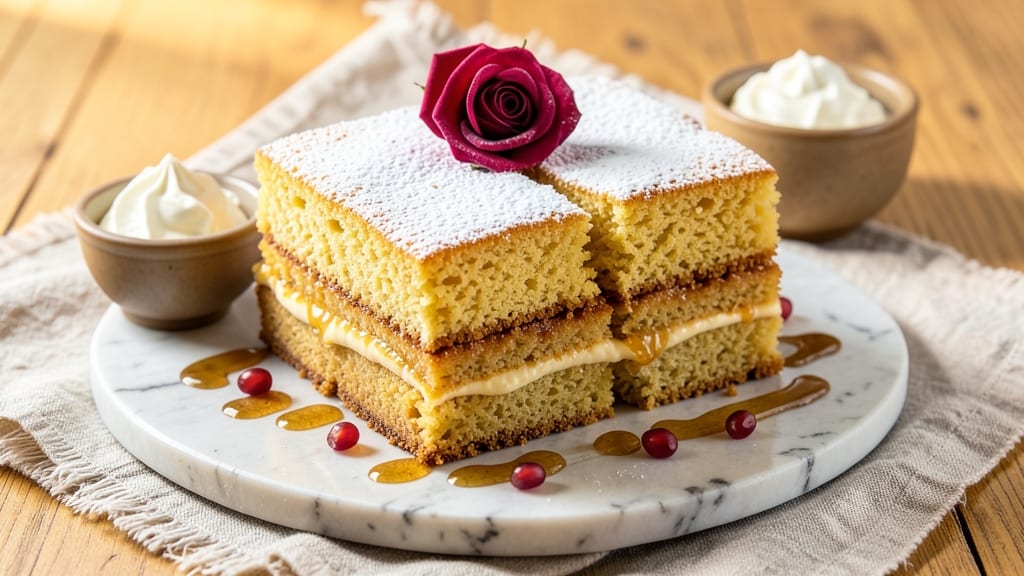
This Arabic semolina cake recipe delivers the perfect balance of crispy top and moist honey-soaked layers—a dessert that transports you straight to the bustling markets of the Middle East. 🌟 The secret lies in its unique texture: a golden, crunchy crust that gives way to tender, honey-infused crumbs beneath, all held together by a simple yet flavorful batter.
Traditionally served at celebrations and family gatherings, this cake requires just a handful of ingredients but packs deep cultural significance. The semolina adds a distinctive nutty flavor and satisfying bite, while the honey-soaking process creates those signature moist, caramelized pockets that make every slice irresistible.
Baking it in a round pan ensures that signature crispy top that's impossible to resist.
What makes this recipe truly special is the harmony of textures—each bite offers a contrast between the crispy exterior and the soft, honey-drenched interior. The cake pairs beautifully with a cup of Arabic coffee or mint tea, making it the perfect finale to any meal.
With just a few simple steps, you can recreate this beloved dessert in your own kitchen.
Once baked, the cake's aroma fills your home, and the moment it cools slightly, you'll want to slice into it immediately. The honey-soaked layers soak up the syrup perfectly, creating a dessert that's both comforting and elegant.
Whether you're celebrating a special occasion or simply craving a taste of tradition, this cake is sure to impress.
Ingredients for arabic semolina cake
Pantry staples meet Middle Eastern magic for this crispy-topped, honey-drenched cake delight.
| Ingredient | Amount | Notes |
|---|---|---|
| All-Purpose Flour 🌾 | 2 cups | Sifted for light texture |
| Semolina Flour 🌾 | 1 cup | Fine grind for smooth batter |
| Granulated Sugar 🍚 | 1 ½ cups | White or light brown |
| Unsalted Butter 🧈 | 1 cup | Cold, cubed for texture |
| Large Eggs 🥚 | 4 whole | Room temperature |
| Baking Powder 🧂 | 2 tsp | Aluminum-free preferred |
| Ground Cinnamon 🌿 | 1 tsp | Freshly ground for warmth |
| Salt 🧂 | ½ tsp | Fine sea salt |
| Milk 🥛 | ½ cup | Whole milk for richness |
| Pure Honey 🍯 | 1 cup | Thick, natural honey |
| Vanilla Extract 🌸 | 1 tsp | Pure vanilla preferred |
| Orange Zest 🍊 | 1 tbsp | Freshly grated |
| Orange Juice 🍊 | ¼ cup | Freshly squeezed |
The semolina is non-negotiable here—it’s what gives this cake that signature nutty crunch and satisfying bite. Bob’s Red Mill or Anthony’s Goods brands are my go-tos for fine-ground semolina, but any good-quality semolina will work. If you can only find coarse semolina, pulse it in a food processor for a smoother texture. The honey should be thick and natural—Manuka or clover work beautifully, but avoid the ultra-runny kind. For the butter, cold cubes are key: they create pockets of steam during baking, giving that coveted crispy top. Don’t skip the zest—fresh orange adds a bright pop that cuts through the richness.
No semolina? Substitute with extra flour plus 1 tbsp cornstarch—it won’t be identical, but close. Running short on honey? Maple syrup works in a pinch, though it’ll lack the depth of flavor. The orange juice can be swapped for water if needed, but the zest is worth hunting down—even a tiny bag from the store’s produce section adds magic. For the butter, if you’ve got vegan butter, use it, but expect a slightly less crispy top. The vanilla extract? Imitation won’t cut it—this is where you don’t want to skimp. Pro tip: Toast the semolina in a dry pan for 2 minutes before mixing—it deepens the nutty flavor and makes the cake even more irresistible.
This cake tastes even better the next day once the honey fully soaks in. Store it in an airtight container at room temperature for up to 5 days, though I’ve never had a slice last that long. For a restaurant-worthy presentation, dust with powdered sugar or a sprinkle of ground pistachios. The syrup left over from soaking? Drizzle it over yogurt or ice cream—trust me, it’s just as delicious that way. And if you’re feeling ambitious, make a double batch. It disappears faster than you’d think, especially when paired with that first sip of Arabic coffee.
Why You'll Love This Recipe
- I’ll be real: this recipe costs me pennies. Semolina and all-purpose flour are pantry basics, and you’re using butter and eggs you’d already have. A single batch stretches for days—pack it for lunches, share with neighbors, or freeze slices for when you’re too tired to bake. Not the prettiest, but the taste makes up for it every time.
- No-Fuss Layers: I swear by this recipe because it’s literally dump-and-bake. Mix the semolina and all-purpose flour with the butter until it crumbles like sand, fold in the eggs, and you’re done—no measuring cups or fancy techniques. The texture? That perfect chewy crunch from the semolina with a tender middle, all thanks to the eggs binding it just right.
- Butter-Sugar Magic: Here’s what sold me—the way the warm, caramelized sugar and rich butter sing together. It’s not sweet like a cake; it’s more like a grown-up cookie with depth, especially when you let it sit for a few hours. Honestly, the first time I made it, I ate a slice straight from the pan and didn’t even care about the slightly crispy edges.
- Breakfast or Dessert: Between us, this cake is my secret weapon for lazy mornings or unexpected guests. Serve it warm with a drizzle of honey for breakfast, or dust it with powdered sugar for a no-fuss dessert. My kids reach for it after school, and my husband sneaks seconds when he thinks I’m not looking—proof it’s universally loved.
Step-by-step instructions for Arabic semolina cake
Here's how to bake this Middle Eastern classic with its signature crunchy semolina top and honey-soaked layers.
👨🍳 Step 1: Prepare the Honey-Soaked Base
Preheat your oven to 350°F and grease a 9x13-inch baking pan generously with butter. In a small saucepan, combine the 1 cup pure honey, 0.25 cup orange juice, and 1 tbsp orange zest. Heat over medium-low heat until the honey becomes runny and fragrant—about 3-4 minutes. Pour this mixture evenly into the prepared pan.
I like to swirl the honey mixture gently with a spoon to create those beautiful marbled patterns you see in traditional Arabic cakes. This step is what gives the cake its signature moist, citrusy flavor throughout. Let the honey soak into the pan for 5 minutes while you prepare the batter.
👨🍳 Step 2: Mix the Wet Ingredients
In a large mixing bowl, cream together the 1 cup cold unsalted butter and 1.5 cups granulated sugar using an electric mixer on medium speed for 3-4 minutes until light and fluffy. This step is crucial—you're incorporating air that will make your cake tender and help it rise properly.
Add the 4 whole large eggs, one at a time, mixing well after each addition. Then stir in the 1 tsp vanilla extract and 1 tsp ground cinnamon. The mixture should be smooth and slightly thickened. I always tap the bowl gently against the counter a few times to release any air bubbles that might have formed during mixing.
👨🍳 Step 3: Combine Dry Ingredients
In a separate bowl, whisk together the 2 cups all-purpose flour and 1 cup semolina flour. Sift in the 2 tsp baking powder and 0.5 tsp salt, then whisk again to combine. This step ensures your cake will have that perfect rise and crunchy texture.
Gradually add the dry ingredients to the wet mixture, mixing on low speed just until combined. Be careful not to overmix—you should still see some flour streaks. Then pour in the 0.5 cup milk and mix until just incorporated. The batter will be thick and slightly grainy, which is exactly what we want for that authentic semolina cake texture.
🥘 Step 4: Layer and Bake
Pour half of the batter over the honey-soaked base in the prepared pan. Use a spatula to spread it evenly. Then sprinkle about ⅓ cup of the semolina flour evenly over the batter. This creates that signature crunchy top layer. Repeat with another layer of batter and another ⅓ cup semolina flour. Finish with the remaining batter.
Bake for 45-50 minutes until the top is golden brown and a toothpick inserted in the center comes out clean. The edges should be set but the center should still be slightly jiggly. This is where the magic happens—the semolina layer crisps up beautifully while the honey-soaked layers stay moist.
⏰ Step 5: Cool and Serve
Let the cake cool in the pan for 10 minutes, then transfer to a wire rack to cool completely. I know it's tempting to cut into it right away, but patience here pays off—the cake will hold together better and the flavors will meld beautifully.
Once completely cool, cut into squares and serve. The contrast between the crunchy semolina top, the moist honey-soaked layers, and the bright citrus flavor makes this cake truly special. Store any leftovers in an airtight container for up to 5 days—though I doubt it will last that long!
Pro Tips For Making Arabic Semolina Cake
- Sift the Semolina: After burning three batches, I finally figured out: sift the semolina flour before mixing it with the all-purpose flour. The fine grains pack unevenly, and unsifted semolina makes the cake dense and crumbly instead of light. Use a fine-mesh sieve—yes, even if you’re impatient like me—and tap the bowl gently to break up clumps.
- Butter at Room Temp: Cold butter makes this cake tough. Take the unsalted butter out of the fridge at least 2 hours before starting—or microwave it in 10-second bursts until it’s soft but not melted. You’re not making cookies here; the butter needs to cream smoothly with the sugar for that classic tender crumb.
- Don’t Overmix the Batter: I used to beat the eggs and semolina like I was punishing the mixture. Mix just until combined—lumpy is fine. Overworking the batter develops gluten, which turns the cake into a dense brick instead of its signature soft, moist layers. Fold in the dry ingredients with a spatula, and stop when the flour is mostly incorporated.
- Bake in Two Stages: Preheat the oven to 350°F (175°C), then bake the cake for 20 minutes. Lower the heat to 325°F (160°C) and bake another 25-30 minutes. The high initial heat sets the edges, while the lower temp ensures the center cooks evenly without burning. A toothpick should come out clean—or have a few moist crumbs, not wet batter.
Common mistakes when making perfect results
Overmixing the Batter
This is the #1 mistake I see that kills the cake's signature texture. When you overmix the batter after adding the dry ingredients, you develop gluten that makes the cake dense instead of tender. The batter should look slightly lumpy with visible flour streaks—this is perfect!
I recommend mixing just until the dry ingredients disappear, then stop immediately. For extra insurance, use a rubber spatula to gently fold in the last bit of flour by hand rather than relying on the mixer. 💫
Skipping the Semolina Layer
The crunchy semolina top is what makes this cake special, so don't skip it! Sprinkle the semolina evenly between batter layers—about ⅓ cup per layer—and make sure it's distributed all the way to the edges.
I like to use a fine-mesh sieve for an even coating. If you forget this step, your cake will lose that essential textural contrast between crispy and moist layers.
Using Wrong Honey
Not all honey works equally well here. Thin, runny honey won't create those beautiful caramelized pockets in the cake. Choose a thick, natural honey like Manuka or clover—these hold their viscosity better during baking.
If your honey is too liquid, warm it gently in the microwave for 10-15 seconds to thicken it slightly before mixing with the orange juice. The texture difference is noticeable!
Incorrect Baking Time
Underbaking leaves the center too soft and overbaking dries out the honey-soaked layers. The cake is done when the edges are set but the center still has a slight jiggle (45-50 minutes at 350°F).
I always check with a toothpick—it should come out clean but with a few moist crumbs. If your oven runs hot, reduce the temperature to 325°F and add 5-10 minutes to the baking time.
Not Letting It Cool
I know it's tempting to cut into warm cake, but resisting is crucial! Letting the cake cool completely in the pan for 10 minutes then on a wire rack prevents crumbling when you slice it.
The honey needs time to fully soak into the layers, and the semolina top will crisp up properly. If you cut too soon, you'll end up with messy, uneven slices that lose their shape.
Greasing the Pan Improperly
Generously greasing your 9x13-inch pan with butter is essential, but don't stop there! Line the bottom with parchment paper for easy removal. I also recommend dusting the pan with 1 tbsp flour after greasing to prevent sticking.
The honey-soaked base can be particularly clingy, so proper pan prep makes all the difference when it comes time to serve your cake. 🔥
Nutrition facts
Frequently asked questions
Why does this cake need semolina?
The semolina creates that signature crunchy top layer that's essential to Arabic semolina cake. It adds a nutty flavor and satisfying texture contrast with the soft honey-soaked interior. Without it, you'd miss the traditional bite that makes this dessert special.
Can I make this cake without orange juice?
Yes, but the flavor will be less vibrant. Replace the 0.25 cup orange juice with 0.25 cup water or apple juice for a milder taste. The orange zest is more important—don't skip that! It adds the bright citrus note that balances the sweetness.
How do I store leftovers?
Keep the cake in an airtight container at room temperature for up to 5 days. The flavors actually improve as the honey soaks in overnight. For longer storage, wrap individual slices in plastic wrap—they'll stay fresh for 3-4 days in the fridge.
What's the best way to serve this cake?
Serve warm or at room temperature with a dusting of powdered sugar or crushed pistachios. For an authentic touch, pair it with Arabic coffee or mint tea. The warm beverage helps release the cake's flavors even more!
Can I use almond flour instead of semolina?
Not recommended—almond flour has a completely different texture and flavor. Semolina's coarse, nutty quality is what gives this cake its signature crunch. If you must substitute, try 1 cup all-purpose flour plus 1 tbsp cornstarch, but the texture won't be identical.