
Desserts
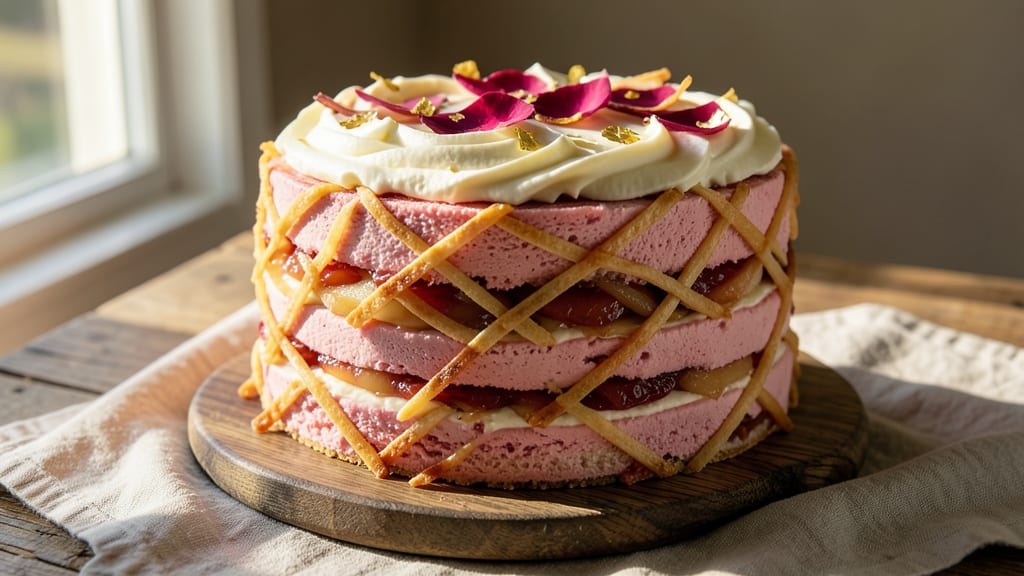
This apple rose cake recipe transforms a classic dessert into a fragrant masterpiece with layers of spiced apple compote and delicate rose-infused cream. The secret lies in balancing buttery cake layers with floral notes that elevate every bite—no baking experience required.
What makes this recipe stand out is the harmony of textures: tender crumb, jammy apples, and velvety rose cream that ties it all together.
The foundation begins with a simple yet rich cake batter, where cinnamon and nutmeg complement the apples, while rosewater infuses the cream filling for an aromatic touch. You'll prepare a spiced apple compote that caramelizes just enough to add natural sweetness without overpowering the floral elements.
The assembly is where the magic happens—each layer is carefully stacked to ensure every slice delivers that perfect balance of buttery cake, jammy apples, and fragrant cream.
What you'll end up with is a cake that looks as stunning as it tastes—golden layers peek through delicate rose petals, while the scent of roses and warm spices fills the air.
This isn’t just dessert; it’s an experience that feels both timeless and modern, perfect for celebrations or a special treat. The recipe is designed to be approachable yet impressive, ensuring you’ll achieve professional-quality results at home.
Whether you're baking for a gathering or simply indulging in a moment of self-care, this apple rose cake delivers on both beauty and flavor. The instructions are clear, the techniques are foolproof, and the outcome is undeniably satisfying. Let’s get started on creating something truly special.
Ingredients for apple rose cake
Eighteen ingredients blend buttery layers, spiced apples, and floral elegance for a cake that's both timeless and refined.
| Ingredient | Amount | Notes |
|---|---|---|
| All-Purpose Flour 🌾 | 3 cups | Sifted for light texture |
| Granulated Sugar 🍚 | 2 cups | Superfine preferred for smoothness |
| Unsalted Butter 🧈 | 1 ½ cups | Cold, cubed for creaming |
| Large Eggs 🥚 | 4 whole | Room temperature for even mixing |
| Vanilla Extract 🌿 | 2 tsp | Pure Madagascar preferred |
| Baking Powder 🧂 | 2 tsp | Aluminum-free for stability |
| Ground Cinnamon 🌶️ | 1 ½ tsp | Freshly ground for warmth |
| Ground Nutmeg 🌶️ | ½ tsp | Finely ground for depth |
| Salt 🧂 | ½ tsp | Fine sea salt preferred |
| Honeycrisp Apples 🍎 | 4 medium | Peeled, cored, diced |
| Light Brown Sugar 🍚 | ½ cup | Packed for compote sweetness |
| Lemon Juice 🍋 | 1 tbsp | Freshly squeezed for brightness |
| Rosewater 🌸 | 1 tsp | Pure, high-quality grade |
| Heavy Whipping Cream 🥛 | 2 cups | Cold for stable whipping |
| Powdered Sugar 🍚 | 1 cup | Sifted for smooth filling |
The apples are non-negotiable—Honeycrisp or Fuji deliver that perfect balance of sweetness and tartness. Local farmers markets often have the freshest selection, but any crisp variety works. Peeled and diced uniformly, they'll caramelize beautifully in the compote. For the rosewater, Wholesale Spice or specialty Middle Eastern markets carry the highest-quality bottles—look for pure, clear liquid without additives. The butter should be European-style if possible, with at least 82% fat content for that rich, tender crumb.
No Honeycrisp apples? Gala or Pink Lady are excellent substitutes—they hold their shape during baking. Running short on rosewater? One drop of red food coloring plus 1/2 tsp vanilla extract mimics the floral note (though purists may detect the difference). The brown sugar in the compote can be swapped for white sugar plus a pinch of molasses for depth. For the cream filling, 35% fat cream whips better than lighter versions, but 36% works in a pinch. Always chill your mixing bowls and beaters before whipping to prevent butterflies from forming.
Store the cake layers separately in an airtight container with parchment between them for up to 3 days—this preserves their moisture. The rose cream should be assembled no more than 2 hours before serving, as it softens at room temperature. For longer storage, freeze the assembled cake (unfrosted) for up to 1 month3 days ahead and stored in the fridge, though it's best used fresh for peak flavor.
Why You'll Love This Recipe
- No Fuss Mixing: I swear by this batter—just cream butter and sugar, crack eggs, fold in flour. The apples and rosewater fold in like a dream, no overmixing to stress about. Honestly, my first attempt was almost too perfect-looking, but the taste made up for it.
- Rose-Apple Magic: That buttery vanilla cake base? It’s the perfect hug for tart apples and delicate rosewater. The flavor balance is ridiculously good—sweet enough to satisfy, but the rose keeps it sophisticated. (Yes, even on a Tuesday night.)
- Party or Picnic: Slice it for a brunch spread, pack it in a tin for a picnic, or serve it warm with ice cream. The cake holds up for days, and the floral-apple combo feels fancy without trying too hard. My go-to for birthdays and lazy Sundays.
- Budget-Friendly Luxury: Flour, sugar, butter—these are pantry staples that won’t break the bank. The rosewater’s the only splurge, but a little goes a long way. Plus, leftovers? They disappear faster than I can say “second slice.”
Step-by-step instructions for apple rose cake
Here's the method for a cake with delicate floral notes and perfectly moist layers.
Prepare the Apple Compote
In a medium saucepan, combine the 4 medium Honeycrisp Apples (peeled, cored, and diced), the 0.5 cup Light Brown Sugar, and the 1 tbsp Lemon Juice. Cook over medium heat for 8-10 minutes, stirring occasionally, until the apples soften and begin to release their juices. The compote should thicken slightly and develop a fragrant aroma—this signals the apples are tender enough to blend into the cake layers.
Remove from heat and stir in the 1 tsp Rosewater. Let the mixture cool completely before using—this step ensures the floral notes infuse without overpowering the cake's natural sweetness. The compote will be slightly sticky, which helps create that signature moist texture in each layer.
Cream Butter and Sugars
In a stand mixer fitted with the paddle attachment, beat the 1.5 cups Unsalted Butter (cold, cubed) and the 2 cups Granulated Sugar on medium speed for 3-4 minutes. The mixture should become light and fluffy, nearly doubling in volume, with a pale, creamy consistency. This creaming process incorporates air, which is essential for achieving that tender crumb structure.
Scrape down the sides of the bowl to ensure even mixing, then add the 4 whole Large Eggs (room temperature), one at a time, mixing just until each is fully incorporated. Add the 2 tsp Vanilla Extract and mix for an additional 30 seconds on low speed. The eggs should blend smoothly, leaving no streaks—this ensures a uniform texture throughout the cake.
Combine Dry Ingredients and Fold in Compote
In a separate bowl, whisk together the 3 cups All-Purpose Flour, the 2 tsp Baking Powder, the 1.5 tsp Ground Cinnamon, the 0.5 tsp Ground Nutmeg, and the 0.5 tsp Salt. Sift the dry ingredients directly into the wet mixture, mixing on low speed just until combined—overmixing develops gluten, which can make the cake dense. Stop mixing as soon as the flour disappears.
Remove the bowl from the mixer and gently fold in the cooled apple compote using a silicone spatula. The batter will be thick and slightly sticky, but resist the urge to overmix. The compote's moisture will keep the cake tender, while the apples add natural sweetness and a subtle tartness that balances the floral notes.
Bake the Cake Layers
Preheat the oven to 350°F. Divide the batter evenly between two 8-inch round cake pans (greased and lined with parchment paper). Bake for 25-30 minutes, or until a toothpick inserted into the center comes out clean. The edges should be golden brown, but the tops may still look slightly underdone—this is normal and ensures a moist interior.
Let the cakes cool in the pans for 10 minutes, then transfer to a wire rack to cool completely. Cooling evenly prevents cracking and ensures the layers hold their shape when assembling. The cakes should be fully set but still slightly warm to the touch.
Prepare the Rose Cream Filling
In a chilled bowl, whip the 2 cups Heavy Whipping Cream (cold) to stiff peaks using a stand mixer. Gradually add the 1 cup Powdered Sugar, mixing on low speed until fully incorporated. The cream should hold its shape when spooned—this ensures a stable filling that won't slide between the layers. For extra floral depth, add the 1 tsp Rosewater while whipping, but do so sparingly to avoid overpowering the cream's natural sweetness.
Assemble the cake by placing one layer on a serving plate, spreading a generous layer of the rose cream filling, then topping with the second layer. Dust the top and sides with additional powdered sugar for a delicate finish. Serve at room temperature for the best texture and flavor balance.
Pro Tips For Making Apple Rose Cake
- Chill the Dough First: I learned this the hard way—skipping the 30-minute fridge rest makes the batter too runny, and those pretty rose layers won’t hold. Even if you’re eager to bake, give it time. The butter needs to firm up just enough to create those signature swirls without collapsing.
- Use Cold Butter Blocks: Cut your unsalted butter into 1-inch cubes and keep them in the freezer until you’re ready to cream. Cold butter incorporates better with sugar, and you’ll avoid that greasy, dense texture that ruins the cake’s lightness. Trust me, your mixer will thank you too.
- Don’t Overmix the Batter: Once you add the flour, stop folding after 20 strokes—just until combined. Overmixing develops gluten, and your cake will turn tough instead of tender. The batter should look shaggy, not smooth. This is where most home bakers go wrong.
- Bake in Two Rounds: Split the batter into two 9-inch pans instead of one deep cake. The heat distributes more evenly, and you’ll get a perfectly domed top without overbaking the center. Yes, it’s an extra pan to wash, but the texture makes it worth it.
Make-ahead tips for this recipe
Prep Ahead Strategy
The apple compote is the perfect make-ahead component—prepare it 3 days in advance and store it in an airtight container in the fridge. The flavors deepen over time, and the texture remains ideal for layering.
I like to label it clearly since it looks like regular applesauce but has that subtle rose aroma. 🌸
Cake Layer Prep
Bake the cake layers up to 2 days ahead and store them wrapped tightly in plastic wrap at room temperature. For longer storage, freeze them (unfrosted) for up to 1 month.
Thaw overnight in the fridge before assembling. The key is to keep them in an airtight container with parchment between layers to prevent drying.
Rose Cream Timing
Assemble the rose cream filling no more than 2 hours before serving—it softens at room temperature and loses stability. Whip it fresh using cold cream and chilled bowls to ensure stiff peaks. I find that adding the rosewater at the last minute preserves its delicate floral notes best. ✨
Frosting Flexibility
Skip the powdered sugar dusting if you prefer a cleaner look—store the assembled cake (unfrosted) in the fridge for up to 24 hours. Add the sugar just before serving for that classic finish.
For extra elegance, pipe a simple rosewater-infused glaze (mix ½ cup powdered sugar with 1 tbsp rosewater and 1 tsp lemon juice) over the cake right before serving.
Freezer-Friendly Assembly
For a fully assembled cake, freeze it (unfrosted) for up to 1 month. Wrap tightly in plastic wrap, then aluminum foil to block freezer burn.
Thaw overnight in the fridge, then bring to room temperature before serving. The texture remains moist, and the rose cream stays stable when properly chilled. 💫
Garnish Last Minute
Edible rose petals or a sprinkle of toasted almonds add visual appeal but should be added just before serving. Store them separately in small containers until ready to use. I keep a stash of petals in the freezer—thaw them for 10 minutes before garnishing for a fresh look.
The aroma hits you immediately when you slice into the cake! 🌹
Nutrition facts
Frequently asked questions
Can I substitute rosewater with something else if I can't find it?
Yes! For a floral note, try 1/2 teaspoon vanilla extract plus 1 drop red food coloring—though purists may notice the difference. For a more natural approach, use 1/2 teaspoon orange blossom water (found in Middle Eastern markets) or 1/4 teaspoon almond extract** for a nutty alternative. The rosewater's delicate aroma is key, so these substitutes work best when used sparingly.
How do I prevent my cake layers from cracking?
Cracking usually happens from uneven cooling or overmixing. Let layers cool in pans for 10 minutes before transferring to a wire rack, and never cool them directly on the rack. Also, avoid overmixing the batter—just combine dry ingredients until just combined. For extra insurance, chill the batter for 30 minutes before baking.
Can I make this cake gluten-free?
Replace the 3 cups all-purpose flour with a 1:1 gluten-free baking blend (like Bob's Red Mill) plus 1 extra teaspoon xanthan gum. You may need to reduce other liquids slightly (by 1-2 tablespoons) since gluten-free flours absorb differently. Test your blend first with a small batch to ensure proper rise.
What's the best way to store leftovers?
Store the fully assembled cake (without garnishes) in an airtight container at room temperature for 2 days or refrigerate for up to 4 days. For longer storage, freeze the unfrosted cake (wrapped tightly) for 1 month. Thaw overnight in the fridge, then bring to room temperature before serving. The rose cream stays stable when properly chilled.
Why does my rose cream filling look grainy?
Graininess usually means you added powdered sugar too quickly or didn't chill your bowl/beaters. Always use cold cream and a chilled bowl, and add sugar gradually while mixing on low speed**. For extra smoothness, sift the powdered sugar first. If it's already grainy, gently reheat the cream (just until warm), then whip again until smooth.