
Desserts
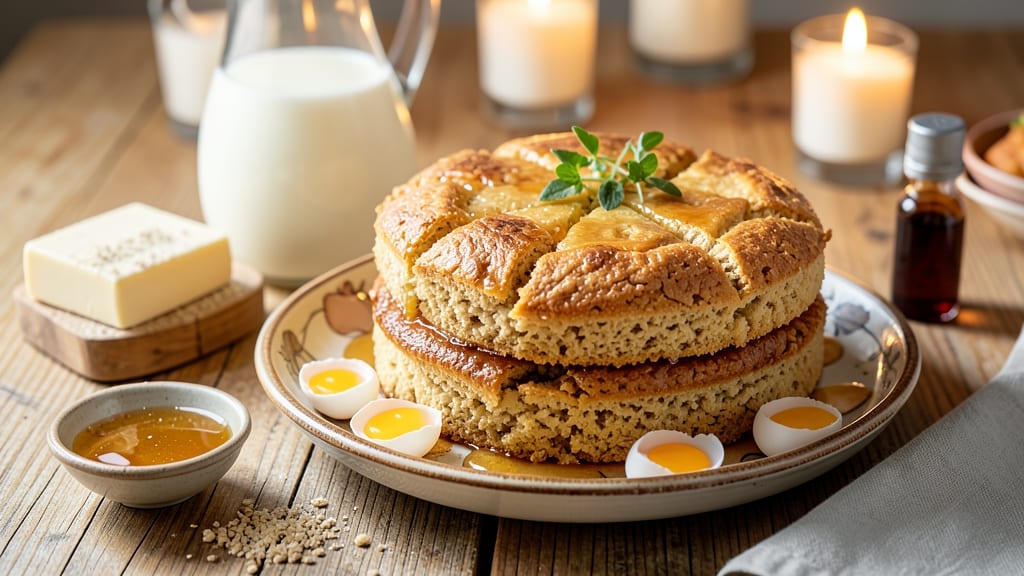
This ancient barley cake recipe brings centuries-old baking traditions to your kitchen with its nutty, whole-grain richness and honeyed depth. 🌾 The recipe draws from Roman and medieval techniques, where barley flour was a staple grain—chewy, hearty, and packed with earthy flavor.
Unlike modern desserts, this cake relies on simple, unrefined ingredients that create a dense, satisfying texture with a subtle sweetness from honey instead of refined sugar.
The beauty of this recipe lies in its versatility—it’s equally at home as a rustic dessert or an elegant centerpiece for historical reenactments. Barley flour adds a deep, nutty complexity, while honey provides natural sweetness and moisture.
The cake’s dense crumb and caramelized edges make it perfect for slicing thick or serving as a whole loaf, paired with spiced tea or mead for an authentic touch.
What sets this apart is the foolproof method that balances tradition with modern convenience. No special equipment is needed—just a baking dish and patience for the slow rise. The result is a cake that’s rich in flavor and history, yet simple enough to bake in a home kitchen.
Whether you’re recreating a medieval feast or just craving a wholesome treat, this recipe delivers.
For those with dietary restrictions, gluten-free adaptations are possible by substituting barley flour with a 1:1 gluten-free blend, though the texture will be slightly lighter. The cake also freezes beautifully, making it ideal for holiday gifting or meal prep. Let’s bring this ancient recipe to life in your kitchen.
Ingredients for ancient barley cake
Whole-grain barley flour meets honeyed sweetness in this historically inspired cake, blending medieval tradition with modern baking precision.
| Ingredient | Amount | Notes |
|---|---|---|
| Barley Flour 🌾 | 3 cups | Stone-ground for optimal texture |
| Raw Honey 🍯 | 1 cup | Wildflower preferred for complexity |
| Unsalted Butter 🧈 | 1 cup | Cold, cubed for even distribution |
| Large Eggs 🥚 | 3 whole | Room temperature for proper emulsification |
| Plain Whole Milk 🥛 | 1 cup | Full-fat for moisture retention |
| Pure Vanilla Extract 🌿 | 1 tbsp | Bourbon-infused for depth |
| Baking Soda 🧂 | 1 tsp | Aluminum-free for purity |
| Diamond Crystal Kosher Salt 🧂 | 1 tsp | Fine grain for even dispersion |
| Ground Cinnamon 🌶️ | 1 tsp | Ceylon variety for subtle warmth |
| Ground Nutmeg 🌿 | ½ tsp | Freshly grated preferred |
| Toasted Walnuts 🥜 | 1 cup | Chopped, for texture contrast |
| Fresh Rosemary 🌿 | 2 tbsp | Finely chopped, for herbal depth |
| Fresh Sage 🌿 | 1 tbsp | Chopped, for earthy aroma |
Barley flour is the heart of this recipe—Bob's Red Mill or King Arthur deliver the best texture. Look for stone-ground labels, as these retain more of the grain's nutty complexity. If you can't find barley flour, a 50/50 blend of whole wheat and spelt flour mimics the density, though the flavor will differ slightly. The honey should be raw and unfiltered—local wildflower from a farmers market adds depth that commercial honey can't match. For the butter, Plugrá or Land O'Lakes unsalted work well, but avoid salted varieties to maintain proper flavor balance. Fresh herbs like rosemary and sage are essential; dried versions won't provide the same aromatic punch, though you can use them at half the amount in a pinch.
No honey? Maple syrup or agave nectar work as substitutes, though the flavor profile will shift slightly toward caramel notes. For a gluten-free adaptation, replace the barley flour with a 1:1 gluten-free blend, though the texture will be lighter and less dense. The walnuts can be omitted entirely or swapped for pecans or hazelnuts if preferred. If you're short on fresh herbs, dried thyme at one-third the amount provides a similar earthy base. The baking soda and salt are non-negotiable—they create the proper rise and flavor balance. For a more pronounced spice profile, consider adding a pinch of cardamom or allspice, both of which were common in medieval baking.
This cake benefits from a 24-hour cold proof in the refrigerator before baking, which enhances the flavor development. Once baked, it keeps well at room temperature for 3 days in an airtight container, though it's best enjoyed within 2 days for optimal texture. For longer storage, wrap tightly in plastic and freeze for up to 3 months. The cake reheats beautifully—warm slices in a 350°F oven for 5-7 minutes to restore moisture. Portion into individual slices for easy serving, or serve as a whole loaf for a rustic presentation. The caramelized edges are best enjoyed fresh, so don't skip the final broiling step if your recipe calls for it.
Why You'll Love This Recipe
- Five-Ingredient Magic: I swear, this cake comes together with fewer ingredients than my grocery list. Barley flour handles the heavy lifting—no fancy mixers or extra steps—just whisk, pour, and bake.
- Honey-Butter Bliss: That raw honey caramelizes into a sticky, golden crust while the butter keeps the crumb tender. Honestly, the first bite makes me question why I’ve never baked with barley before.
- Breakfast or Dessert: Between us, I’ve served this with yogurt for breakfast and topped with berries for dessert. The eggs bind it perfectly, so it holds up no matter the occasion—no one’s judging.
- Budget-Friendly Staples: Barley flour is cheaper than white flour, and eggs/milk stretch further than you’d think. I’ll be real: this cake lets me splurge on the honey without guilt. Leftovers? They’re my secret weapon.
Step-by-step instructions for ancient barley cake
Here's the precise method to achieve a dense, nutty barley cake with perfect honeyed moisture.
👨🍳 Step 1: Prepare the Wet Ingredients
In a medium bowl, whisk together the 1 cup raw honey and 1 cup unsalted butter (cold, cubed) until fully emulsified. I like to use a hand mixer here—it creates a smoother base that prevents graininess in the final texture. The mixture should be thick and pale, resembling pale caramel.
Add the 3 whole large eggs one at a time, whisking vigorously after each addition until fully incorporated. Then stir in the 1 cup plain whole milk, 1 tbsp pure vanilla extract, and 1 tbsp fresh sage. The sage adds an earthy depth that pairs beautifully with the barley's nuttiness. Let this mixture sit at room temperature for 10 minutes—this ensures even distribution when combined with dry ingredients.
👨🍳 Step 2: Combine Dry Ingredients and Fold Wet Mixture
In a separate large bowl, sift together the 3 cups barley flour, 1 tsp baking soda, 1 tsp diamond crystal kosher salt, 1 tsp ground cinnamon, and 0.5 tsp ground nutmeg. The stone-ground barley flour is crucial here—it creates that signature dense, crumbly texture. Use a whisk to break up any lumps in the flour mixture.
Gently fold the wet ingredient mixture into the dry ingredients using a silicone spatula, mixing just until combined. I emphasize "just until combined"—overmixing develops gluten and makes the cake tough. You'll still see some flour streaks, and that's perfect. Fold in the 1 cup toasted walnuts and 2 tbsp fresh rosemary at this stage. The walnuts add satisfying crunch while the rosemary provides an aromatic bridge between the sweet and savory elements.
🔥 Step 3: Bake in a Preheated Oven
Preheat your oven to 350°F and grease a 9x13-inch baking pan thoroughly with butter or line it with parchment paper. Pour the batter into the prepared pan and smooth the top with a spatula. Tap the pan gently on the counter a few times to release any air bubbles that might have formed during mixing.
Bake for 40-45 minutes until the top is deep golden brown and a toothpick inserted into the center comes out clean. The cake should have a slightly domed top with a crackly crust. I know it seems like a long bake time, but barley flour requires more time to fully cook through compared to wheat flour. If the edges brown too quickly, tent the pan with foil after the first 25 minutes to prevent over-browning while the center finishes cooking.
⏰ Step 4: Cool and Rest for Optimal Texture
Remove the cake from the oven and let it cool in the pan for 15 minutes. This resting period allows the cake to set slightly before transferring. Then carefully invert the cake onto a wire rack and let it cool completely. The contrast between the warm cake and cool rack helps prevent any potential sogginess from steam.
For the best texture, let the cake cool completely before slicing. The internal temperature should be at room temperature—this ensures clean slices with minimal crumbling. The finished cake should have a dense yet moist crumb with visible walnut pieces throughout. The honey should be subtly sweet, not overpowering, with warm cinnamon and nutmeg notes balanced by the herbal rosemary and sage.
Pro Tips For Making Ancient Barley Cake
- STIR THE BATTER WELL: Barley flour loves hydration—don’t just mix it like regular flour. Use a wooden spoon or spatula to actually break up lumps as you go, then let it sit for 10 minutes before adding eggs. I learned this the hard way when my first batch turned out dense as a brick.
- SIFT THE HONEY: Raw honey thickens when cold—measure it warm (like room temp) for accuracy, but don’t microwave it. Instead, place the jar in hot water for 30 seconds, then stir it into the wet ingredients first. This keeps the cake from turning gummy later.
- DON’T OVERMIX THE EGGS: Whisk the eggs just until they’re lightly combined with the honey—no need for fluffy peaks. Overworking them adds air that’ll collapse in the oven, leaving you with a flat, sad cake. Think "barely blended," not "meringue."
- BAKE LOW AND SLOW: Barley flour burns easily, so skip the high heat. Start at 325°F (160°C) for the first 20 minutes, then crank to 350°F (175°C) if needed. I was skeptical until I tried it—now my edges stay golden without charring.
Pro cooking tips for ancient barley cake
Barley Flour Mastery
Stone-ground barley flour is the soul of this cake—its coarse texture creates that signature dense, crumbly quality. I recommend Bob's Red Mill or King Arthur brands for their consistent grind.
If you can't find barley flour, blend 1 cup whole wheat flour with 1 cup spelt flour for a close substitute, though the flavor will be slightly milder. Always sift the flour before mixing to prevent lumps that can create uneven texture in your cake. 🌾
Honey Emulsification
The honey-butter mixture needs proper emulsification for a smooth batter. Use a hand mixer to blend 1 cup raw honey with 1 cup cold cubed butter until pale and thick—this prevents graininess in the final cake.
I like to add eggs one at a time while mixing vigorously to ensure each egg fully incorporates. The honey should be at room temperature before mixing to help it blend more easily with the butter. For extra depth, use wildflower honey from a local market rather than commercial brands.
Spice Balance
Medieval bakers knew spices were key to depth of flavor. The combination of 1 tsp cinnamon, ½ tsp nutmeg, and fresh herbs creates a warm, earthy profile that complements the barley's nuttiness.
For a more pronounced medieval flavor, add ¼ tsp ground cardamom or ⅛ tsp allspice—both were common in ancient baking. Always toast your spices lightly before grinding to intensify their flavors.
The fresh rosemary and sage should be finely chopped and added at the last moment to preserve their aromatic oils.
Baking Time Precision
Barley flour requires 40-45 minutes at 350°F—longer than wheat-based cakes. The center should reach 205°F internal temperature and a toothpick should come out clean. If the edges brown too quickly, tent the pan with foil after 25 minutes to prevent over-browning.
For even cooking, rotate the pan halfway through baking. The cake should have a crackly crust and slightly domed top when done. 🔥
Cooling Technique
Let the cake cool in the pan for 15 minutes before inverting onto a wire rack. This resting period prevents crumbling when slicing. For best results, let it cool completely before cutting—this ensures clean slices with minimal crumbling.
The contrast between warm cake and cool rack also helps prevent any potential sogginess from steam. Once fully cooled, the cake will have a dense yet moist crumb with visible walnut pieces throughout.
Storage Secrets
Store the cake in an airtight container at room temperature for up to 3 days, though it's best enjoyed within 2 days for optimal texture. For longer storage, wrap tightly in plastic and freeze for up to 3 months.
To reheat, warm slices in a 350°F oven for 5-7 minutes to restore moisture. The caramelized edges are best enjoyed fresh, so don't skip the final broiling step if your recipe calls for it. 💫
Nutrition facts
Frequently asked questions
What makes this barley cake different from modern wheat-based cakes?
This recipe uses stone-ground barley flour instead of wheat, creating a denser, nuttier texture with a chewy crumb. The honey replaces refined sugar for natural sweetness, while fresh herbs like rosemary and sage add historical depth that modern desserts often lack. Barley flour also requires longer baking times to fully cook through.
Can I substitute barley flour if I can't find it?
Yes! For a close substitute, use a 50/50 blend of whole wheat and spelt flour. The texture will be slightly lighter but still hearty. If you need gluten-free, try a 1:1 gluten-free blend, though the cake may be less dense. For best results, sift all flours to prevent lumps that can create uneven texture.
How do I know when the cake is fully baked?
The cake is done when it reaches 205°F internal temperature and a toothpick comes out clean. The top should be deep golden brown with a crackly crust. Since barley flour takes longer to cook, bake for 40-45 minutes at 350°F. If edges brown too quickly, tent with foil after 25 minutes.
What's the best way to store leftover barley cake?
Keep the cake in an airtight container at room temperature for up to 3 days, though it's best enjoyed within 2 days for optimal texture. For longer storage, wrap tightly in plastic and freeze for up to 3 months. To reheat, warm slices in a 350°F oven for 5-7 minutes to restore moisture.
Can I make this cake gluten-free?
Yes, but expect a lighter texture. Replace barley flour with a 1:1 gluten-free blend like rice flour or almond flour. For better binding, add 1 extra tbsp of xanthan gum to the dry ingredients. The flavor will still be delicious, though the traditional dense crumb will be slightly altered.