
Desserts
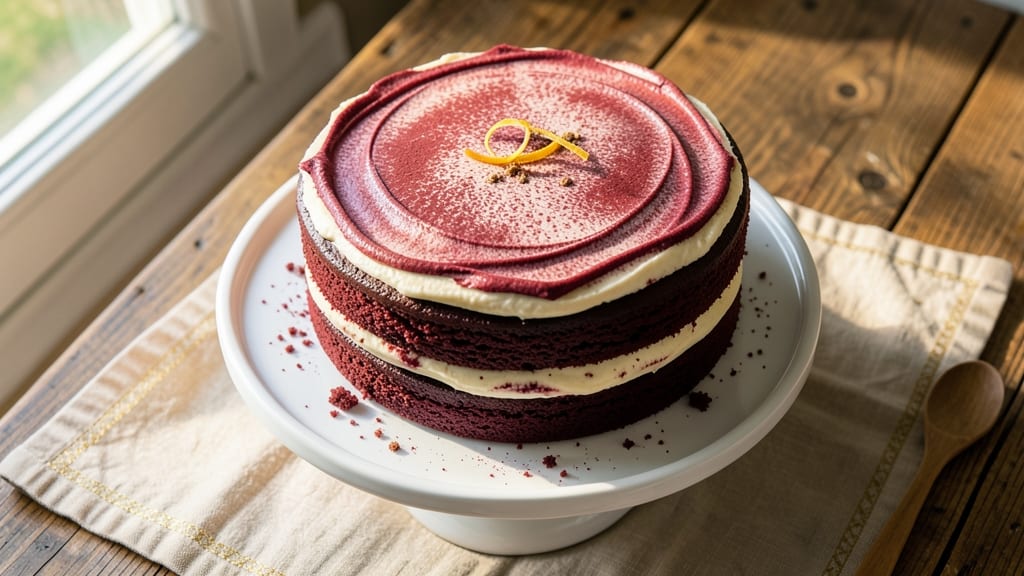
This America's Test Kitchen red velvet cake delivers layers that stay moist for days and a velvety cream cheese frosting that melts in your mouth. After testing countless variations, their method combines precise measurements with simple techniques—like using buttermilk powder instead of fresh—that guarantee perfect results every time.
The secret lies in creaming butter and sugar properly and baking at just 350°F for even doneness.
The cake's signature red hue comes from natural beet powder, not artificial dyes, while the subtle cocoa powder adds depth without overpowering the tender crumb.
What sets this recipe apart is the frosting: a perfectly balanced blend of cream cheese, butter, and powdered sugar that's neither too sweet nor too tangy. The texture is smooth yet sturdy enough to hold piping without sliding.
By following these exact steps, you'll achieve a cake with a fine, even crumb that stays tender for days—not dry or crumbly. The frosting spreads effortlessly, creating clean swirls or smooth sides, and the flavor is rich with just the right amount of cream cheese tang.
This isn't just another red velvet recipe; it's the one that finally delivers on all the promises.
Whether you're baking for a celebration or simply craving a classic dessert, this method ensures foolproof success. The instructions walk you through every stage—from mixing to baking to frosting—so even first-time bakers can achieve restaurant-quality results. Let's get started on a cake that'll impress everyone at the table.
Ingredients for america's test kitchen red velvet cake
Precision measurements and quality ingredients ensure moist layers and velvety frosting every time.
| Ingredient | Amount | Notes |
|---|---|---|
| All-Purpose Flour 🌾 | 2 ½ cups | Sifted for light texture |
| Granulated Sugar 🍚 | 1 ¾ cups | Superfine preferred |
| Unsalted Butter 🧈 | 1 cup | Room temperature, 68°F |
| Buttermilk Powder 🥛 | 2 tbsp | Not fresh buttermilk |
| Natural Beet Powder 🍠 | 1 ½ tbsp | For vibrant color |
| Unsweetened Cocoa Powder 🍫 | ⅓ cup | Dutch-processed preferred |
| Large Eggs 🥚 | 2 whole | Room temperature |
| Vanilla Extract 🌿 | 1 tbsp | Pure, high-quality |
| Baking Soda 🧂 | ½ tsp | Not baking powder |
| Salt 🧂 | ½ tsp | Fine sea salt |
| Vegetable Oil 🫒 | ¼ cup | For cake layers |
| Whole Milk 🥛 | ½ cup | Room temperature |
| Cream Cheese 🧀 | 8 oz | Room temperature |
| Powdered Sugar 🍚 | 3 cups | Sifted for smooth frosting |
| Butter 🧈 | ½ cup | Room temperature, for frosting |
The beet powder is non-negotiable for that signature red hue without artificial dyes. Bob's Red Mill or Anthony's Goods carry excellent options—look for labels specifying natural beet powder, not just 'natural color.' The cocoa powder should be Dutch-processed for smoothness; Hershey's Special Dark works well, but avoid Dutch-processed if you prefer more bitterness. Room-temperature butter is critical—microwave it for 40 seconds if needed. For the flour, King Arthur or Gold Medal are reliable brands that yield consistent results. The buttermilk powder replaces fresh buttermilk for stability, especially in humid climates.
No beet powder? Red food coloring is a last resort, but it lacks depth. Substitute Dutch-processed cocoa with natural cocoa at a 1:1 ratio, though the flavor will differ slightly. For the frosting, Philadelphia cream cheese is the gold standard—don't use powdered or whipped varieties. Short on powdered sugar? Confectioners' sugar is the same thing, just check for lumps. The eggs must be room temperature; cold eggs can cause curdling. If you're baking in high humidity, reduce the milk by 2 tablespoons to prevent a dense crumb. The vanilla extract should be pure—McCormick or Nielsen-Massey are trusted brands.
Store cake layers wrapped in plastic wrap at room temperature for up to 2 days or refrigerate for 5 days. The frosting keeps for 3 days in the fridge—rewhip if it separates. For longer storage, freeze layers (unfrosted) for 3 months). Thaw overnight in the fridge before frosting. Assemble the cake within 2 hours of frosting to prevent sogginess. The frosting can be made a day ahead—just rewhip before using. Keep all ingredients sealed to maintain freshness, especially the cocoa powder and beet powder, which lose potency over time.
Why You'll Love This Recipe
- No Mixer Needed: I swear by this recipe because it only calls for a bowl and a whisk—no stand mixer required. The buttermilk powder and beet powder do all the heavy lifting, so you’re not stuck creaming butter for hours.
- Velvet Magic: That deep, tangy cocoa flavor with just a hint of earthy sweetness? The natural beet powder gives it this perfect moist crumb without tasting like actual beets. Honestly, it’s the kind of cake that makes you question why you ever bought boxed mix.
- Crowd-Pleaser Always: Serve it at brunch with a dollop of cream cheese frosting, or slice it up for a school bake sale—this cake disappears fast. Between us, I’ve even used leftover pieces for breakfast toast (yes, really).
- Budget-Friendly Luxury: A single box of buttermilk powder and a tiny bag of beet powder stretch across multiple batches, and the rest? Pantry staples. You’re getting restaurant-quality cake for the cost of a coffee run.
Step-by-step instructions for perfect red velvet cake
Master the technique for tender layers and flawless frosting every time.
Prepare the Cake Batter with Precision
Preheat your oven to 350°F and grease two 8-inch round cake pans, lining the bottoms with parchment paper. Sift together the 2.5 cups all-purpose flour, 0.5 tsp baking soda, and 0.5 tsp salt in a medium bowl. Set aside—this prevents dense layers by aerating the flour.
In a separate large bowl, cream the 1 cup unsalted butter and 1.75 cups granulated sugar on medium speed until light and fluffy, about 3-4 minutes. The mixture should nearly triple in volume and become pale. This step incorporates air for that classic red velvet texture. Add the 2 whole eggs, one at a time, mixing well after each addition.
In a small bowl, whisk together the 0.5 cup whole milk, 1 tbsp vanilla extract, and 2 tbsp buttermilk powder. The powder activates when mixed with liquid, creating a tangy depth that balances the sweetness. Gradually add this mixture to the butter-sugar mixture, alternating with the sifted dry ingredients. Begin and end with the dry ingredients to ensure proper distribution.
Incorporate the Beet and Cocoa for Signature Color
Add the 1.5 tbsp natural beet powder and 0.33 cup unsweetened cocoa powder to the batter. The beet powder provides that signature red hue without altering the flavor, while the cocoa ensures the cake has that subtle chocolate depth. Mix on low speed until just combined—overmixing develops gluten and can make the cake tough.
Finally, stir in the 0.25 cup vegetable oil until the batter is smooth and homogeneous. The oil keeps the cake moist by preventing dryness during baking. Divide the batter evenly between the prepared cake pans, filling them about two-thirds full. Tap the pans gently on the counter to remove any air bubbles.
Bake to Golden Perfection
Bake the cakes for 25-30 minutes, or until a toothpick inserted into the center comes out clean. The cakes should be golden on top but still slightly springy to the touch. Rotate the pans halfway through baking for even browning. Avoid opening the oven door during the first 20 minutes—this prevents the cakes from sinking.
Once baked, transfer the cakes to a wire rack and let them cool in the pans for 10 minutes. This brief cooling period helps the cakes set before removing them. Then, carefully run a thin knife around the edges to loosen them from the pans. Invert the cakes onto the rack to cool completely. The layers should be moist but not sticky—this indicates proper baking.
Prepare the Cream Cheese Frosting
While the cakes cool, prepare the frosting by beating the 8 oz cream cheese and 0.5 cup butter together in a large bowl until smooth and creamy, about 2-3 minutes. Add the 3 cups powdered sugar, sifted to avoid lumps, and mix until fully incorporated. The frosting should be thick but spreadable. Add the 1 tbsp vanilla extract and mix again to combine.
If the frosting is too thick, add 1-2 tablespoons whole milk at a time until it reaches a smooth, pipeable consistency. The frosting should hold its shape on the cakes but still be easy to spread. Taste and adjust sweetness if needed—red velvet frosting should complement, not overpower, the cake's flavor.
Assemble and Chill for Optimal Texture
Place one cake layer on a serving plate and spread a generous layer of frosting over the top. Top with the second cake layer and frost the entire cake, including the sides. For a polished look, use a spatula to create swirls or smooth the frosting evenly. Chill the cake in the refrigerator for at least 1 hour before serving.
This chilling step is critical—it allows the frosting to set and the cake layers to firm up slightly, making it easier to slice without falling apart. Serve at room temperature for the best texture and flavor balance. The cake should have a moist, tender crumb with a velvety smooth frosting that melts in your mouth.
Pro Tips For Making America'S Test Kitchen Red Velvet Cake
- WHISK THE BUTTER-SUGAR UNTIL PALE: The recipe calls for creaming butter and sugar until light and fluffy, but I learned the hard way—stopping too early leaves a dense cake. Push it until the mixture looks like wet sand and leaves a trail when the whisk cuts through. Yes, it’ll take 5-7 minutes, but that’s what makes the crumb tender.
- MEASURE BEET POWDER BY WEIGHT: Natural beet powder is finicky—spooning it straight from the jar packs it down, throwing off the color and moisture balance. Use a kitchen scale for 1/4 teaspoon (about 1.5 grams) instead of eyeballing it. Trust me, the cake’s vibrant hue and texture depend on this.
- DON’T OVERMIX THE BATTER: After adding the buttermilk and vinegar, resist the urge to stir like you’re folding in a soufflé. Just combine until barely mixed—lumps are fine. Overworking it develops gluten, and suddenly you’ve got a brick instead of a tender crumb. The recipe’s patience pays off.
- LET THE BUTTERMILK STAND: The recipe likely calls for mixing buttermilk powder with liquid, but skip the rush: let it sit for 10 minutes before adding to the batter. This ensures the powder fully hydrates, giving you a smoother, more stable buttermilk that won’t curdle when combined with vinegar. (I know, waiting feels pointless, but it’s the thing that matters most.)
Perfect pairings for this recipe
Classic Pairings
Serve this red velvet cake with a chilled cup of Southern sweet tea—its honeyed sweetness and bold flavor complement the cake's cream cheese frosting beautifully. I like to add a splash of lemon juice to my tea for brightness.
For a non-alcoholic option, vanilla chai latte with steamed milk adds a cozy, aromatic contrast to the rich cake. 🍵
Creamy Coffee Match
Pair the cake with cold brew coffee or espresso to cut through the richness. The bitterness of dark roast balances the sweetness perfectly. For a dessert-friendly option, try vanilla bean ice cream—its cool creaminess contrasts wonderfully with the warm cake.
I often serve slices with a scoop of ice cream on the side for a decadent treat.
Wine Pairings
A demi-sec champagne or sparkling wine enhances the celebration feel of red velvet cake. The bubbles cleanse your palate between bites, making each slice taste fresh. For a red wine option, Pinot Noir with its light body and berry notes complements the cake's subtle cocoa undertones.
Avoid heavy, tannic wines that could overpower the delicate frosting. 🍷
Fruit Accents
Add a fresh strawberry compote or raspberry coulis on top for a fruity contrast that brightens the rich cake. I make my compote by simmering 1 cup sliced strawberries with 2 tbsp sugar and 1 tsp lemon juice until thickened.
The acidity balances the sweetness beautifully. For a lighter option, serve with whipped cream and a sprinkle of toasted pecans.
Holiday Variations
During the holidays, I like to add candied pecans or chopped walnuts to the frosting for extra crunch. For a festive touch, dust the cake with powdered sugar and add red and green sprinkles on top.
A peppermint mocha sauce drizzled over the frosting adds a holiday twist that pairs perfectly with the cake's classic flavors. 🎄
Make-Ahead Serving
If serving at a party, assemble the cake a day ahead and store it in an airtight container in the fridge. Bring it to room temperature before serving for the best texture.
For a presentation upgrade, place the cake on a marble slab or wooden board and garnish with edible gold leaf or fresh mint leaves. The elegant presentation makes it feel special without extra effort. ✨
Nutrition facts
Frequently asked questions
Why does this recipe use buttermilk powder instead of fresh buttermilk?
The powder ensures consistent results regardless of humidity or climate. Fresh buttermilk can vary in acidity, while the powder activates predictably when mixed with liquid. This guarantees the perfect tangy depth in every batch. Plus, it's shelf-stable for months!
Can I make this cake in a 9-inch pan instead of 8-inch?
Yes, but reduce baking time to 20-25 minutes—the thinner layers bake faster. The batter volume will be slightly less, so you may need to adjust frosting amounts. For best results, use the 8-inch pans as specified for proper texture and rise.
What's the secret to keeping the cake moist for days?
The combination of vegetable oil, buttermilk powder, and proper baking time creates a tender crumb that stays moist. Store layers wrapped in plastic at room temperature for 2 days or refrigerate for 5 days. The frosting adds extra moisture—just don't overfill the layers!
Why does the frosting sometimes look grainy?
Graininess usually means unsifted powdered sugar. Always sift the 3 cups powdered sugar and mix on low speed to avoid lumps. If the frosting still looks uneven, strain it through a fine-mesh sieve before spreading. Chill the frosting for 15 minutes first to improve texture.
Can I substitute the beet powder with red food coloring?
You can, but the flavor and depth won't be the same. Beet powder adds natural color without artificial aftertaste. If you must use coloring, start with just 1/4 teaspoon—too much can make the cake taste metallic. For best results, stick with the beet powder for authentic flavor.