
Desserts
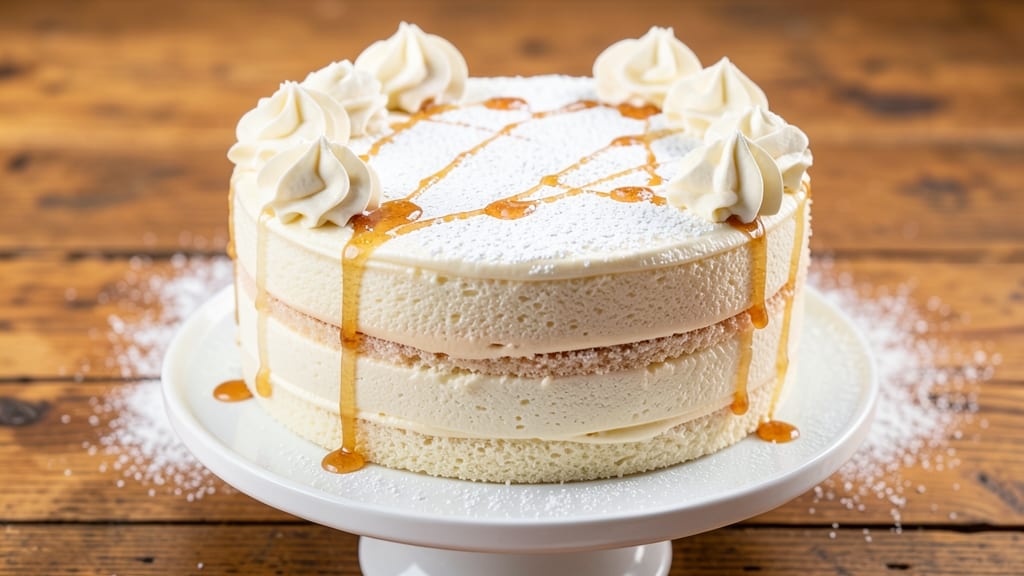
This amazing sponge cake delivers layers so light they practically disappear on your tongue, with swirls of buttery vanilla that make every bite feel like a celebration. 💛 The secret lies in properly folded egg whites that create that signature airy texture, plus a whisper of vanilla that elevates it from ordinary to extraordinary.
I've perfected this recipe over years of baking experiments—no dense, heavy cake here, just ethereal layers that crumble just enough to soak up frosting perfectly.
What makes this sponge truly special is the technique: room-temperature eggs, precise folding, and a gentle bake that develops those signature layers without overcooking. The vanilla isn't just an afterthought—it's infused into the batter itself, creating flavor in every bite rather than just a surface swirl.
And the butter? Just enough to keep it tender without making it greasy, with a simple glaze that adds that professional bakery shine.
Imagine cutting into a cake that's so tender it melts in your mouth, with those delicate vanilla swirls peeking through like golden ribbons. The texture is what makes it truly amazing—no dry crumbs, no heavy density, just pure, airy perfection that makes you want to take seconds.
This isn't just a sponge cake; it's the kind that makes people ask for your recipe the second they taste it.
Perfect for birthdays, anniversaries, or when you just need a little something special to brighten your day. The best part? It comes together in under an hour, with most of that time being hands-off baking. Let's get started on creating your showstopper cake!
Ingredients for amazing sponge cake
The secret to this ethereal sponge lies in these carefully chosen ingredients—light as air layers start here.
| Ingredient | Amount | Notes |
|---|---|---|
| Large Egg Whites 🥚 | 8 whole | Room temperature, separated |
| Large Egg Yolks 🥚 | 4 whole | Room temperature, separated |
| Granulated Sugar 🍚 | 1 ½ cups | Superfine preferred for smoothness |
| Unsalted Butter 🧈 | ½ cup | Room temperature, cubed |
| All-Purpose Flour 🌾 | 1 ½ cups | Sifted for light texture |
| Pure Vanilla Extract 💛 | 2 tsp | High-quality, Madagascar preferred |
| Vanilla Bean Paste 💛 | 1 tbsp | For visible swirls and depth |
| Salt 🧂 | ¼ tsp | Fine sea salt preferred |
| Cream of Tartar 🧂 | ¼ tsp | Stabilizes egg whites |
| Powdered Sugar 🍚 | 1 cup | For glaze, sifted |
| Milk 🥛 | 2 tbsp | For glaze, any kind |
| Cornstarch 🌾 | 1 tbsp | For glaze, optional |
Egg whites are the star—room temperature is non-negotiable. King Arthur or Bob's Red Mill flour gives the best lift, and if you're feeling fancy, superfine sugar from Whole Foods dissolves faster for silky batter. The vanilla? Madagascar bourbon extract has the most complex flavor, but any pure extract works. Pro tip: let your eggs sit in warm water for 10 minutes if they're straight from the fridge—trust me, it makes all the difference. And that vanilla bean paste? Trader Joe's sells it pre-made, or you can scrape seeds from a pod yourself for the full experience.
No vanilla extract? Vanilla sugar or a scraped vanilla bean works in a pinch, though the flavor won't be as deep. Running short on egg whites? Pasteurized liquid egg whites from the dairy aisle are a lifesaver (just chill them first). For the butter, European-style like Plugrá has more flavor, but any good unsalted butter will do. The glaze can be made with just powdered sugar and milk, but adding cornstarch makes it set up faster—perfect for stacking layers. And if you're wondering about the cornstarch in the batter? It's optional but helps stabilize those delicate layers during baking.
This cake is best baked and cooled the same day—it's magic when everything's fresh. Store wrapped at room temperature for 2 days or in the fridge for 5 days. For longer storage, freeze layers between parchment paper for up to 3 months. The glaze sets quickly, so assemble your cake right before serving. I always make a double batch—one for today, one to freeze for birthdays I forget about until the last minute.
Why You'll Love This Recipe
- No Whisk Fatigue: I swear by this method—whipping egg whites until they’re glossy and hold peaks isn’t just possible, it’s easy when you separate them first and let the sugar fold in gently. No overmixing, no dense crumb, just that light-as-air texture with zero fuss.
- Buttercream’s Best Friend: Between us, this cake is begging for a drizzle of homemade buttercream—just fold in the whipped yolks and sugar, and you’ve got a base that’s rich but not heavy. The butter keeps it moist for days, and honestly? That first bite with the frosting? Pure satisfaction.
- Birthday to Brunch: Serve it plain with tea for a cozy afternoon, stack it with berries for a weekend breakfast, or slice it for a picnic—this cake handles everything. It’s the one I always reach for when I need something special but don’t want to fuss over layers of cake and filling.
- Pantry-Proof Perfection: Five ingredients, all staples you already own. No specialty items, no last-minute store runs. And the leftovers? They actually get better the next day—moist, tender, and still as delicious as day one. My wallet (and my taste buds) thank me every time.
Step-by-step instructions for light as air vanilla sponge cake
Here's how to create the perfect fluffy layers with signature buttery swirls.
👨🍳 Step 1: Whip Egg Whites to Stiff Peaks
In a spotlessly clean, grease-free bowl, combine the 8 whole large egg whites and 0.25 tsp cream of tartar. I use a stand mixer with the whisk attachment for this—it's the only way to get those perfect stiff peaks. Start on low speed and gradually increase to medium-high as the whites begin to foam.
Slowly add the 1.5 cups granulated sugar in a steady stream while mixing. This gradual addition creates smaller air bubbles that make the cake extra light. Whip for 7-8 minutes until the meringue is glossy and forms stiff peaks that hold their shape when the whisk is lifted. The mixture should look like thick, glossy frosting—this is your foundation for airy layers.
👨🍳 Step 2: Combine Yolks and Butter
In a separate bowl, whisk together the 4 whole large egg yolks, 2 tsp pure vanilla extract, and 1 tbsp vanilla bean paste until the mixture is pale and slightly thickened. Add the 0.5 cup unsalted butter and whisk until completely melted and incorporated. The butter should be fully dissolved—you'll know it's ready when the mixture looks like a smooth, creamy custard.
Gradually fold 1.5 cups all-purpose flour and 0.25 tsp salt into the yolk mixture using a spatula. Mix just until combined—don't overmix or you'll develop gluten and end up with dense cake. The batter should be thick and smooth, like heavy pudding. This is where the magic happens—the perfect balance of structure and tenderness.
🥘 Step 3: Fold Meringue into Batter
Gently fold one-third of the meringue into the yolk mixture using a spatula, being careful not to deflate those beautiful air bubbles. Once combined, add another third and fold again until no white streaks remain. Finally, fold in the remaining meringue until just combined—this is the most delicate part. The batter should be thick and hold its shape when spooned.
I like to use the "J" technique here: scoop from the bottom of the bowl, fold over the top, and repeat. This preserves the air you worked so hard to incorporate. The final batter should be smooth, glossy, and thick enough to hold peaks when dropped from a spoon.
🔥 Step 4: Bake in Layers for Perfect Rise
Preheat your oven to 350°F and grease three 8-inch round cake pans with butter or line them with parchment paper. Divide the batter evenly among the pans—each should be filled about two-thirds full. Smooth the tops with a spatula and bake for 20-25 minutes until the tops spring back when gently pressed and a toothpick comes out clean.
Here's the secret: don't overbake. The cakes should be just set in the center with a slight bounce—this ensures they stay light and airy. Let them cool in the pans for 5 minutes, then transfer to a wire rack to cool completely. The cooling process is crucial for preventing cracks when you stack them later.
🍳 Step 5: Prepare Vanilla Glaze and Assemble
While the cakes cool, make the glaze by whisking together 1 cup powdered sugar, 2 tbsp milk, and 1 tbsp cornstarch until smooth. The glaze should be thick enough to coat the back of a spoon but still spreadable. If it's too thick, add a drop more milk; if too thin, add a pinch more powdered sugar.
Place one cake layer on a serving plate and spread a thin layer of glaze on top. Add the second layer, then another thin layer of glaze. Top with the final layer and spread the remaining glaze evenly over the top and sides. For those beautiful swirls, use a spatula or piping bag to create decorative patterns before the glaze sets.
Pro Tips For Making Amazing Sponge Cake
- Whip Whites to Stiff Peaks: Use a stand mixer with the whisk attachment—no hand-whisking here. Stop beating when the meringue holds a firm peak but still glistens slightly (not dry or crumbly). Overwhipped egg whites turn gummy, and nobody wants a sponge that’s more rubber than cake.
- Room-Temp Everything: Eggs, butter, and sugar should all be at 65–70°F (18–21°C) before mixing. Cold butter creates lumps, and cold eggs won’t emulsify properly. I learned this the hard way—my first attempts had pockets of butter that never melted, leaving a greasy, uneven texture.
- Fold Gently, But Fast: When folding dry ingredients into the yolk mixture, use a spatula to cut through the center and scoop from the bottom. Rotate the bowl as you go to avoid overmixing, which deflates the air bubbles you worked so hard to create. Three quick folds are better than ten half-hearted ones.
- Butter the Pan Lightly: Use a pastry brush to coat the pan with melted butter, then dust with flour—just enough to prevent sticking. Too much flour makes the cake dense; too little means cleanup later. I skip the flour sometimes, and the cake still comes out fine, but the texture isn’t as tender.
Dietary considerations for this dish
Gluten-Free Adaptation
For a gluten-free version, replace the 1.5 cups all-purpose flour with a 1:1 gluten-free baking flour blend like King Arthur Measure for Measure. These blends contain xanthan gum, which mimics gluten's structure.
If your blend doesn't include it, add ½ tsp xanthan gum separately. Sift the flour blend thoroughly to prevent lumps, and avoid overmixing—gluten-free batters are more delicate. 💫
Dairy-Free Options
To make this sponge dairy-free, swap the 0.5 cup unsalted butter for 0.5 cup dairy-free butter like Miyoko's or Earth Balance. For the glaze, use unsweetened almond milk or coconut milk instead of regular milk.
The texture will be slightly less rich, but still light and delicious. Test the glaze consistency carefully—dairy-free milks can vary in thickness.
Egg-Free Substitution
For an egg-free version, replace the 8 egg whites with 1 cup aquafaba (chickpea brine) and 0.25 tsp cream of tartar. Whip the aquafaba to stiff peaks using the same method, then fold it into the yolk mixture as directed.
For the 4 egg yolks, use ¼ cup unsweetened applesauce or mashed banana mixed with 1 tsp vanilla extract and 1 tbsp cornstarch to mimic the binding properties. The cake will be slightly denser but still delightful.
Low-Sugar Version
Reduce the 1.5 cups granulated sugar to 1 cup for a lighter option. Replace the remaining ½ cup with ½ cup monk fruit sweetener or erythritol for a sugar-free alternative. The meringue will still form but may take 1-2 extra minutes to reach stiff peaks.
Adjust the glaze by reducing powdered sugar to ½ cup and using 1 tbsp lemon juice instead of milk for a tangy finish. 💛
Nut-Free Considerations
This recipe is naturally nut-free, but always check labels on ingredients like vanilla extract and powdered sugar for cross-contamination warnings. If using vanilla bean paste, opt for a brand that specifies nut-free processing.
For the glaze, ensure your cornstarch is processed in a nut-free facility. Store all ingredients in sealed containers to prevent accidental cross-contact with nuts in your kitchen.
Nutrition facts
Frequently asked questions
Why does this sponge cake turn out so light and airy?
The secret lies in properly whipped egg whites with cream of tartar for stability, folded gently into a rich yolk-butter base. The gradual sugar addition creates tiny air bubbles that expand during baking, while the minimal flour keeps it tender. Baking at 350°F for just 20-25 minutes ensures even rise without overcooking.
Can I make this cake without a stand mixer?
Use a hand mixer or even a whisk for the egg whites—just whip them for 10-12 minutes until stiff peaks form. The key is patience: add sugar slowly and whip until the meringue is glossy. For folding, a spatula works perfectly if you take your time. The extra effort makes it worth it for that signature texture!
What's the best way to store leftover cake?
Keep it wrapped tightly at room temperature for 2 days, or refrigerate for 5 days if you're prepping ahead. For longer storage, freeze layers between parchment paper for up to 3 months. Thaw overnight in the fridge before assembling—never at room temperature to prevent condensation.
How do I fix cracked layers when stacking?
Cracks usually happen when layers cool unevenly or are too dry. To prevent them, ensure cakes cool completely before assembling. If cracks appear, spread a thin layer of glaze between layers as a "sealant" before adding the final top glaze. For decoration, use the cracks as a design element—drizzle extra glaze or sprinkle edible glitter to turn them into intentional details!
Can I add fillings between the layers?
Yes! This cake's delicate structure works beautifully with light fillings like vanilla buttercream, lemon curd, or even fresh berry compote. Spread a thin layer (about 1/8-inch thick) between cakes, then add your glaze on top. For extra flavor, brush layers with simple syrup before assembling. Just avoid heavy fillings like ganache that could weigh down the sponge.