
Desserts
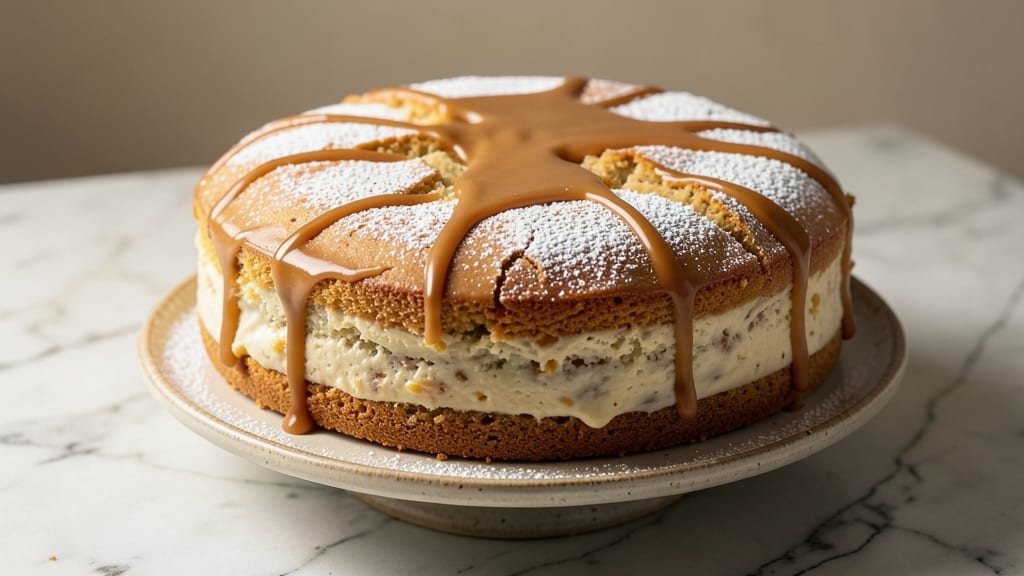
This almond paste pound cake delivers moist, nutty layers with a buttery crust that makes every slice irresistible. 💛 The secret lies in properly incorporating almond paste and using a creaming method that creates tender crumbs while keeping the texture rich and velvety.
Perfect for special occasions or when you simply crave something decadent yet vegetarian-friendly.
What makes this recipe stand out is the balance of ingredients—just enough almond paste for that signature marzipan flavor without overpowering the delicate cake structure. The buttercream layers between each cake layer add a luxurious touch, while the golden-brown crust gives it that bakery-fresh appeal.
This isn't just another pound cake; it's a showstopper.
By the time you pull it from the oven, you'll have a cake that's perfectly moist with a tender crumb and a subtle almond aroma that fills your kitchen. The buttery crust layers add a satisfying contrast, making each bite a harmonious blend of textures.
It's the kind of dessert that feels special enough for celebrations but simple enough to make any day feel like a treat.
Serve it with fresh berries, a dusting of powdered sugar, or a drizzle of chocolate ganache for an extra touch of elegance. This recipe is designed to impress, whether you're baking for a gathering or just indulging in a little self-care. Let's get started on creating this luxurious pound cake.
Ingredients for almond paste pound cake
Twelve ingredients for a showstopping pound cake with almond paste's signature marzipan flavor and buttery crust layers.
| Ingredient | Amount | Notes |
|---|---|---|
| Unsalted Butter 🧈 | 1 ½ cups | Cold, cubed for creaming |
| Granulated Sugar 🍚 | 2 ½ cups | Superfine preferred for smoothness |
| Almond Paste 🌰 | 1 cup | High-quality, finely ground |
| Large Eggs 🥚 | 6 whole | Room temperature for best mixing |
| All-Purpose Flour 🌾 | 2 cups | Sifted, plus extra for dusting |
| Baking Powder 🍃 | 2 tsp | Aluminum-free preferred |
| Salt 🧂 | ½ tsp | Fine sea salt preferred |
| Vanilla Extract 🌿 | 2 tsp | Pure Madagascar vanilla |
| Powdered Sugar 🍚 | 1 ½ cups | For buttercream filling |
| Heavy Cream 🥛 | 1 cup | Cold for buttercream whipping |
| Almond Extract 🌰 | ½ tsp | Enhances almond flavor |
| Unsalted Butter (for crust) 🧈 | ¼ cup | Melted, for brushing layers |
| Powdered Sugar (for dusting) 🍚 | 2 tbsp | Final decorative touch |
The almond paste is non-negotiable here—Ghirardelli or Marzipan.com are the gold standards, but any high-quality brand works. Look for a smooth, finely ground paste with no graininess. The butter should be cold and cubed when you start creaming—this creates the signature tender crumb. If your almond paste smells faint, add an extra 0.25 tsp almond extract to the batter. For the flour, King Arthur or Gold Medal brands sift beautifully and prevent lumps. The baking powder should be fresh—if it's over a year old, toss it.
No almond paste? Substitute with 1 cup finely ground almonds plus 0.25 cup powdered sugar, but the texture won't be identical. Running short on vanilla? Almond extract at half the amount works in a pinch. For the buttercream, European-style butter like Plugrá whips up lighter, but regular unsalted butter is fine. If you're gluten-sensitive, swap the all-purpose flour for a 1:1 gluten-free baking flour blend. The powdered sugar should be sifted before whipping to avoid graininess—use a fine-mesh sieve or just shake it in a jar before measuring.
Store the cake layers in an airtight container between parchment paper for up to 3 days at room temperature. For longer storage, freeze the assembled cake (unfrosted) for up to 2 months. The buttercream can be made a day ahead and refrigerated—just rewhip before assembling. To keep the crust crisp, brush each layer with melted butter right before serving. Dust with powdered sugar right before slicing to maintain that bakery-fresh look.
Why You'll Love This Recipe
- No Mixer Needed: I swear by this recipe when my stand mixer’s on vacation. Creaming the butter and sugar by hand takes five minutes—no fuss, no waiting for appliances. The almond paste blends in like butter (literally), and the eggs just fold right in without a single lump.
- Rich Without Overpowering: That first bite? Warm, buttery, and subtly nutty—like a hug from a French patisserie, but with zero pretension. The almond paste adds depth without tasting like marzipan went rogue, and the flour keeps it light enough to slice for breakfast tomorrow.
- Weekday Breakfast Hero: Honestly, this cake is my lazy Sunday morning’s best friend. Bake it once, and you’ve got days of grab-and-go slices—dust with powdered sugar for a pastry bar vibe, or slather with jam when you’re in a rush. My kids fight over the leftovers (and I don’t blame them).
- Budget-Friendly Luxury: Here’s what sold me—it’s fancy enough for guests but cheap enough for weeknights. Almond paste might sound pricey, but a little goes a long way, and the butter-to-sugar ratio means no wasted ingredients. One batch feeds six, and the leftovers? Even better the next day.
Step-by-step instructions for almond paste pound cake
Here's how to achieve that signature nutty moistness with perfect texture every time.
👨🍳 Step 1: Cream Butter and Sugars for Maximum Fluffiness
In a stand mixer fitted with the paddle attachment, beat the 1.5 cups Unsalted Butter (cold, cubed) and 2.5 cups Granulated Sugar on medium speed for 5-7 minutes. You're aiming for a light, fluffy texture that nearly doubles in volume and becomes pale in color. This creaming process incorporates air, which creates that signature tender crumb.
I press down on the butter mixture with a spatula every minute or so to ensure even incorporation. The sugar should dissolve completely, leaving no grainy texture. If you're using superfine sugar, this process goes even faster—just watch for that ribbons-to-pale-color transformation.
👨🍳 Step 2: Add Eggs and Almond Paste for Rich Flavor
Add the 6 whole Large Eggs (room temperature) one at a time, mixing on low speed for 30 seconds after each addition. This prevents the eggs from scrambling in the hot butter mixture. After all eggs are incorporated, add the 1 cup Almond Paste, 2 tsp Vanilla Extract, 0.5 tsp Almond Extract, 2 tsp Baking Powder, and 0.5 tsp Salt. Mix on low speed just until combined—about 30 seconds.
The almond paste will make the batter look slightly thick, but don't worry. This is normal and ensures that signature almond flavor throughout. I like to scrape down the sides of the bowl with a rubber spatula at this point to ensure all ingredients are fully incorporated.
👨🍳 Step 3: Gently Fold in Flour for Perfect Texture
With the mixer on low speed, gradually add the 2 cups All-Purpose Flour (sifted) to the batter. Mix just until the flour disappears—about 20-30 seconds. Overmixing develops gluten, which can make the cake dense. The batter should be smooth and slightly thick, with no visible flour streaks.
Here's a pro tip: I use a flexible spatula to gently fold the batter a few times after mixing to ensure the flour is evenly distributed. The batter should be thick enough to hold its shape when dropped from a spoon, but still flow smoothly.
🥘 Step 4: Prepare and Fill the Pan for Even Baking
Preheat your oven to 350°F. Grease two 9-inch round cake pans (or one 9x5-inch loaf pan) thoroughly with 0.25 cup Unsalted Butter (for crust), then dust with flour. Divide the batter evenly between the pans, filling each about ⅔ full. Tap the pans gently on the counter to remove any air bubbles.
Smooth the tops with a spatula. The batter should be level and about ½ inch below the rim of the pans. This allows room for the cake to rise without overflowing. I like to use a skewer to check the batter level in each pan—it should be consistent.
🔥 Step 5: Bake Until Golden and Moist
Bake for 50-60 minutes (for round pans) or 60-70 minutes (for loaf pan) until a toothpick inserted in the center comes out clean. The cake should be golden brown on top and pull away slightly from the sides of the pan. For the round pans, I usually rotate them halfway through baking to ensure even browning.
Here's the key to moisture: I like to tent the pans loosely with aluminum foil after 30 minutes of baking. This prevents the top from drying out while still allowing the cake to rise properly. The internal temperature should reach 210°F when done—this ensures the cake is fully cooked but still moist.
🍽️ Step 6: Cool and Assemble with Buttercream
Remove the cakes from the oven and let them cool in the pans for 10 minutes. Then transfer to a wire rack to cool completely. While the cakes cool, prepare the buttercream by beating the 1.5 cups Powdered Sugar, 1 cup Heavy Cream, and remaining 0.25 cup Unsalted Butter (for crust) on high speed until light and fluffy—about 3-4 minutes.
Once completely cool, level the cakes if needed and assemble with the buttercream between layers. Dust the top and sides with the 2 tbsp Powdered Sugar (for dusting) for that final elegant touch. The cake should be moist, rich, and have that signature almond flavor throughout.
Pro Tips For Making Almond Paste Pound Cake
- Cream Butter and Sugar Slowly: I used to rush this step, and the batter ended up grainy—like eating sand with your cake. Take your time whipping the butter and sugar until it’s pale and fluffy (about 3-5 minutes). That light color means proper air incorporation, which keeps your cake tender, not dense.
- Sift Almond Paste Twice: Almond paste is stubborn—it clumps like a teenager avoiding chores. Sift it twice through a fine-mesh sieve before mixing it into the batter. This prevents lumps that turn into weird, dry pockets in your cake. (Yes, even if the package says it’s "smooth.")
- Don’t Overmix the Batter: I learned this the hard way—overmixing turns your pound cake into a chewy, sad brick. Mix the dry ingredients and wet ingredients separately, then combine with just 10-12 strokes of the spatula. Stop when the flour is just incorporated. The cake will thank you with a proper crumb.
- Bake at 325°F, Not Higher: Your oven lies. Even if it says "350°F is accurate," almond paste pound cake needs a gentler 325°F to bake through evenly without burning the top before the center sets. Use an oven thermometer if you’re skeptical—trust me, your cake will be golden, not charred.
Best sauces and condiments for almond paste pound cake
Classic Vanilla Buttercream
The recipe's built-in buttercream is already a crowd-pleaser, but I like to elevate it with an extra 1 tsp almond extract while whipping to amplify that signature nutty flavor.
For a lighter texture, whip the 1 cup heavy cream to soft peaks first, then gradually add the 1.5 cups powdered sugar and 0.25 cup melted butter on low speed. This creates fluffy layers that complement the cake's moisture perfectly. 💛
Lemon Curd Filling
For a bright contrast, replace half the buttercream with homemade lemon curd. Cook ½ cup lemon juice, ½ cup sugar, 2 egg yolks, and 2 tbsp butter until thickened, then chill completely.
Spread between layers for a zesty-sweet balance that cuts through the richness. Use Ghirardelli lemon zest for extra brightness.
Chocolate Ganache Drizzle
Melt ½ cup dark chocolate chips with ¼ cup heavy cream, then cool to a drizzling consistency. Pour over the assembled cake and let set for 10 minutes before serving.
The bittersweet contrast enhances the almond flavor while adding visual drama. I recommend Ghirardelli 70% dark for the perfect balance.
Caramel Glaze Finish
For a decadent touch, make a quick caramel glaze by melting ½ cup sugar in a saucepan until amber, then whisking in 2 tbsp cream. Drizzle over the cake while warm and let set.
The glossy finish adds a buttery-sweet note that pairs beautifully with the almond paste. Use a pastry brush for even coverage.
Fruit Compote Topping
Simmer 1 cup mixed berries (raspberries, blackberries) with 2 tbsp sugar and 1 tsp lemon juice until thickened. Spread over the cake's top layer for a fresh, fruity contrast. The acidity brightens the almond flavor while adding vibrant color. Serve immediately for the best texture.
Salted Caramel Sauce
Drizzle the assembled cake with warm salted caramel sauce made by cooking ½ cup sugar until melted, adding 3 tbsp cream, and finishing with a pinch of flaky sea salt.
The salty-sweet combination enhances all the flavors in the cake. I like to serve this with a scoop of vanilla bean ice cream for extra indulgence. ✨
Nutrition facts
Frequently asked questions
Why does my almond paste pound cake turn out dense?
Overmixing the batter develops gluten, which makes the cake dense. Mix just until the flour disappears (20-30 seconds on low speed). Also ensure your butter is cold when creaming and don't overfill the pans—fill them only ⅔ full for proper rise. The almond paste should be finely ground too; lumpy paste can create dense pockets.
Can I substitute almond extract with something else?
Yes! If you're out of almond extract, use ½ tsp vanilla extract plus ½ tsp lemon zest for a similar aromatic depth. For a stronger almond flavor, add 1 tbsp ground almonds to the batter. Just remember that almond extract is the secret to that signature marzipan taste—it's worth tracking down if possible.
How do I prevent the cake from drying out?
Tent the pans with foil after 30 minutes of baking to lock in moisture. Cool the cake completely before assembling with buttercream—warm layers will melt the frosting. Store leftovers in an airtight container with parchment between layers. For extra moisture, brush the cooled cake layers with simple syrup (¼ cup sugar + ¼ cup water, heated until dissolved).
What's the best way to store this cake?
Keep the assembled cake at room temperature in an airtight container for up to 3 days. For longer storage, freeze the unfrosted layers (wrapped tightly) for 2 months. The buttercream can be made ahead and refrigerated—just rewhip before assembling. To refresh a slightly dried cake, brush with warm simple syrup (1 tbsp sugar + 1 tbsp water, heated until dissolved) before serving.
Can I make this cake gluten-free?
Yes! Replace the all-purpose flour with a 1:1 gluten-free baking flour blend (like Bob's Red Mill). Add ½ tsp xanthan gum to improve structure. You may need to increase the baking time by 5-10 minutes as gluten-free cakes often bake slower. Also, let the batter rest for 10 minutes before baking to hydrate the flour blend properly.