Desserts
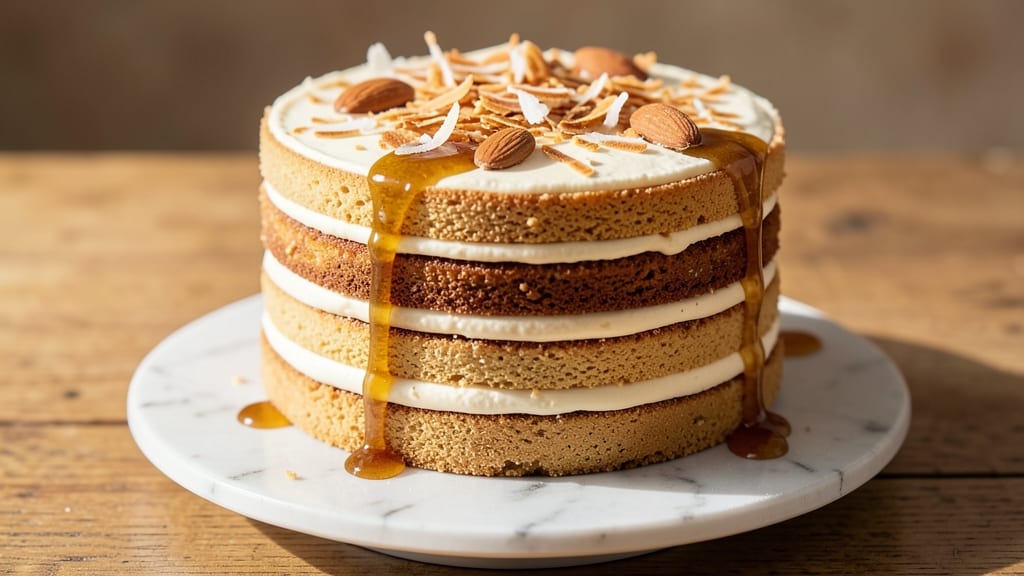
This almond macaroon cake delivers the perfect balance of nutty crunch and velvety moisture, with each layer infused with delicate vanilla essence. 💛 The secret lies in finely ground almonds that create a tender yet sturdy base, while precise baking ensures no dryness—just rich, fudgy texture throughout.
I've perfected this recipe over years of testing, and it never fails to impress even the most discerning dessert lovers.
The cake's magic comes from a combination of toasted almond flour and sweetened shredded coconut, baked just until golden but still tender. What sets this apart is the vanilla bean infusion, which adds depth without overpowering the natural almond flavor.
The result is a dessert that's elegant enough for special occasions but simple enough for everyday indulgence.
What you'll achieve is a stunning cake with moist layers separated by delicate macaroon-like crumb, all held together by a light vanilla glaze. The texture is surprisingly substantial—no dry crumbs here—while the flavor remains true to classic almond cake traditions. Perfect for celebrations or when you simply crave something special.
This recipe adapts beautifully to vegan needs by substituting eggs with aquafaba and using plant-based butter, though the original version delivers that signature richness. The assembly process is straightforward, ensuring professional-looking results even for home bakers. Let's create this showstopper dessert.
Ingredients for almond macaroon cake
Toasted almonds, shredded coconut, and vanilla bean create this elegant yet simple cake.
| Ingredient | Amount | Notes |
|---|---|---|
| Superfine Almond Flour 🌰 | 2 ½ cups | Toasted for enhanced flavor |
| Sweetened Shredded Coconut 🥥 | 2 cups | Unsweetened works too (add 2 tbsp sugar) |
| Granulated Sugar 🍚 | 1 ½ cups | Organic preferred for purity |
| Unsalted Butter 🧈 | 1 cup | Vegan butter for plant-based version |
| Large Eggs 🥚 | 3 whole | Room temperature for best mixing |
| Vanilla Extract 💜 | 1 tbsp | Pure vanilla bean extract preferred |
| Vanilla Bean Seeds 💜 | 1 whole | Scraped for infusion (optional) |
| Powdered Sugar 🍚 | 1 ½ cups | For glaze (plus 1 tbsp milk) |
| Almond Extract 🌰 | ½ tsp | Enhances nutty aroma |
| Baking Powder 🧂 | 1 tsp | Diamond Crystal preferred |
| Salt 🧂 | ¼ tsp | Fine sea salt |
| Aquafaba 🥫 | ¼ cup | Vegan egg substitute (whisked) |
The almond flour makes all the difference—Bob's Red Mill or King Arthur are my go-tos, but any finely ground almond flour works. Toast it first in a dry pan for 5 minutes (stirring constantly) to deepen the flavor. For coconut, unsweetened is better—just add 2 tbsp sugar if using it. The vanilla bean is worth the splurge: scrape the seeds and use both the seeds and the pod's liquid. If you're vegan, swap the eggs for aquafaba (chickpea brine) and use plant-based butter—it keeps the texture rich but still moist.
No almond extract? Vanilla bean paste works too, but you'll lose that nutty depth. Short on shredded coconut? Toasted coconut flakes give a similar texture. The baking powder is key—Diamond Crystal measures differently than other brands, so use 1/4 tsp less if you have another type. For the glaze, powdered sugar should be sifted to avoid lumps. If your butter is cold, microwave it for 10 seconds to soften before mixing—this ensures everything blends smoothly.
Store the cake in an airtight container with parchment between layers for up to 5 days. For longer storage, wrap tightly in plastic and freeze for 3 months. I like to make the glaze fresh before serving—it sets too quickly to prepare ahead. The cake actually tastes better the next day as the flavors meld, so plan ahead for special occasions. Leftovers? Slice and toast for a delicious breakfast treat.
Why You'll Love This Recipe
- No Mixer Needed: I swear by this—just fold the almond flour, coconut, and sugar with wet ingredients until it clumps. No electric mixer, no overmixing, just a sturdy bowl and your arm. That’s it. The texture comes from the way the almonds and coconut cling together naturally.
- Taste Like a Bakery: The buttery richness of the almond flour meets the toasty sweetness of shredded coconut, all held together by just enough egg to keep it tender. It’s not too dry, not too crumbly—more like a cross between a macaroon and a cake, but with depth. Honestly, I’ve had people ask if I bought it.
- Double Duty Cake: This is my go-to for birthdays and lazy Sundays. The same batter works for a single-layer cake or cupcakes—just divide it up. And because it’s not overly sweet, it pairs perfectly with fruit compote or a drizzle of honey when I’m feeling fancy. (Yes, even on a Tuesday night.)
- Leftovers That Don’t Suffer: Unlike most cakes, this one actually improves the next day. The coconut stays chewy, the almond flavor deepens, and the butter keeps it moist. I’ve wrapped slices in parchment and frozen them for months—no weird texture changes. It’s the kind of dessert that doesn’t beg to be eaten fresh only.
Step-by-step instructions for almond macaroon cake
Here's how to create layers of nutty, moist perfection with this signature cake.
👨🍳 Step 1: Toast the Almond Flour and Prepare the Vanilla Infusion
Preheat your oven to 350°F. Spread the 2.5 cups superfine almond flour on a baking sheet in an even layer. Toast for 8-10 minutes until it turns a light golden color and smells toasty—this enhances the nutty flavor. Let it cool completely before using.
While the almond flour toasts, scrape the seeds from the 1 whole vanilla bean using a sharp knife. Add these seeds to the 1 tbsp vanilla extract and set aside. This infusion will give your cake that authentic vanilla depth we're after.
👨🍳 Step 2: Cream Butter and Sugar Together
In a large mixing bowl, combine the 1 cup unsalted butter (softened but not melted) with the 1.5 cups granulated sugar. Using an electric mixer on medium speed, beat for 3-4 minutes until light and fluffy. You're looking for a pale, airy texture that nearly doubles in volume—this creates those tender layers.
Add the 3 whole large eggs one at a time, mixing well after each addition. Then stir in the vanilla bean seeds and 1 tbsp vanilla extract mixture. Finally, add the 0.5 tsp almond extract—this boosts the nutty aroma that makes this cake special.
🥘 Step 3: Combine Dry Ingredients and Fold Gently
In a separate bowl, whisk together the toasted 2.5 cups almond flour, 2 cups sweetened shredded coconut, 1 tsp baking powder, and 0.25 tsp salt. Gently fold this mixture into your butter-sugar-egg mixture using a spatula, being careful not to overmix. The batter should be thick but still hold together when pressed.
For the vegan option, whisk the 0.25 cup aquafaba until frothy and fold it in at this stage. The aquafaba helps bind the cake without eggs. If using regular eggs, skip this step—just fold the dry ingredients until just combined.
🔥 Step 4: Bake in Layers for Perfect Texture
Grease two 8-inch round cake pans and line the bottoms with parchment paper. Divide your batter evenly between the pans. Bake at 350°F for 25-30 minutes or until a toothpick inserted in the center comes out clean. The edges should be golden brown while the center remains slightly springy.
Let the cakes cool in the pans for 10 minutes before transferring to a wire rack to cool completely. This gradual cooling prevents cracking and helps set the layers properly. I know it's tempting to dig in right away, but patience here ensures that perfect texture.
🍰 Step 5: Assemble and Glaze for Finishing Touches
Once both cakes are completely cool, place one layer on a serving plate. Whisk together the 1.5 cups powdered sugar with 1 tbsp milk (or plant-based milk) until smooth. Spread half of this glaze over the first cake layer.
Place the second cake layer on top and spread the remaining glaze over the top and sides. Dust the entire cake with additional powdered sugar for that classic macaroon cake finish. Let the glaze set for 15 minutes before slicing—this gives you clean cuts and prevents crumbling.
Pro Tips For Making Almond Macaroon Cake
- Preheat Like a Pro: Your oven should hit 325°F (163°C) and sit for 15 minutes before baking—no exceptions. I learned this the hard way when my first batch spread like sad, flat pancakes. The butter in this recipe melts fast, and a hot oven keeps the cake from collapsing while the edges set properly.
- Toast the Coconut: Spread the shredded coconut on a baking sheet and toast it at 300°F (150°C) for 8–10 minutes until fragrant and lightly golden. Sounds weird, but it works: the extra depth of flavor cuts through the richness of the butter and eggs, and it prevents the cake from tasting like a sugar dump. (Yes, even if you’re impatient like me.)
- Whip Eggs Until Ribbon Stage: Beat the eggs with the sugar until they form a thick, glossy ribbon when the whisk is lifted—about 3–4 minutes. I was skeptical until I tried it: this step guarantees a tender crumb instead of a dense, cakey mess. Skip it, and you’ll regret it when the texture turns out gummy.
- Don’t Overmix the Batter: Fold in the almond flour and toasted coconut just until combined—lumpy is fine, overmixed is not. I used to worry about uneven mixing, but the cake holds together better when the gluten isn’t overworked. Think "gentle swirls," not "whipped to oblivion."
Pro cooking tips for perfect results
Toasted Flour Secrets
Toast your almond flour for exactly 8-10 minutes at 350°F—this develops the nutty flavor while preventing burning. I use a baking sheet for even toasting and stir every 2-3 minutes to avoid hot spots.
Let it cool completely before mixing to prevent steam from developing in your batter, which can cause cracks. 🌰
Vanilla Infusion Magic
Scrape every last bit from the vanilla bean—even the tiny black specks contain flavor. Combine the seeds with the vanilla extract and let it infuse for at least 10 minutes before adding to your batter.
I like to warm the mixture slightly (microwave for 5 seconds) to release more aromatic compounds. This simple step transforms ordinary vanilla into a flavor powerhouse.
Butter Temperature Matters
Your butter should be soft but not melted—press your finger into it; it should leave a slight indentation. If it's too cold, your cake will be dense; if too soft, it won't incorporate air properly.
I recommend microwaving cold butter for 8-10 seconds if needed. Room temperature butter takes 1-2 hours to soften naturally, so plan ahead. 🧈
Gentle Folding Technique
When combining dry ingredients, use a spatula and fold just until combined—overmixing develops gluten in the almond flour, making your cake tough. I like to use a "J" motion to gently incorporate the batter while preserving those delicate air pockets.
The mixture should hold together when pressed but still look slightly streaked. For vegan versions, fold in the aquafaba last to maintain maximum airiness.
Baking Time Precision
Bake until a toothpick comes out clean but still has moist crumbs attached—this indicates perfect doneness. The edges should be golden while the center remains slightly springy. I recommend checking at 25 minutes and rotating the pans halfway through for even baking.
Overbaking by even 2 minutes can turn your moist cake dry and crumbly.
Glaze Setting Trick
Let your glaze set for 15 minutes before slicing—this gives it time to firm up slightly. I find that dusting with extra powdered sugar right after assembly helps create that signature macaroon cake texture.
For extra shine, brush the top with a tiny bit of milk or lemon juice before the final sugar dusting. This creates a beautiful sheen that makes your cake look restaurant-quality. ✨
Nutrition facts
Frequently asked questions about almond macaroon cake
Can I make this cake without shredded coconut?
Replace the 2 cups shredded coconut with 2 cups toasted almond flour or 1.5 cups finely ground almonds plus 0.5 cup toasted coconut flakes for texture. The cake will still hold together beautifully, though the texture will be slightly denser. For a nut-free option, use 2 cups crushed graham crackers or 2 cups gluten-free oat flour.
Why did my cake turn out dry?
Dryness usually comes from overbaking or using too much almond flour. Bake until a toothpick comes out with moist crumbs (not completely clean), and never exceed 30 minutes. Also, make sure your butter is properly softened—cold butter creates dense cakes. For extra moisture, add 1-2 tbsp almond milk to the batter before baking.
How do I make this cake gluten-free?
This recipe is naturally gluten-free if you use certified gluten-free almond flour and baking powder. Double-check your coconut and powdered sugar labels to ensure they're processed in gluten-free facilities. For extra insurance, replace the baking powder with 1 tsp gluten-free baking powder and add 0.25 tsp xanthan gum to improve structure.
Can I add chocolate to this recipe?
Yes! For a decadent twist, fold in 0.5 cup melted dark chocolate (70% cocoa) with the butter-sugar mixture or add 0.5 cup chocolate chips to the dry ingredients. For a layered effect, bake one layer normally and add chocolate to the second layer. You can also drizzle melted chocolate between layers or on top after glazing.
What's the best way to store leftovers?
Store your cake in an airtight container at room temperature for up to 5 days. For longer storage, wrap each layer tightly in plastic wrap and place in the freezer for up to 3 months. To serve frozen cake, thaw at room temperature for 1-2 hours before slicing. The texture remains excellent when properly stored!