
Desserts
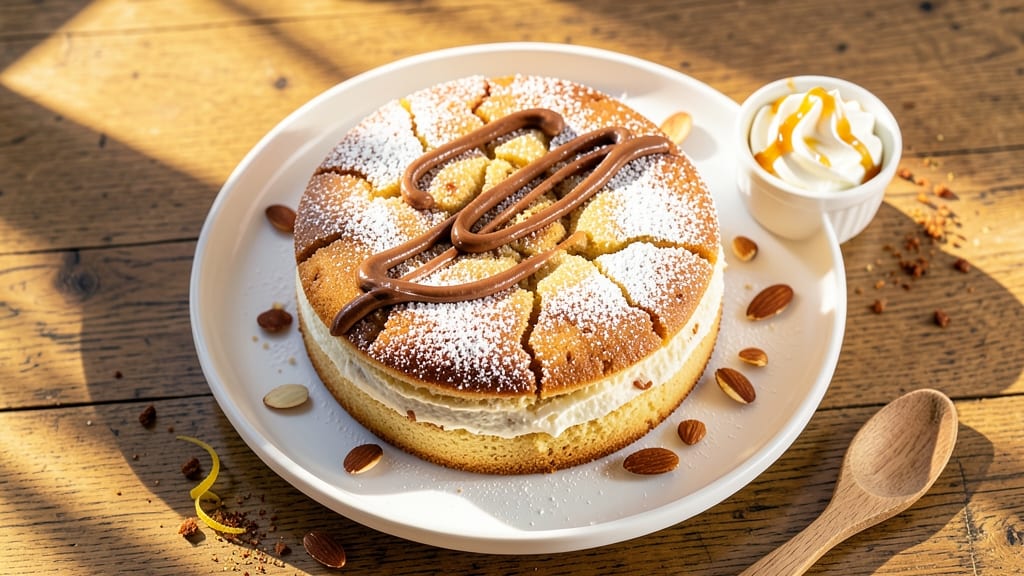
This almond genoise cake recipe delivers a gluten-free masterpiece with layers so light they practically melt in your mouth. The secret lies in whisking egg yolks to ribbon stage—creating a silky texture that separates from traditional genoise.
What makes this version special is the almond flour base, which adds natural sweetness and nutty depth without overpowering the delicate structure.
Baking at 325°F for 25 minutes ensures perfectly domed layers with a tender crumb, while the almond buttercream filling ties everything together with its velvety richness. The cake's airy yet sturdy texture comes from folding whipped egg whites in carefully—too much folding and you risk deflating those precious air pockets.
What you'll end up with is a gluten-free dessert that rivals classic genoise in texture but stands out with its almond-forward flavor. The layers stay moist for days, making this ideal for special occasions or when you want to impress without gluten concerns.
The buttercream adds a luxurious finish that turns simple slices into showstopping moments.
Garnish with powdered sugar, fresh berries, or a dark chocolate glaze for extra flair. This recipe proves gluten-free baking can be just as elegant—and delicious—as traditional versions. Let's get started on creating your perfect almond genoise cake.
Ingredients for almond genoise cake
Light-as-air layers and velvety almond buttercream make this gluten-free masterpiece worth every whisked egg yolk.
| Ingredient | Amount | Notes |
|---|---|---|
| Large Eggs 🥚 | 8 whole | Room temperature, separated |
| Granulated Sugar 🍚 | 2 cups | Superfine preferred for smoothness |
| Almond Flour 🌰 | 2 ½ cups | Fine, blanched almond flour |
| Unsalted Butter 🧈 | 1 cup | Softened to room temperature |
| Vanilla Extract 🌿 | 2 tsp | Pure Madagascar bourbon |
| Almond Butter 🥜 | 1 cup | Natural, unsweetened variety |
| Powdered Sugar 🍚 | 4 cups | For buttercream, sifted |
| Heavy Cream 🥛 | 1 cup | Cold, for buttercream |
| Salt 🧂 | ½ tsp | Fine sea salt |
| Baking Powder 🌾 | 1 tsp | Aluminum-free preferred |
| Xanthan Gum 🧪 | ¼ tsp | For gluten-free structure |
| Almond Extract 🌰 | 1 tsp | Pure almond flavor |
| Dark Chocolate Chips 🍫 | ½ cup | Optional for garnish |
Almond flour is the star here—Bob's Red Mill or King Arthur brands work best for their fine grind. The eggs need to be room temperature to whisk properly, so pull them out 30 minutes before baking. For almond butter, natural, unsweetened varieties like Justin's or Smucker's give the best flavor without added sugars. Superfine sugar dissolves better, but if you only have granulated, pulse it in a food processor for 30 seconds. The xanthan gum might seem intimidating, but it's what gives this cake its signature structure—don't skip it!
No almond flour? Oat flour or extra fine cornmeal can stretch it, but texture will change. Running short on eggs? Flax eggs (1 tbsp ground flax + 3 tbsp water = 1 egg) work in a pinch, though texture may be slightly denser. The buttercream can be made ahead and stored in the fridge for 3 days, but bring it to room temperature before whipping again. For a richer filling, add 2 tbsp melted butter to the buttercream. The cake layers freeze beautifully—wrap tightly in plastic wrap and freeze for up to 3 months.
This cake stays moist for 4-5 days when stored in an airtight container at room temperature. For extra freshness, place a slice of bread in the container to absorb moisture. The buttercream keeps 5 days in the fridge, but add a splash of milk when rewhipping to restore creaminess. To assemble, layer cake with buttercream between each, then frost the entire cake. Garnish with chocolate chips or fresh berries just before serving—they add color and prevent the cake from drying out.
Why You'll Love This Recipe
- Four Eggs, Zero Stress: I swear by this recipe because it’s the kind of cake that doesn’t demand perfection—just a bowl, a whisk, and 15 minutes of your time. The eggs and sugar blend into a silky batter that practically folds itself, and the almond flour keeps things light without the fuss of sifting.
- Butter-Soft Magic: That crisp exterior with a tender, almost custardy center? It’s all thanks to the butter and eggs working together like a dream team. The vanilla ties it all into something so rich it feels like a treat, not just a cake.
- Weeknight or Celebration: Between us, this is my go-to for any occasion—birthday brunch, last-minute dessert, or just because. Slice it thin for a fancy coffee cake, or layer it with jam for a no-fuss showstopper. (Yes, even on a Tuesday night.)
Step-by-step instructions for almond genoise cake
This method delivers light, airy layers with perfect texture every time—no gluten-free compromise here.
Whisk Eggs and Sugar to Ribbon Stage
Separate the 8 whole Large Eggs, keeping yolks and whites in separate bowls. In a stand mixer fitted with the whisk attachment, beat the 2 cups Granulated Sugar on medium speed for 2 minutes until fully dissolved. Add the egg yolks one at a time, mixing well after each addition until fully incorporated.
Increase speed to high and whip for 5-7 minutes until the mixture is pale, thick, and forms ribbons when the whisk is lifted. This stage is critical—you'll know it's ready when the mixture holds soft peaks and leaves clean streaks in the bowl. I like to test by running my finger through the mixture; if it leaves a clear trail that holds its shape, it's perfect.
Fold in Dry Ingredients Gently
In a medium bowl, whisk together the 2.5 cups Almond Flour, 1 tsp Baking Powder, 0.5 tsp Salt, 0.25 tsp Xanthan Gum, and 1 tsp Almond Extract. Sift the mixture once to aerate the almond flour—this prevents dense layers. Gradually fold the dry ingredients into the egg mixture in three additions using a spatula, being careful not to deflate the batter.
Add the 2 tsp Vanilla Extract and 1 cup Unsalted Butter (softened but not melted) to the batter. Fold gently until just combined—you should still see some white streaks in the batter. Overmixing develops gluten-like proteins that can make the cake dense. If the batter looks too thick, you can add 1-2 tablespoons of cold water to loosen it slightly.
Incorporate Egg Whites and Prepare Pans
In a clean, grease-free bowl, beat the egg whites on medium speed until foamy. Gradually increase to high speed and whip for 5-7 minutes until stiff peaks form. The egg whites should hold their shape when the whisk is lifted, and the peaks should stand straight up without collapsing.
Using a spatula, gently fold one-third of the egg whites into the batter to lighten it. Then fold in the remaining egg whites in two additions, being careful to maintain the airiness. Pour the batter into two 8-inch round cake pans lined with parchment paper, dividing it evenly between the pans. Tap the pans gently on the counter to remove any air bubbles.
Bake at Low Temperature for Even Rise
Preheat your oven to 325°F—this lower temperature ensures even baking without a domed top. Bake the cakes for 30-35 minutes, or until a toothpick inserted into the center comes out clean and the edges are golden. Rotate the pans halfway through baking for even browning.
I know it seems like a long time, but patience is key here. The cakes should spring back when gently pressed in the center, and they'll continue setting as they cool. Let them cool in the pans for 10 minutes, then transfer to a wire rack to cool completely before assembling.
Make Almond Buttercream and Assemble
In a stand mixer fitted with the paddle attachment, beat the 1 cup Almond Butter and 1 cup Unsalted Butter on medium speed for 2 minutes until smooth and creamy. Gradually add the 4 cups Powdered Sugar, mixing on low speed until combined. Increase speed to medium and beat for 3-4 minutes until light and fluffy.
Add the 1 cup Heavy Cream and 1 tsp Vanilla Extract, mixing until fully incorporated. Spread a thin layer of buttercream on one cake layer, then place the second layer on top. Frost the entire cake with the remaining buttercream, smoothing with an offset spatula. For extra indulgence, sprinkle the 0.5 cup Dark Chocolate Chips on top before the buttercream sets.
Pro Tips For Making Almond Genoise Cake
- Weigh Your Eggs: After cracking eggs straight from the fridge into your mixing bowl, I learned the hard way—temperature matters. Let them sit at room temp for at least 30 minutes first. Cold eggs won’t incorporate properly with the sugar, and your genoise will end up dense instead of light and airy. Trust me, your future cake will thank you.
- Sift the Almond Flour: I used to just dump the almond flour into the bowl like flour, but that’s a mistake. Sift it first—even if it’s finely ground—to break up any clumps and prevent a gritty texture. Use a fine-mesh sieve and tap it gently over the bowl. It takes 30 seconds but makes a real difference in how smooth the batter is.
- Don’t Overmix the Batter: Once you fold in the almond flour, stop mixing the second it’s just combined. Overmixing develops gluten in the eggs and turns your delicate genoise into a tough, chewy mess. Use a spatula to gently fold—just until no dry spots remain. Your cake’s texture depends on this.
- Use Room-Temp Butter: Cold butter from the fridge will melt unevenly in the oven, leaving greasy spots and a cake that’s dense in places. Take the time to let it soften to about 65°F (18°C)—press it gently, and if it leaves a slight indent, it’s ready. This isn’t the prettiest method, but it’s the tastiest.
Pro cooking tips for great almond genoise cake
Egg Whisking Mastery
Whisking egg yolks to ribbon stage is non-negotiable for that signature airy texture. Use a stand mixer with whisk attachment on high speed for 5-7 minutes—the mixture should be pale, thick, and form ribbons when the whisk is lifted.
I test by running my finger through it; if it leaves a clear, holdable trail, you're golden. Room-temperature eggs whisk better, so pull them from the fridge 30 minutes before starting. 🌟
Folding Technique
Folding egg whites into the batter requires gentle precision. Use a spatula to incorporate one-third of the whites first, then the remaining in two additions. Think "cut and fold" motions—don't stir! Overmixing collapses those precious air pockets.
If your batter looks thick, add 1-2 tablespoons cold water to loosen it slightly. The goal is to maintain that cloud-like consistency right until the last fold. ✨
Temperature Control
Bake at 325°F—never higher. This lower temp prevents doming and ensures even baking. Rotate your pans halfway through for consistent browning. A toothpick test is key: it should come out clean, but the cake should still spring back slightly when pressed.
Patience here prevents dryness. I've ruined cakes by opening the oven too early—resist the urge to peek! 🔥
Almond Flour Tips
Use fine, blanched almond flour—brands like Bob's Red Mill or King Arthur work best. Sift it once before mixing to aerate and prevent dense layers. For extra flavor, add ½ tsp cinnamon to the dry ingredients.
If you're short on almond flour, substitute ½ cup oat flour (blended finely), but expect a slightly denser texture. The xanthan gum is your secret weapon—don't skip it for structure. 🌰
Buttercream Perfection
Beat the almond butter and butter together for 2 minutes first to create a smooth base. Add powdered sugar gradually while mixing on low to avoid a sugar storm. For extra stability, chill the buttercream for 15 minutes before assembling—this prevents sliding.
To troubleshoot graininess, strain the mixture through a fine-mesh sieve. A splash of heavy cream revives stiff buttercream if needed. 💫
Layer Assembly
Spread buttercream thinly on the first layer to avoid sogginess. Place the second layer on top, then frost the entire cake. For clean edges, use an offset spatula to smooth the sides.
Add garnishes like chocolate chips or berries just before serving—they'll keep the cake looking fresh. Store assembled cakes in an airtight container at room temp for 4-5 days. 🍰
Nutrition facts
Frequently asked questions
Why does this almond genoise need xanthan gum?
Xanthan gum acts as a gluten substitute, giving your cake that signature structure and preventing crumbly layers. Without it, the almond flour alone won't provide enough binding, especially since we're skipping traditional flour. The 0.25 tsp is just enough to create a tender yet sturdy crumb.
Can I make this cake without almond flour?
You can substitute 1 cup oat flour or ½ cup fine cornmeal for part of the almond flour, but expect a denser texture. The almond flavor will also be milder. For best results, use at least 1.5 cups almond flour to maintain that signature nutty profile and lightness.
How do I fix sunken cake layers?
Sunken layers usually mean overmixing or underbaked centers. Next time, bake 2-3 minutes longer and rotate pans halfway. For immediate fixes, slice the cake horizontally, add a thin layer of buttercream, and reassemble. If the cake is too dry, brush layers with simple syrup before adding filling.
Can I use store-bought almond butter for the filling?
Yes, but choose natural, unsweetened varieties like Justin's or Smucker's for best flavor. Avoid sweetened versions—the extra sugar can make the buttercream too sticky. If using sweetened almond butter, reduce the powdered sugar in the filling by ½ cup to balance sweetness.
How long can I store the assembled cake?
Keep it in an airtight container at room temperature for 4-5 days while staying moist. For longer storage, freeze the layers (unfrosted) for up to 3 months. Thaw overnight in the fridge before assembling. The buttercream keeps 5 days refrigerated—just rewhip with a splash of milk if it stiffens.