
Desserts
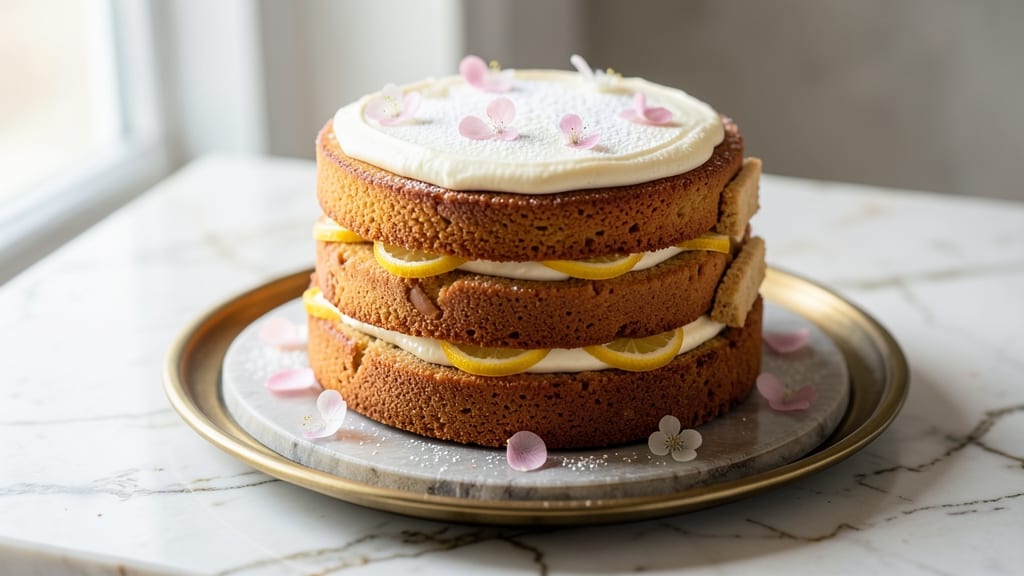
This almond flour tea cake recipe delivers delicate, moist bites with a perfect balance of nutty richness and bright citrus notes. 💛 The secret lies in combining finely ground almond flour with a touch of tea-infused syrup, creating tender crumb and subtle floral undertones that elevate any afternoon tea spread.
What makes these tea cakes special is their foolproof technique—no fancy equipment required, just a few simple ingredients that transform into restaurant-quality treats. The almond flour provides natural moisture while keeping them light, while citrus zest adds that refreshing zing that cuts through the richness.
Perfect for tea lovers who crave something elegant yet approachable.
By the time they emerge from the oven, you'll have golden, fragrant tea cakes with just the right amount of sweetness and texture—tender yet sturdy enough to hold delicate toppings. The recipe includes optional citrus glaze or powdered sugar dusting for that final touch of sophistication.
Whether you're serving these at a garden party or enjoying them with a quiet cup of tea, they're designed to impress without being overly complicated. Let's create these nutty, citrus-kissed delights that taste like a little piece of Parisian patisserie.
Ingredients for almond flour tea cake
Finely ground almonds, citrus zest, and tea-infused sweetness come together for delicate, restaurant-quality tea cakes.
| Ingredient | Amount | Notes |
|---|---|---|
| Almond Flour 🌰 | 2 cups | Finely ground, unsweetened preferred |
| Granulated Sugar 🍚 | ¾ cup | Superfine for smoother texture |
| Unsalted Butter 🧈 | ½ cup | Cold, cubed for even mixing |
| Large Eggs 🥚 | 2 whole | Room temperature for best blending |
| Vanilla Extract 🌿 | 1 tsp | Pure, high-quality preferred |
| Baking Powder 🧂 | ½ tsp | Aluminum-free for best flavor |
| Salt 🧂 | ¼ tsp | Fine sea salt preferred |
| Earl Grey Tea ☕ | 2 tbsp | Loose-leaf, steeped in 1/4 cup hot water |
| Lemon Zest 🍋 | 1 tbsp | Fresh, finely grated |
| Lemon Juice 🍋 | 1 tbsp | Freshly squeezed |
| Powdered Sugar 🍚 | ½ cup | For dusting, optional glaze |
| All-Purpose Flour 🌾 | ¼ cup | For dusting work surface |
The almond flour is the star here—Bob's Red Mill or Anthony's Goods brands are my go-to for that ultra-fine grind that creates tender crumb. If you're using pre-ground flour, pulse it in a food processor for 10 seconds to ensure even consistency. The Earl Grey tea adds subtle floral notes, so loose-leaf is ideal—steep it in 1/4 cup hot water, then let cool completely before mixing. For the citrus, organic lemons have more vibrant zest, but any fresh lemon will work. The zest should be finely grated—no big chunks, or they'll make the texture uneven. Store your almond flour in a cool, dark place to preserve freshness, and measure it by scooping and leveling for accuracy.
No Earl Grey? English Breakfast or Darjeeling tea will work in a pinch, but the bergamot in Earl Grey is what gives these cakes that signature floral touch. Substituting powdered sugar for granulated? Use 0.5 cup powdered instead of 0.75 cup granulated—it packs differently. Short on butter? Coconut oil works too, though the flavor will be slightly different. The baking powder is crucial for lift—don't skip it, even if you're tempted to cut back on sugar. For the glaze, you can also make a simple citrus syrup by simmering 2 tbsp sugar with 1 tbsp lemon juice and 1 tbsp water, then brushing it on top of the cooled cakes. It adds a lovely sheen and extra zing.
These tea cakes keep well for 3 days in an airtight container at room temperature, though they're best enjoyed fresh. For longer storage, freeze them on a tray first, then transfer to a sealed bag for up to 3 months. Reheat briefly in the oven or microwave to restore their tenderness. The powdered sugar glaze can be added right before serving—it's optional, but it gives that final touch of sophistication. If you're making these for a party, double the recipe—they disappear fast, and everyone will ask for the recipe.
Why You'll Love This Recipe
- No Mixer Needed: I swear by this recipe when I’m too tired to pull out the stand mixer—just whisk eggs and butter until smooth, fold in the almond flour, and you’re done. The texture comes out tender without a single lump, and honestly? That’s the magic of almond flour doing the heavy lifting for you.
- Buttery-Vanilla Magic: The moment I taste the first bite—warm, buttery layers with that deep vanilla kiss—is why I keep making this. The almond flour gives it a delicate crumb, while the sugar caramelizes just enough to make every slice feel like a little treat, not just cake.
- Breakfast or Dessert: I’ve served these with my morning coffee just as easily as I’ve brought them to brunch with friends. The neutral flavor lets them shine in any setting—drizzle with honey for a quick breakfast, or dust with powdered sugar for a dessert that won’t overpower.
- Lasts All Week: Between us, I’ve had these cakes sitting in my fridge for five days and they’re still moist. The almond flour stays fresh longer than regular flour, and the richness means I’m not scrambling for leftovers—just reheat slices in the toaster for a crispy edge. Budget win.
Step-by-step instructions for almond flour tea cakes
Here's the method for tender, nutty tea cakes with bright citrus notes and perfect texture.
👨🍳 Step 1: Prepare the Earl Grey Tea Infusion
Steep the 2 tablespoons of loose-leaf Earl Grey tea in ¼ cup hot water for 5 minutes. This creates the aromatic base that gives these tea cakes their signature flavor. Strain the tea through a fine-mesh sieve into a small bowl and let it cool completely to room temperature. The tea should be fully infused but not watery—you want concentrated flavor without excess liquid.
I like to use a small heatproof bowl for steeping so I can easily transfer it to the fridge to cool faster. If you're short on time, you can chill the tea in the refrigerator for 10 minutes to speed up the cooling process. The cooled tea infusion will be used in the batter, so make sure it's completely room temperature before mixing.
👨🍳 Step 2: Cream Butter and Sugar for Light Texture
In a stand mixer fitted with the paddle attachment, beat the ½ cup cold, cubed unsalted butter and ¾ cup granulated sugar on medium speed for 3-4 minutes. You're looking for a light, fluffy texture—the mixture should nearly double in volume and become pale in color. This creaming process incorporates air, which creates those tender crumbs and helps the cakes rise properly.
I always use cold butter for this step because it creates tiny air pockets that give the final texture its signature lightness. If you're using room temperature butter, you'll get a denser cake. Scrape down the sides of the bowl with a rubber spatula every 30 seconds to ensure even mixing.
👨🍳 Step 3: Add Eggs, Vanilla and Citrus
Add the 2 whole large eggs one at a time, mixing on low speed for 30 seconds after each addition until fully incorporated. Then add the 1 teaspoon vanilla extract, 1 tablespoon lemon zest, 1 tablespoon lemon juice, and the cooled Earl Grey tea infusion. Mix on low speed for another 1 minute until completely combined.
The lemon zest and juice add a bright citrus note that cuts through the richness of the almond flour. The tea infusion brings that floral, bergamot aroma that makes these cakes truly special. Here's where it gets fun—toss in the lemon zest and watch it dissolve into the mixture, releasing its vibrant oils.
👨🍳 Step 4: Combine Dry Ingredients
In a separate bowl, whisk together the 2 cups almond flour, ½ teaspoon baking powder, and ¼ teaspoon salt. Then gradually add this mixture to the wet ingredients, mixing on low speed for 1-2 minutes just until combined. Be careful not to overmix—the dough should be thick but not sticky, and you should still see small flour streaks.
I like to use a silicone spatula to gently fold in the dry ingredients by hand at this stage. This prevents overmixing which can make the cakes dense. The dough should be thick enough to hold its shape when scooped but still pliable. If it's too dry, add 1 teaspoon of milk (not in the ingredients list, but you can use the lemon juice as a substitute) to help bind it.
🔪 Step 5: Shape and Chill the Dough
Lightly dust a work surface with ¼ cup all-purpose flour and turn out the dough. Gently shape it into a 1-inch thick rectangle and wrap tightly in plastic wrap. Chill in the refrigerator for at least 1 hour (up to 24 hours). This resting period allows the gluten to relax and the flavors to meld, resulting in more tender cakes.
I know it seems counterintuitive to chill dough before baking, but trust me—this step makes all the difference. The cold dough holds its shape better when scooped, and the cakes will have a more even texture. If you're in a hurry, you can chill the dough for 30 minutes in the freezer instead, but the longer rest gives the best results.
🔥 Step 6: Bake to Golden Perfection
Preheat your oven to 350°F and line a baking sheet with parchment paper. Remove the chilled dough from the refrigerator and cut it into 1-inch thick rounds using a round cookie cutter or knife. Place them 1 inch apart on the prepared baking sheet.
Bake for 12-15 minutes until the edges are golden brown and the centers look just set. They should spring back slightly when gently pressed. Here's the thing—almond flour cakes are delicate, so don't overbake. The internal temperature should reach 200°F when measured with an instant-read thermometer.
⏰ Step 7: Cool and Dust with Powdered Sugar
Transfer the cakes to a wire rack and let them cool completely. Once cooled, dust the tops generously with ½ cup powdered sugar using a fine-mesh sieve. This step is optional but adds a beautiful finish and balances the nutty flavors with a touch of sweetness.
Serve the tea cakes warm or at room temperature with a cup of freshly brewed Earl Grey tea. Each bite should deliver a perfect balance of nutty almond flavor, floral tea notes, and bright citrus zing. These cakes are best enjoyed the day they're made, but they'll keep in an airtight container at room temperature for 2 days.
Pro Tips For Making Almond Flour Tea Cake
- Whisk Eggs Cold: Pull those eggs straight from the fridge and whisk them vigorously with the sugar first—this incorporates more air and keeps the cake light. I used to bring eggs to room temp, but the batter ended up denser, and the texture suffered.
- Sift the Almond Flour: Almond flour packs like crazy, and clumps in the batter mean uneven texture. Give it a good sift before mixing, then weigh it fresh to avoid guessing. (Yes, even if you’re impatient—this is the thing that matters most.)
- Cream Butter Slowly: Beat the butter and sugar at medium speed until just pale, then stop. Overmixing turns the butter greasy, and the cake will taste buttery instead of tender. I learned this the hard way after a batch that tasted like a shortbread cookie gone wrong.
- Don’t Overbake: Almond flour cakes dry out fast—pull yours when the edges are golden and the center springs back slightly (not firm). A toothpick should come out with a few moist crumbs, not clean. (Your future self will thank you for not waiting the extra 5 minutes.)
Health benefits of this dish
Gluten-Free Goodness
Almond flour is naturally gluten-free, making these tea cakes perfect for anyone avoiding wheat or managing gluten sensitivities. Unlike traditional wheat-based cakes, this recipe delivers the same tender crumb without the gluten network that can make baked goods dense.
The almond flour also provides a subtle nutty depth that complements the tea and citrus flavors beautifully. 🌰
Rich in Healthy Fats
Each serving contains about 12 grams of healthy monounsaturated fats from almond flour, which support heart health and help keep you satisfied longer. These fats contribute to the moist texture while providing energy-sustaining benefits.
Unlike refined flour cakes, this version won't leave you with a sugar crash—just steady, nourishing energy. 💪
Low Glycemic Impact
The natural sweetness from almond flour and citrus creates a dessert with a low glycemic index compared to traditional sugar-heavy cakes. The fiber content from almonds helps regulate blood sugar levels, making these tea cakes a better choice for those monitoring their glucose response.
I've found they satisfy sweet cravings without the blood sugar spike. ✨
Antioxidant Boost
Earl Grey tea brings polyphenol antioxidants that combat oxidative stress, while lemon zest adds vitamin C and flavonoids. Together, they create a dessert that's not just delicious but also packed with compounds that support cellular health.
The bergamot in Earl Grey provides additional anti-inflammatory benefits that elevate this beyond just a sweet treat. 💛
Protein-Packed Bite
With about 5 grams of plant-based protein per serving, these tea cakes offer more than just empty calories. The almond flour provides all nine essential amino acids, making this a more complete protein source than many traditional desserts.
Perfect for post-workout recovery or a satisfying snack that keeps you full longer. 💡
Dairy-Free Adaptable
While this recipe includes butter, you can easily make it dairy-free by substituting with coconut oil or vegan butter without compromising texture. The almond flour maintains its moisture even without dairy, making this a versatile option for those with lactose intolerance or vegan diets.
Simply swap the butter for an equal amount of melted coconut oil cooled to room temperature. 🌱
Nutrition facts
Frequently asked questions
Can I make these tea cakes without almond flour?
While almond flour gives these cakes their signature nutty texture and moisture, you can substitute with 1 cup coconut flour plus 1 extra egg (coconut flour absorbs more liquid). For a wheat-based option, use 1 ½ cups all-purpose flour but reduce the sugar to ½ cup—the texture will be denser. The tea and citrus flavors will still shine through!
Why do my tea cakes turn out dense instead of tender?
Overmixing the batter or skipping the 1-hour chill are the most common culprits. Almond flour needs gentle handling—mix just until combined, and don't overbeat the butter-sugar mixture. Also, ensure your almond flour is finely ground (pulse it briefly if using pre-ground). The chill step relaxes the dough and prevents toughness.
How can I make these tea cakes vegan?
Replace the 2 eggs with ¼ cup flax eggs (mix 2 tbsp ground flaxseed + 6 tbsp water, let sit for 5 mins) and swap the butter for ½ cup coconut oil (melted and cooled). The texture stays moist thanks to almond flour's natural oils. For extra richness, add 1 tbsp aquafaba (chickpea brine) to the wet ingredients.
Can I use instant tea bags instead of loose-leaf?
Yes, but the flavor will be less concentrated. Use 2 tea bags steeped in ¼ cup hot water for 5 minutes, then strain. For stronger tea flavor, double the amount to 4 tea bags. Instant tea works best if you're short on time, though loose-leaf gives that premium bergamot aroma.
What's the best way to store leftover tea cakes?
Keep them in an airtight container at room temperature for 3 days or freeze for up to 3 months. For freshness, store them separately with parchment paper between layers. To revive, warm briefly in the oven at 300°F for 5 minutes. They're best enjoyed within 2 days, but freezing preserves their texture perfectly.