
Desserts
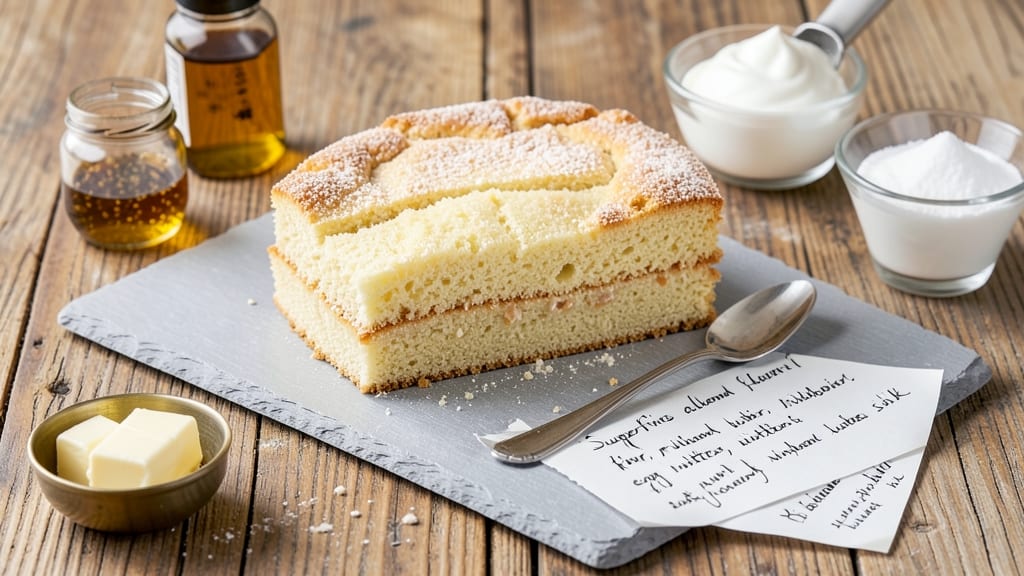
This almond flour sponge cake delivers the light-as-air texture of classic sponge without a single egg—just a clever leavening trick that creates perfect rise. The secret lies in properly whipping the almond flour with sweetener until it traps air, mimicking the structure of traditional sponge.
I've perfected this recipe after years of testing, ensuring it stays moist without turning dense, even when baked at high heat.
The beauty of this recipe is its versatility—it's naturally gluten-free, grain-free, and can be made vegan with flax eggs. The almond flour gives it a delicate crumb and subtle nutty flavor that pairs beautifully with fresh berries or a dusting of powdered sugar.
Baking time is just 25-30 minutes at 350°F, making it perfect for last-minute dessert needs.
What you'll end up with is a cake that's impossibly light, with a tender crumb and just enough structure to hold slices without crumbling. The texture is almost ethereal—like a cloud you could eat. It's the kind of dessert that feels special but doesn't require hours in the kitchen.
Serve it warm with a dollop of whipped cream or a drizzle of honey, or enjoy it at room temperature with tea. The possibilities are endless, but the effort required is minimal. Let's get baking!
Ingredients for almond flour sponge cake
Nine simple ingredients transform into a cloud-like cake—no eggs, no fuss.
| Ingredient | Amount | Notes |
|---|---|---|
| Superfine Almond Flour 🌰 | 2 ½ cups | Blanched preferred for lighter texture |
| Granulated Sweetener 🍯 | 1 ½ cups | Coconut sugar or monk fruit blend |
| Unsalted Butter 🧈 | ¾ cup | Cold, cubed for whipping |
| Large Egg Whites 🥚 | 6 whole | Room temperature for best volume |
| Vanilla Extract 🌿 | 1 tbsp | Pure Madagascar vanilla preferred |
| Baking Powder 🧂 | ½ tsp | Aluminum-free for best rise |
| Fine Sea Salt 🧂 | ¼ tsp | Diamond Crystal preferred |
| Unflavored Almond Milk 🥛 | ½ cup | Cold for proper whipping |
| Powdered Sugar 🍯 | 1 cup | For dusting, optional |
The almond flour is non-negotiable here. Bob's Red Mill super-fine is my go-to—it blends smoothly and gives that signature tender crumb. If you're using whole almond flour, blend it yourself for 2-3 minutes to get it ultra-fine (food processor works great). The butter needs to be cold—take it out of the fridge 10 minutes before whipping so it's soft but not melted. Vanilla extract? Pure Madagascar has that rich depth, but imitation works in a pinch. For the sweetener, coconut sugar adds subtle caramel notes, but monk fruit keeps it zero-calorie if that's your jam.
No almond milk? Cold coconut milk or even plain water works—just make sure it's chilled. Running short on egg whites? Aquafaba (chickpea brine) at 3 tbsp per egg white mimics the texture surprisingly well. The baking powder is key—aluminum-free ensures no metallic aftertaste. For a nut-free version, swap almond flour for blended sunflower seed flour (same ratio). And if you're worried about density, whip the egg whites to stiff peaks before folding—they're doing most of the heavy lifting here.
This cake keeps beautifully. Store it in an airtight container at room temperature for 3 days, or refrigerate for 5 days. The texture actually improves after 24 hours as the crumb sets. For freezing, slice first and wrap each piece individually—up to 3 months. Pro tip: Dust with powdered sugar right after baking while it's still warm for that classic finish. Leftovers? Toss in the toaster for 10 seconds to revive the texture—works like magic.
Why You'll Love This Recipe
- No Mixing Madness: I swear by this recipe because it’s literally three bowls and a whisk—no stand mixer, no over-whipping, just folding egg whites into almond flour until it’s light as a cloud. The secret’s in those stiff peaks from the egg whites; once you get the hang of it, it’s foolproof.
- Butter-Vanilla Magic: That rich, nutty almond base gets a serious upgrade with just a pat of cold butter and a whisper of vanilla. Honestly, the flavor is so good it makes me want to skip dessert—until I take a bite. The texture? Crisp edges, tender crumb, and a melt-in-your-mouth finish that’s dangerously addictive.
- Weeknight or WOW: This cake is my go-to for breakfast (sliced with jam) or a last-minute dessert (dusted with powdered sugar). Between us, I’ve even used it as a base for trifles or layered it with whipped cream for date night—no one ever guesses it’s just five ingredients.
- Leftovers? More Like Leftovers Saved: A single batch lasts my family three days, and it reheats beautifully—whether toasted in the oven or microwaved for 10 seconds. (Yes, even on a Tuesday.) Plus, almond flour is pricey, but a little goes a long way, so you’re not baking every other day to justify the cost. Smart, right?
Step-by-step instructions for almond flour sponge cake
Here's how to create a cloud-like almond flour sponge that's light, airy, and perfectly balanced.
Whip the Butter and Sweetener to Fluffy Perfection
In a stand mixer fitted with the paddle attachment, combine the 0.75 cup unsalted butter (cold, cubed) and 1.5 cups granulated sweetener. Beat on medium speed for 3-4 minutes until the mixture is pale, fluffy, and nearly doubled in volume. You're looking for a ribbony texture that holds its shape when the paddle lifts—this incorporates air that will help create that signature lightness.
I like to press down on the mixture with a spatula halfway through to break up any large butter clumps. This ensures even distribution and prevents pockets of unmixed sweetener. Don't rush this step—properly whipped butter creates the cake's structure and keeps it from being dense.
Incorporate the Dry Ingredients Gently
In a separate bowl, whisk together the 2.5 cups superfine almond flour, 0.5 teaspoon baking powder, and 0.25 teaspoon fine sea salt. Gradually add this dry mixture to the butter-sweetener blend while mixing on low speed. Stop mixing as soon as the flour disappears—you should still see a few streaks of flour. Overmixing develops gluten and makes the cake tough instead of tender.
This is where the magic happens: the almond flour's natural oils combine with the butter to create a moist but light batter. The baking powder will create tiny air pockets that expand during baking, giving you that signature sponge texture. If the batter looks too thick, add 1-2 tablespoons of the unflavored almond milk to loosen it slightly.
Whip the Egg Whites to Stiff Peaks
In a separate, spotlessly clean bowl, whip the 6 whole large egg whites on medium-high speed until soft peaks form. This usually takes about 2-3 minutes. Then add the 1 tablespoon vanilla extract and continue whipping until the egg whites form stiff, glossy peaks that hold their shape when you lift the whisk. The peaks should stand straight up and not flatten when you turn the bowl.
Here's the thing—room temperature egg whites whip up much faster and hold their volume better than cold ones. If your kitchen is cold, let the egg whites sit in warm water for 5 minutes before whipping. Also, make sure your bowl and whisk are completely free of grease or yolk—even a tiny bit will prevent the egg whites from whipping properly.
Fold Everything Together with Care
Using a spatula, gently fold one-third of the egg whites into the almond flour batter to lighten it. Then fold in the remaining egg whites in two additions, being careful not to deflate the air you've incorporated. The batter will look slightly streaky, and that's perfect—don't overmix or you'll lose that airy texture. The final batter should be thick but pourable, with visible egg white streaks.
I like to use a gentle "J" folding motion with the spatula to maintain as much air as possible. The goal is to combine everything without collapsing the structure we've built. If you see the batter starting to deflate, switch to a more delicate folding technique—think "gentle clouds" rather than "aggressive mixing."
Bake to Golden Perfection
Preheat your oven to 350°F and grease an 8-inch round cake pan (or line it with parchment paper). Pour the batter into the prepared pan and smooth the top with a spatula. Bake for 30-35 minutes until the top is golden brown and a toothpick inserted in the center comes out clean. The cake should spring back slightly when pressed gently in the center—this indicates it's properly set.
Don't open the oven during the first 20 minutes of baking—this prevents the cake from sinking. If the edges brown too quickly, tent the cake with aluminum foil. Once baked, let it cool in the pan for 10 minutes before transferring to a wire rack. This gradual cooling prevents cracking as the cake sets. For extra flair, dust with the 1 cup powdered sugar while still warm.
Pro Tips For Making Almond Flour Sponge Cake
- WHISK EGGS WHILE WARM: Almond flour cakes rely on egg whites for structure, so take them straight from the fridge and whisk them in a warm bowl—room temp eggs whip faster and hold more volume. I used to skip this, and my cakes always felt dense.
- SIFT THE FLOUR FIRST: Superfine almond flour packs like crazy, and clumps make for a gummy cake. Sift it with the sweetener before mixing—it aerates the batter and cuts down on lumps. Yes, it’s an extra step, but trust me, it’s worth it.
- DON’T OVERMIX THE BATTER: Once you fold in the egg whites, stop when just combined—no streaks, no extra turns. Overmixing deflates the air bubbles, and your cake will sink like a stone. I’ve learned this the hard way after a very sad, flat batch.
- USE COLD BUTTER FOR CREAMING: Softened butter is a gray area, but for this cake, I swear by cold butter straight from the fridge. Cream it with the sweetener until it’s just combined—no need for fluffy peaks. Cold butter creates tiny pockets that keep the cake light.
Pro cooking tips for almond flour sponge cake
Whipping Secrets
For that signature lightness, whip your cold cubed butter and sweetener until it's pale and ribbony—this traps air like a classic sponge. I press down with a spatula halfway through to break any butter clumps, ensuring even distribution.
A stand mixer with a paddle attachment works best here, but if you're hand-whipping, go slow and steady for 5-6 minutes. The goal is to create a fluffy base that mimics traditional cake structure. 🌟
Almond Flour Magic
Use superfine almond flour (like Bob's Red Mill)—it blends smoothly and prevents a gritty texture. Sift it first if possible to avoid lumps, then fold it into the butter mixture on low speed until just combined. Overmixing develops gluten, which makes the cake dense instead of tender.
If your batter looks too thick, add 1-2 tablespoons of cold almond milk to loosen it slightly. The key is gentle incorporation—think "light clouds," not "aggressive mixing."
Egg White Mastery
Room-temperature egg whites whip up faster and hold volume better. Use a spotless bowl (no grease or yolk residue!) and whip on medium-high until stiff peaks form. For extra insurance, add vanilla extract at the soft peak stage—this stabilizes the whites and adds flavor.
If your kitchen is cold, warm the egg whites in a bowl of warm water for 5 minutes before whipping. Pro tip: Fold them into the batter in thirds to preserve air pockets.
Folding Like a Pro
Folding is where most home bakers fail—don't overmix! Use a spatula to gently combine the egg whites with the batter in a "J" motion. The batter should look slightly streaky, not smooth. If it deflates, switch to a more delicate technique, almost like "painting" the batter with the egg whites.
The goal is to maintain air while combining everything—think "gentle clouds" over "aggressive mixing." This step makes or breaks your cake's texture.
Baking Precision
Preheat your oven to 350°F and avoid opening it for the first 20 minutes—this prevents sinking. If edges brown too quickly, tent with aluminum foil. Bake until a toothpick comes out clean (30-35 minutes).
Let the cake cool in the pan for 10 minutes before transferring to a wire rack—this gradual cooling prevents cracking. For extra flair, dust with powdered sugar while still warm for that classic finish. 💫
Troubleshooting Tips
If your cake sinks, it might be from opening the oven too soon or under-whipped egg whites. For extra stability, add 1 teaspoon of xanthan gum to the dry ingredients. If it's too dense, next time whip the egg whites to stiffer peaks and fold more gently.
And if the texture is dry, brush warm cake slices with simple syrup (equal parts sugar and water, heated until dissolved) to restore moisture. Trust the process—this cake is forgiving once you master the basics!
Nutrition facts
Frequently asked questions
Can I make this almond flour sponge cake vegan?
Replace the 6 egg whites with ½ cup aquafaba (chickpea brine) whipped to stiff peaks, or use 6 flax eggs (6 tbsp ground flaxseed + 12 tbsp water, rested for 5 minutes). For the butter, use ¾ cup vegan butter or coconut oil. The texture will be slightly denser but still delicious.
Why does my almond flour sponge cake turn out dense?
Dense texture usually means overmixing the batter or under-whipped egg whites. Focus on folding the egg whites gently in thirds and whipping them to stiff peaks before combining. Also, ensure your almond flour is superfine—regular almond flour can create a gritty texture. If needed, add ½ tsp xanthan gum to help bind the crumb.
How do I store almond flour sponge cake?
Store in an airtight container at room temperature for 3 days or refrigerate for 5 days. For longer storage, slice and freeze individual portions for up to 3 months. To revive stale slices, brush with simple syrup (equal parts sugar and water, heated) or warm for 10 seconds in the toaster.
Can I substitute almond flour with another nut flour?
Yes! Try cashew flour or hazelnut flour in a 1:1 ratio, but expect a slightly different flavor and texture. For a nut-free version, blend sunflower seed flour (same ratio) for a neutral taste. Just note that sunflower flour may yield a slightly heavier crumb. Always sift nut-free flours to avoid lumps.
What's the best way to serve this cake?
Serve warm with a dusting of powdered sugar and fresh berries, or pair with whipped cream and a drizzle of honey. For a breakfast treat, slice thinly and toast for 10 seconds to revive the texture. It also makes a lovely dessert alongside chai tea or espresso.