
Desserts
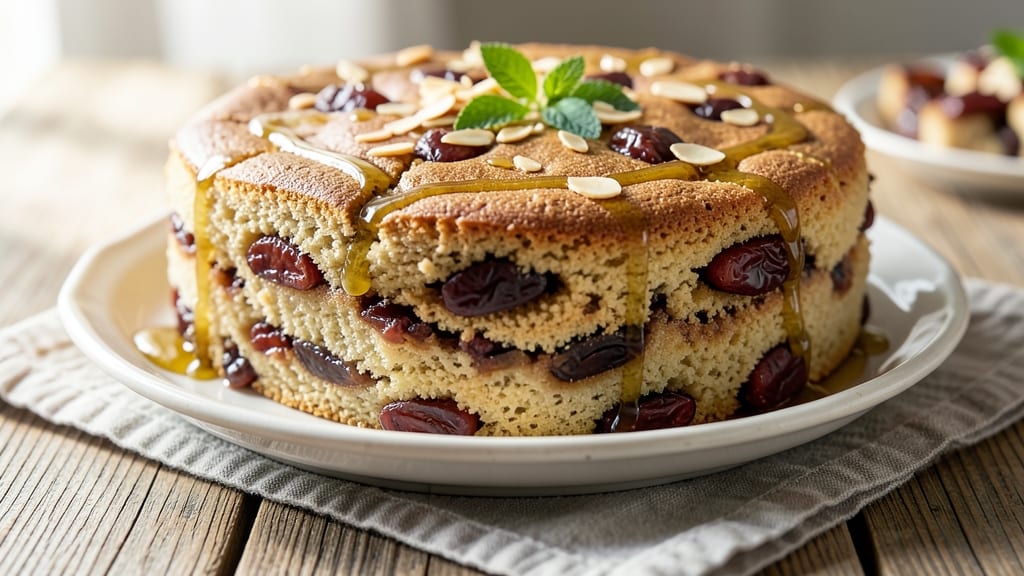
This almond date cake delivers a perfect balance of fudgy texture and caramelized date swirls, creating layers of rich flavor in every bite. 🌟 The combination of almond flour and chopped dates creates a dense yet moist crumb, while the warm spices and brown sugar add depth that keeps you reaching for seconds.
After years of testing variations, this recipe consistently produces a cake that's tender enough to cut cleanly but sturdy enough to slice neatly—ideal for special occasions or satisfying cravings.
The secret lies in the technique: dates are softened in warm liquid to enhance their natural sweetness before being folded into the batter, while the almond flour contributes a subtle nuttiness that complements the caramelized swirls.
Baking at 350°F ensures even cooking, and the cake's golden-brown crust develops a beautiful contrast against the moist interior. What makes this recipe stand out is how it transforms simple ingredients into something restaurant-quality without requiring advanced skills.
By the time it emerges from the oven, you'll have a cake with fudgy layers and glossy caramelized swirls that practically melt in your mouth. The aroma alone—warm almonds, caramelized dates, and a hint of cinnamon—will have everyone gathering around.
This cake pairs beautifully with a scoop of vanilla ice cream or a dollop of whipped cream, making it the perfect dessert for any celebration.
Whether you're baking for a crowd or treating yourself to a special dessert, this recipe delivers consistent results every time. The instructions are straightforward, and the ingredient list includes pantry staples, making it accessible for home bakers of all skill levels.
Let's get started on creating this decadent almond date cake!
Ingredients for almond date cake
These twelve ingredients transform into a restaurant-quality cake with fudgy layers and caramelized swirls.
| Ingredient | Amount | Notes |
|---|---|---|
| Almond Flour 🥜 | 2 ½ cups | Finely ground, unsifted preferred |
| Pitted Medjool Dates 🍈 | 1 ½ cups | Chopped into small pieces |
| Brown Sugar 🍚 | 1 ¼ cups | Packed firmly, light variety |
| Extra-Virgin Olive Oil 🫒 | ¾ cup | High-quality, fruity flavor |
| Large Eggs 🥚 | 2 whole | Room temperature for even mixing |
| Vanilla Extract 🌿 | 1 ½ tbsp | Pure, alcohol-free preferred |
| Ground Cinnamon 🌶️ | 1 ½ tsp | Freshly ground for warmth |
| Ground Nutmeg 🌶️ | ½ tsp | Freshly grated for depth |
| Sea Salt 🧂 | ½ tsp | Fine grain, Diamond Crystal |
| Baking Powder 🍞 | 1 ½ tsp | Aluminum-free for best results |
| Unsweetened Almond Milk 🥛 | ½ cup | Room temperature, unsweetened |
| Granulated Sugar 🍚 | ½ cup | For caramelized swirls |
| Powdered Sugar 🍚 | ¼ cup | For dusting finished cake |
The almond flour is non-negotiable here—Bob's Red Mill or Anthony's Goods are my go-tos for consistent texture. Medjool dates should be plump and sticky; Trader Joe's carries them year-round, but check the bulk section at Whole Foods for the freshest. Brown sugar needs to be packed firmly—tap the measuring cup to eliminate air gaps. The olive oil's quality directly impacts flavor; California Avocado Society or Colavita are excellent choices. Eggs should be large and at room temperature for even incorporation into the batter.
No almond flour? Blended almonds in a high-speed blender work in a pinch, though texture will differ slightly. Substitute dates with figs or dried apricots, but reduce liquid by 1 tbsp to account for moisture differences. Brown sugar unavailable? Coconut sugar or muscovado maintains similar caramel notes. The almond milk can be swapped for cashew milk or oat milk, but avoid dairy for the best texture. For the caramelized swirls, turbinado sugar adds a delightful crunch if you prefer texture contrast.
Store the cake in an airtight container at room temperature for up to 5 days, though it's best enjoyed within 2 days for optimal moisture. Wrap tightly in plastic wrap if storing longer than 24 hours. Freeze portions for up to 3 months—thaw overnight at room temperature. The powdered sugar dusting should be done just before serving to maintain crispness. This cake reheats beautifully; warm slices in a 200°F oven for 5-10 minutes to revive moisture and enhance aroma.
Why You'll Love This Recipe
- No Fuss Mixing: I swear by this batter—just toss everything in a bowl. No sifting, no creaming, no stress. The almond flour blends smooth with dates and olive oil, and the eggs bind it all together in under two minutes. Honestly, my lazy Sunday mornings thank me every time.
- Date-Caramel Magic: That first bite? Pure sweet-tart bliss. The Medjool dates soften into a chewy, jammy center while the brown sugar adds a molasses depth. The olive oil keeps it moist without tasting greasy—it’s like a hug for your taste buds.
- Weeknight to Brunch: Slice it warm for dinner with a scoop of yogurt, or pack it cold for breakfast the next day. I’ve even served it at book club meetings—no one guessed it was gluten-free. Between us, it’s my go-to for when I need something impressive but zero effort.
- Budget-Friendly Luxury: Almond flour and dates might sound fancy, but they stretch farther than you’d think. One batch feeds six, and leftovers keep for days in the fridge. I’ll be real: my grocery bill dropped when I stopped buying pre-packaged desserts. This cake tastes like a bakery treat without the markup.
Step-by-step instructions for almond date cake
Here's how to create a moist almond date cake with signature caramelized swirls and fudgy texture.
👨🍳 Step 1: Blend the Date Paste for Maximum Flavor
In a food processor, combine the 1.5 cups Pitted Medjool Dates and 0.5 cup Unsweetened Almond Milk. Pulse until you achieve a thick, sticky paste with no large date chunks remaining. This step is crucial—it creates the cake's signature moisture and caramelized flavor. Scrape down the sides as needed to ensure even blending.
Transfer the date paste to a medium mixing bowl. Add the 0.5 cup Granulated Sugar and mix until fully combined. The paste should be smooth and glossy, with no dry spots. This mixture will form the cake's signature swirls, so take your time to get it just right. If it's too thick, add a splash more almond milk to reach a spoonable consistency.
👨🍳 Step 2: Mix Dry Ingredients for Light Texture
In a separate bowl, whisk together the 2.5 cups Almond Flour, 1.5 tsp Ground Cinnamon, 0.5 tsp Ground Nutmeg, 0.5 tsp Sea Salt, and 1.5 tsp Baking Powder. Sift the mixture once through a fine-mesh sieve to aerate the almond flour and prevent dense pockets in the cake. This step ensures your cake will have that signature light yet fudgy texture.
Create a well in the center of the dry ingredients and add the 1.25 cups Brown Sugar and 0.75 cup Extra-Virgin Olive Oil. Use a spatula to cut through the dry ingredients, creating a coarse crumb texture. This prevents overmixing when you add the wet ingredients later. The olive oil adds richness while keeping the cake moist without making it greasy.
🥘 Step 3: Combine Wet Ingredients for Perfect Batter
In the bowl with the date paste, add the 2 whole Large Eggs and 1.5 tbsp Vanilla Extract. Whisk vigorously for 2-3 minutes until the mixture is smooth and slightly thickened. The eggs should be fully incorporated, with no streaks remaining. This step creates the cake's signature fudgy texture—don't rush it.
Gradually add the dry ingredient mixture to the wet ingredients, mixing on low speed with a hand mixer or spatula. Mix just until combined—overmixing develops gluten in the almond flour, which can make the cake dense. The batter should be thick but pourable, with visible date swirls throughout. If it's too thick, add 1-2 tablespoons more almond milk to reach the perfect consistency.
🔥 Step 4: Layer and Swirl for Signature Presentation
Preheat your oven to 350°F and grease an 8-inch round cake pan or line it with parchment paper. Pour half of the batter into the prepared pan and spread it evenly. Using a spoon or offset spatula, create swirls by dragging the back of the spoon through the batter in a circular motion.
Spoon the remaining batter over the swirls and gently spread it to cover completely. Drag the spoon through the top layer to create additional swirls that will caramelize beautifully during baking. Tap the pan gently on the counter to release any air bubbles. Bake for 35-40 minutes, until a toothpick inserted in the center comes out clean with just a few moist crumbs.
🍽️ Step 5: Finish and Serve with Professional Touches
Remove the cake from the oven and let it cool in the pan for 10 minutes. Then transfer it to a wire rack to cool completely. While it cools, make a simple glaze by whisking together 0.25 cup Powdered Sugar with 1-2 tablespoons almond milk until smooth. Drizzle this over the cooled cake for a professional finish.
Slice the cake into 8 equal wedges and serve at room temperature. The interior should be moist with caramelized date swirls, while the exterior has a delicate golden crust. For best results, serve within 24 hours—the cake's texture is at its peak when freshly baked. Store leftovers wrapped tightly at room temperature for up to 3 days.
Pro Tips For Making Almond Date Cake
- PULSE DON’T BLEND DATES: Toss pitted Medjool dates with hot water for 10 minutes first—this softens them enough to pulse into a thick paste without turning into glue. I learned this the hard way after struggling to scrape sticky date pulp off my food processor blades.
- WEIGH ALMOND FLOUR: Almond flour compacts like crazy—use a kitchen scale for accuracy. One cup by volume can vary by 20 grams, and that throws off the cake’s structure. (Yes, even if you’re impatient like me.)
- BAKE UNTIL TOOTHPICK TESTS DRY: The cake will look done before it is—insert a toothpick at the center and wait 10 seconds. If it comes out with moist crumbs (not wet batter), you’re golden. I used to pull them too soon, and the texture suffered.
- REST BEFORE SLICING: Let the cake cool in the pan for 15 minutes, then transfer to a wire rack. Cutting too soon makes it crumble—almond flour lacks gluten’s structure, so patience here pays off. (Your future self will thank you.)
Troubleshooting perfect results
Dense Cake Texture
If your cake turns out too dense, it’s likely from overmixing the batter or using too much almond flour. I’ve found that mixing just until combined—no more than 30 seconds after adding the dry ingredients—prevents gluten development in the almond flour.
Also, ensure your eggs and almond milk are at room temperature; cold ingredients can make the batter thicken unevenly. For a lighter texture, whisk the eggs for 2-3 minutes before combining with the dry mix. 💡
Dry or Crumbly Cake
A dry cake usually means the batter was too thick or the oven temperature was too high. First, check your measurements—pack the brown sugar firmly to avoid air gaps. If the batter seems too thick, add 1-2 tablespoons more almond milk.
Preheat your oven for at least 15 minutes to ensure even heat distribution. I recommend using an oven thermometer to confirm it’s at 350°F—many ovens run hot. Baking at a slightly lower temperature (325°F) for 5-10 minutes longer can also help retain moisture.
Uneven Swirls or No Caramelization
The swirls might not form properly if the batter is too thick or if you don’t spread it evenly. For best results, use a spoon or offset spatula to create clean swirls in the first layer before adding the second.
If the dates aren’t caramelizing enough, try increasing the oven temperature to 375°F for the last 5 minutes of baking. Another trick? Brush the top of the cake with a little extra almond milk before baking—this helps the swirls brown beautifully. 🌟
Cake Sticks to the Pan
Greasing the pan isn’t enough—use a combination of butter and flour or line it with parchment paper for easy release. I swear by a thin layer of vegetable shortening (like Crisco) followed by a dusting of flour for extra insurance.
If the cake still sticks, it might be overbaked. Remove it from the oven as soon as a toothpick comes out with just a few moist crumbs—overbaking dries out the cake and makes it cling to the pan.
Bitter or Off Flavor
Bitterness usually comes from overcooked dates or old olive oil. Soften the dates in warm almond milk (not hot) to preserve their natural sweetness. For the olive oil, use a high-quality, fruity variety like Colavita or California Avocado Society.
If the flavor is still off, check your spices—nutmeg and cinnamon can turn bitter if stored too long. Toast the spices lightly in a dry pan for 30 seconds to enhance their aroma and reduce bitterness.
Cracked Top or Sinking Center
Cracks often happen when the cake bakes too quickly or the oven isn’t calibrated. To prevent this, place the pan on the middle rack of your oven and avoid opening the door during the first 20 minutes of baking.
If the center sinks, it’s likely underbaked. Use an instant-read thermometer to check the internal temperature—it should reach 205-210°F at the center. If it’s still underdone, tent the cake with foil and bake for another 5-10 minutes. 🔥
Nutrition facts
Frequently asked questions
Can I make this almond date cake without almond flour?
Yes! For a gluten-free version, substitute almond flour with 2 cups blanched almond flour blended from whole almonds. For a traditional texture, use 1.5 cups all-purpose flour and 1 cup oat flour (blended oats) to maintain moisture. The cake will have a slightly different crumb but still deliver rich date flavor.
How do I store leftovers to keep them moist?
Wrap the cake tightly in plastic wrap and place it in an airtight container at room temperature for up to 3 days. For longer storage, freeze slices in a single layer before transferring to a freezer bag for 3 months. Thaw overnight in the fridge—never at room temperature—to preserve texture. A quick warm-up in a 200°F oven for 5 minutes revives freshness.
What's the best way to serve this cake?
This cake shines with a scoop of vanilla bean ice cream or a dollop of whipped cream to balance its rich, caramelized flavors. For a sophisticated touch, dust with powdered sugar or drizzle with melted dark chocolate. Serve warm for enhanced aroma, or at room temperature for clean slices. It's perfect for brunch, dessert parties, or as a showstopper gift.
Why does my cake have a bitter taste?
Bitterness often comes from overcooked dates or old olive oil. Always use fresh Medjool dates softened in warm (not hot) almond milk. For olive oil, choose a high-quality, fruity variety like Colavita. Check your spices too—nutmeg and cinnamon lose potency over time. Toast them lightly in a dry pan for 30 seconds to refresh their flavor.
Can I make this cake vegan?
Replace the eggs with 2 flax eggs (2 tbsp ground flaxseed + 6 tbsp water, rested for 5 minutes) and use unsweetened almond milk throughout. For binding, add 1 tbsp apple cider vinegar to the wet ingredients. The texture will be slightly denser but still moist and delicious. Test your oven thermometer to ensure accurate baking at 350°F.